
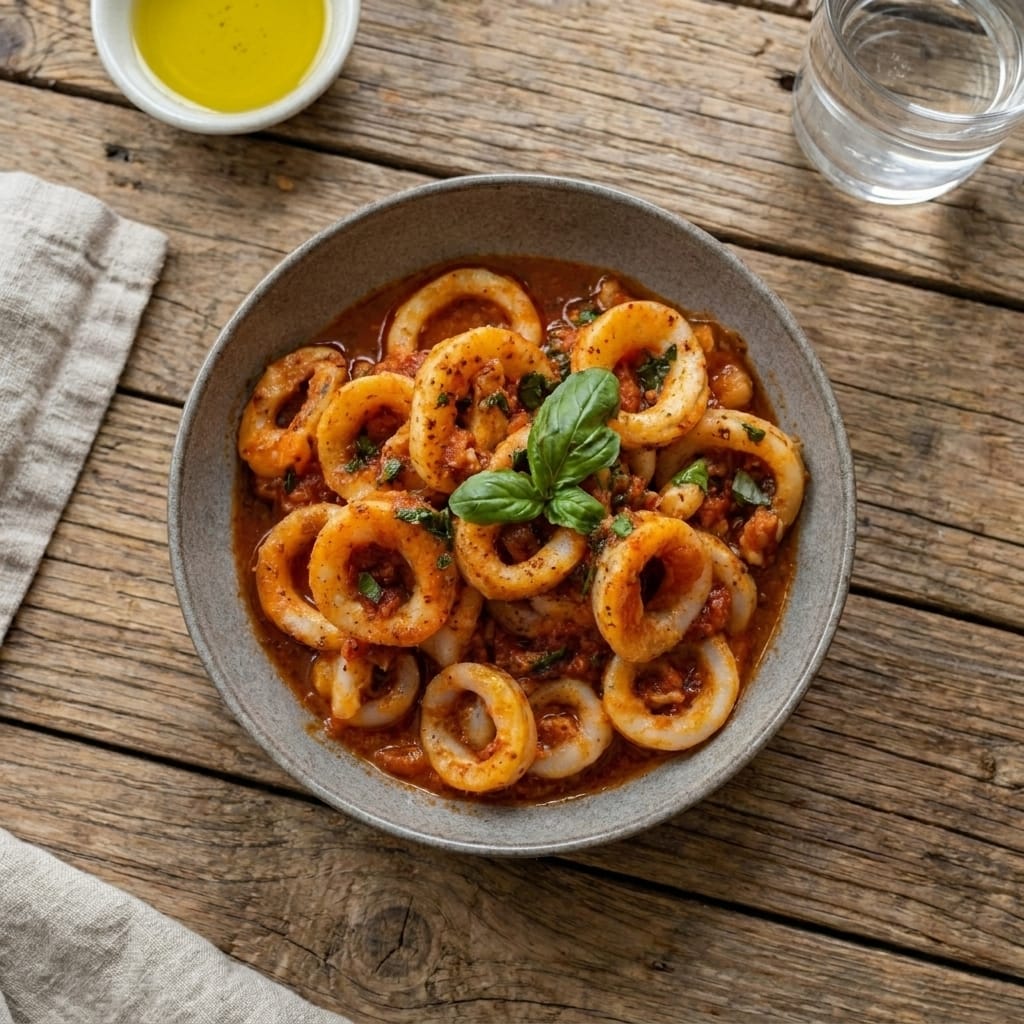
If you are looking for an impressive seafood dinner with tender calamari, plenty of garlic, rich tomato sauce, fresh basil, and a touch of heat, this Garlic Butter Calamari in Spicy Tomato Basil Sauce is an excellent recipe to make. Calamari rings and tentacles are quickly sautéed in garlic butter, removed before they can overcook, then folded into a vibrant tomato sauce flavored with chili flakes, herbs, lemon, and Parmesan.
This recipe is perfect for date nights, seafood dinners, entertaining, or whenever you want something that feels restaurant-style without requiring complicated techniques. The most important part is controlling the calamari cooking time. Squid is most tender when cooked very quickly or braised for a long time; cooking it for several minutes in between can make it rubbery.
Serve this dish over pasta, creamy polenta, rice, or alongside crusty garlic bread for soaking up every spoonful of the spicy tomato basil sauce.
Why You’ll Love This Garlic Butter Calamari
The calamari cooks in just a couple of minutes, making this seafood dinner surprisingly quick.
Garlic butter adds richness while fresh lemon keeps the seafood flavor bright.
The spicy tomato basil sauce combines crushed tomatoes, garlic, chili flakes, oregano, and fresh basil for a bold Mediterranean-inspired flavor.
Cooking the calamari separately before making the sauce helps you avoid tough, overcooked squid.
The recipe is also easy to adjust depending on how spicy, garlicky, or saucy you prefer it.
Ingredients
For the Calamari
- 1½ pounds cleaned calamari, rings and tentacles
- 1 tablespoon olive oil
- 2 tablespoons unsalted butter
- 4 garlic cloves, finely minced
- ¾ teaspoon kosher salt
- ½ teaspoon freshly ground black pepper
- ½ teaspoon smoked paprika
- ¼ teaspoon red pepper flakes
- 1 tablespoon fresh lemon juice
For the Spicy Tomato Basil Sauce
- 2 tablespoons olive oil
- 1 small yellow onion, finely diced
- 5 garlic cloves, finely minced
- 2 tablespoons tomato paste
- 1 can (28 ounces) crushed tomatoes
- ½ cup low-sodium seafood or chicken broth
- 1 teaspoon dried oregano
- ½ teaspoon dried thyme
- ½ teaspoon smoked paprika
- ½–1 teaspoon red pepper flakes, depending on preferred heat
- ½ teaspoon kosher salt
- ¼ teaspoon freshly ground black pepper
- 1 teaspoon sugar or honey, optional
- ½ cup fresh basil leaves, roughly chopped
- 1 tablespoon fresh lemon juice
For Finishing
- 2 tablespoons unsalted butter
- ¼ cup freshly grated Parmesan cheese, optional
- 2 tablespoons chopped fresh parsley
- Extra basil
- Lemon wedges
- Red pepper flakes, optional

How to Make Garlic Butter Calamari in Spicy Tomato Basil Sauce
1. Prepare the Calamari
If using frozen calamari, thaw it completely in the refrigerator.
Drain thoroughly.
Pat the calamari very dry with paper towels.
Removing excess moisture is essential because wet calamari will steam instead of developing light browning.
2. Check the Pieces
If the rings are extremely large, cut them into slightly smaller pieces.
Leave smaller tentacles whole.
Keeping everything similar in size helps the calamari cook evenly.
3. Season the Calamari
Place the calamari in a bowl.
Add salt, black pepper, smoked paprika, and red pepper flakes.
Toss gently.
4. Heat the Skillet
Place a large skillet over medium-high to high heat.
Add the olive oil and 2 tablespoons butter.
Let the skillet become hot before adding the calamari.
5. Add the Calamari
Add the calamari in a single layer.
If necessary, work in two batches.
Crowding the skillet releases too much moisture.
6. Sear Quickly
Cook for approximately 45–60 seconds without moving excessively.
The edges should begin to curl and turn opaque.
7. Add Garlic
Add 4 minced garlic cloves.
Toss the calamari quickly with the garlic.
8. Finish the Calamari
Cook for approximately another 30–60 seconds.
The calamari should be just opaque and tender.
9. Add Lemon
Squeeze in 1 tablespoon fresh lemon juice.
Toss once.
10. Remove Immediately
Transfer the calamari to a clean plate.
Do not leave it in the skillet while making the sauce.
Overcooking at this stage is the easiest way to make calamari rubbery.
11. Begin the Tomato Sauce
Reduce the skillet heat to medium.
Add 2 tablespoons olive oil if the pan looks dry.
12. Cook the Onion
Add the diced onion.
Cook for approximately 4–5 minutes, stirring occasionally, until softened.
13. Add Garlic
Stir in the remaining 5 minced garlic cloves.
Cook for approximately 30–60 seconds, just until fragrant.
14. Add Tomato Paste
Stir in the tomato paste.
Cook for approximately 1–2 minutes.
This concentrates its flavor and adds depth to the sauce.
15. Add Crushed Tomatoes
Pour in the crushed tomatoes.
Stir well.
16. Add Broth
Pour in the seafood or chicken broth.
Scrape the bottom of the skillet to loosen any flavorful browned bits.
17. Season the Sauce
Add oregano, thyme, smoked paprika, red pepper flakes, salt, black pepper, and sugar or honey if using.
The small amount of sweetness is optional and simply balances very acidic tomatoes.
18. Simmer
Reduce the heat to medium-low.
Let the sauce simmer gently for approximately 12–15 minutes, stirring occasionally.
It should thicken slightly and develop a rich tomato flavor.
19. Add Fresh Basil
Stir in most of the chopped basil.
Reserve a little for garnishing.
20. Add Lemon
Stir in the fresh lemon juice.
Taste the sauce and adjust salt, pepper, or chili flakes.
21. Add Butter
Reduce the heat to low.
Stir in 2 tablespoons butter.
This gives the tomato sauce a smoother, richer finish.
22. Add Parmesan
If using, stir in Parmesan gradually.
Keep the heat low so it melts smoothly.
23. Return the Calamari
Add the cooked calamari and any juices from the plate back to the skillet.
24. Toss Briefly
Gently toss the calamari with the hot tomato basil sauce.
Cook for only 30–60 seconds, just long enough to warm it through.
Avoid simmering the calamari for several more minutes.
25. Remove from Heat
Take the skillet off the heat immediately.
26. Garnish
Finish with fresh parsley, basil, extra Parmesan, cracked black pepper, and red pepper flakes if desired.
27. Serve
Serve immediately with lemon wedges.
What to Serve With Garlic Butter Calamari
This saucy seafood dish works especially well with pasta.
Try:
- Linguine
- Spaghetti
- Fettuccine
- Angel hair pasta
- Rigatoni
Other excellent options include:
- Creamy polenta
- Parmesan risotto
- White rice
- Lemon herb rice
- Garlic mashed potatoes
- Crusty Italian bread
- Garlic bread
For vegetables, serve with:
- Roasted asparagus
- Broccoli
- Green beans
- Zucchini
- Arugula salad
- Caesar salad
Tips for the Best Garlic Butter Calamari
Pat the calamari completely dry.
Use a very hot skillet.
Cook in batches if necessary.
Do not overcrowd the pan.
Keep the initial cooking time short.
Remove the calamari before making the sauce.
Use fresh garlic for the best flavor.
Let the tomato sauce simmer separately.
Add basil toward the end.
Return the calamari only briefly before serving.
Serve immediately.
Easy Recipe Variations
Extra-Spicy Calamari
Increase the red pepper flakes or add finely chopped fresh chili.
Creamy Tomato Calamari
Stir ½ cup heavy cream into the tomato sauce before returning the calamari.
Garlic Parmesan Calamari
Increase the Parmesan to ½ cup and add another tablespoon of butter.
Mediterranean Calamari
Add:
- Kalamata olives
- Capers
- Fresh parsley
- Extra oregano
Calamari Marinara
Omit the butter finish and keep the sauce more traditionally tomato-forward.
Seafood Tomato Skillet
Add shrimp or scallops, cooking each seafood separately and returning them only at the end.
Tomato Spinach Calamari
Stir 2 cups fresh spinach into the sauce until wilted.
White Wine Tomato Calamari
Deglaze the skillet with ½ cup dry white wine after cooking the garlic and reduce it by half before adding tomatoes.
How to Store Leftovers
Calamari has its best texture immediately after cooking.
If you have leftovers, allow them to cool and transfer to an airtight container.
Refrigerate for up to 2–3 days.
Store the calamari with the tomato sauce to help prevent it from drying out.
To reheat, place the sauce in a skillet over low heat.
Once the sauce is hot, add the calamari only at the end and warm very briefly.
Avoid boiling or prolonged reheating because squid becomes tough easily.
Freezing the finished dish is not ideal because the calamari texture can deteriorate after thawing.
Frequently Asked Questions
Why does calamari become rubbery?
It is usually cooked too long during a quick-cooking preparation.
Cook squid very briefly over high heat, remove it, then return it only long enough to warm through.
Can I use frozen calamari?
Yes.
Thaw it completely and pat it extremely dry before cooking.
Can I use only calamari rings?
Absolutely.
Rings alone work perfectly, although tentacles add extra texture and visual appeal.
Can I make the tomato sauce ahead?
Yes.
Prepare the sauce up to several days ahead and refrigerate.
Cook the calamari fresh shortly before serving.
How spicy is this recipe?
With ½ teaspoon red pepper flakes it has moderate warmth.
Increase or decrease the amount according to your preference.
Can I serve this with pasta?
Yes.
Toss cooked pasta directly into the tomato sauce, then add the calamari at the very end.
Can I add cream?
Absolutely.
A little heavy cream creates a richer rosé-style tomato sauce.
Can I use marinara instead of crushed tomatoes?
Yes.
Use approximately 3 cups thick marinara sauce and reduce some of the additional seasoning if your marinara is already strongly flavored.
Final Thoughts
This Garlic Butter Calamari in Spicy Tomato Basil Sauce combines tender calamari, fresh garlic, butter, crushed tomatoes, basil, chili flakes, herbs, and lemon in one bold seafood dinner.
The key is cooking the calamari quickly, removing it before building the tomato sauce, and returning it only briefly at the end so it stays tender rather than rubbery.
Serve it over pasta, rice, or creamy polenta with crusty garlic bread for a saucy, spicy, restaurant-style seafood meal that comes together surprisingly quickly.