
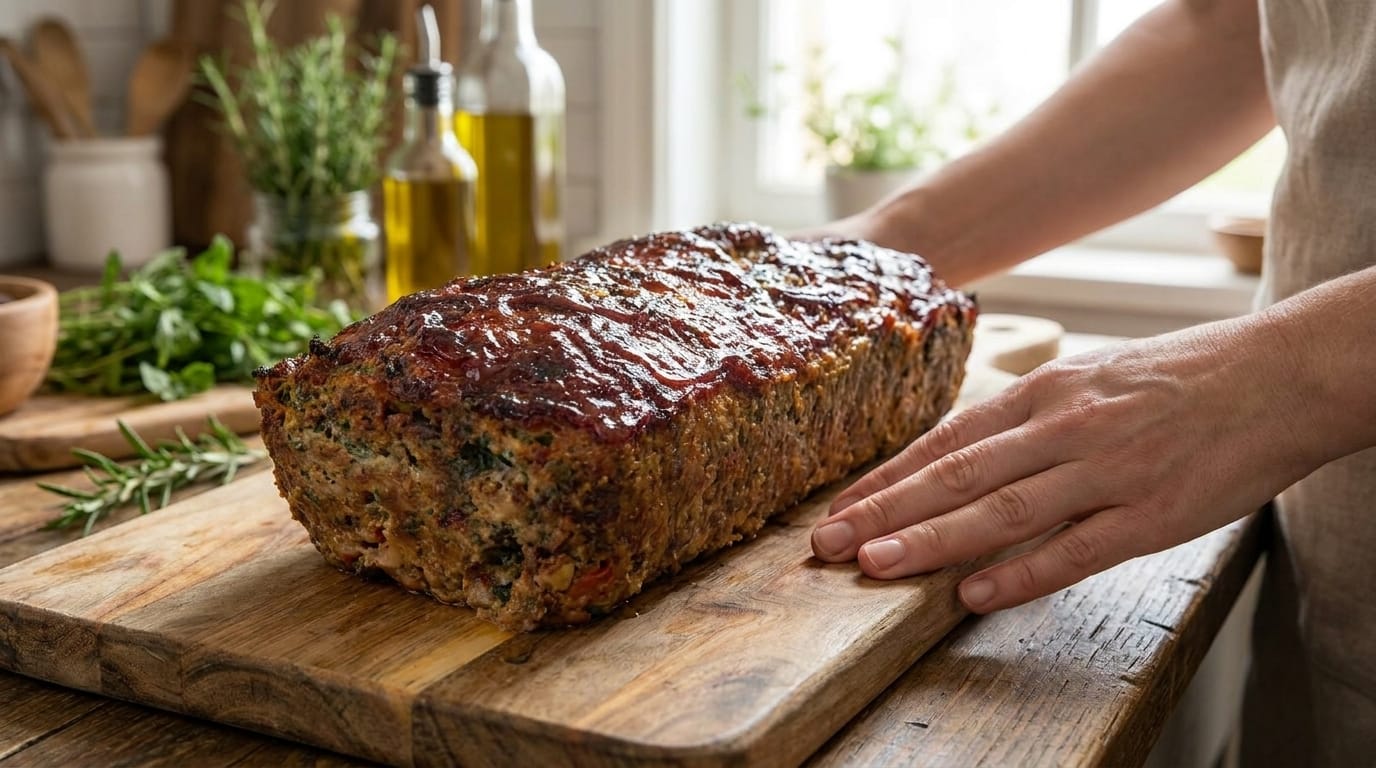
Classic Glazed Meatloaf is one of those timeless comfort-food dinners that never seems to go out of style. A tender, well-seasoned beef mixture is baked into a hearty loaf and finished with a thick, sweet-and-tangy tomato glaze that caramelizes beautifully in the oven. The result is juicy meatloaf inside with a sticky, slightly smoky topping that adds plenty of flavor to every slice.
The meatloaf in the image has that classic deeply glazed appearance, with browned edges and a glossy tomato-based topping. The secret to recreating that texture is using the right balance of ground beef, breadcrumbs, milk, eggs, aromatics, and seasonings. Breadcrumbs soaked in milk help retain moisture, while onions, garlic, Worcestershire sauce, herbs, and mustard give the beef mixture much more flavor than a basic meatloaf.
This is an excellent family dinner because it uses simple ingredients, can be prepared ahead of time, and pairs with almost any traditional side dish. Serve it with mashed potatoes and green beans for a classic combination, or add roasted vegetables, macaroni and cheese, or a fresh salad.
Why You’ll Love This Classic Glazed Meatloaf
A great meatloaf should be juicy without falling apart, tender without becoming mushy, and flavorful enough to stand on its own even before the glaze is added. This recipe is designed to achieve exactly that balance.
The milk-soaked breadcrumbs help trap moisture inside the loaf, while eggs provide enough structure for clean slices. Finely diced onion and garlic add savory flavor throughout the meat instead of only seasoning the surface.
The glaze is another highlight. Ketchup provides the classic tomato base, brown sugar adds sweetness and caramelization, Worcestershire sauce provides savory depth, and Dijon mustard gives the topping a subtle tanginess.
This recipe is also excellent for leftovers. Chilled meatloaf slices make delicious sandwiches, grilled melts, breakfast hash, or quick lunches the next day.
Ingredients
For the Meatloaf
- 2 pounds ground beef, preferably 85% to 90% lean
- 1 medium yellow onion, finely diced
- 4 cloves garlic, minced
- 2 large eggs
- 1 cup plain breadcrumbs
- ¾ cup whole milk
- 2 tablespoons Worcestershire sauce
- 2 tablespoons ketchup
- 1 tablespoon Dijon mustard
- 1 teaspoon garlic powder
- 1 teaspoon onion powder
- 1 teaspoon dried Italian seasoning
- 1 teaspoon smoked paprika
- 1½ teaspoons kosher salt
- ½ teaspoon freshly ground black pepper
- 2 tablespoons chopped fresh parsley
For the Glaze
- ¾ cup ketchup
- 2 tablespoons brown sugar
- 1 tablespoon Worcestershire sauce
- 1 tablespoon Dijon mustard
- 1 teaspoon apple cider vinegar
- ½ teaspoon smoked paprika
- ¼ teaspoon garlic powder
- Pinch of black pepper
How to Make Classic Glazed Meatloaf
1. Preheat the Oven
Preheat your oven to 375°F.
Lightly grease a standard loaf pan or line a rimmed baking sheet with parchment paper.
A loaf pan creates the neat rectangular shape shown in the image, while baking the meatloaf free-form on a sheet pan allows more of the exterior to brown.
2. Soak the Breadcrumbs
Place the breadcrumbs in a medium bowl and pour the milk over them.
Stir gently and allow the mixture to sit for approximately 5 minutes.
The breadcrumbs will absorb the milk and become soft. This mixture, sometimes called a panade, helps keep the finished meatloaf moist and tender.
Skipping this step and using completely dry breadcrumbs can result in a firmer, denser loaf.
3. Sauté the Onion and Garlic
Heat a teaspoon of olive oil in a small skillet over medium heat.
Add the finely diced onion and cook for approximately 4 to 5 minutes, or until softened.
Add the garlic and cook for another 30 seconds.
Remove the skillet from the heat and allow the mixture to cool slightly.
Cooking the onion first gives the meatloaf a smoother texture and sweeter onion flavor.
4. Make the Meatloaf Mixture
Place the ground beef in a large mixing bowl.
Add the soaked breadcrumbs, cooked onion and garlic, eggs, Worcestershire sauce, ketchup, Dijon mustard, garlic powder, onion powder, Italian seasoning, smoked paprika, salt, black pepper, and fresh parsley.
Use clean hands to gently combine everything.
Mix only until the ingredients are evenly distributed.
One of the most important meatloaf tips is not to overmix the beef. Compressing the mixture too aggressively can create a dense, tough texture.
5. Shape the Meatloaf
Transfer the mixture to the prepared loaf pan.
Press it gently into an even loaf without packing it too tightly.
Smooth the top with the back of a spoon.
If using a baking sheet instead, shape the mixture into a loaf approximately 9 inches long and 4 to 5 inches wide.
6. Prepare the Glaze
In a small bowl, combine the ketchup, brown sugar, Worcestershire sauce, Dijon mustard, apple cider vinegar, smoked paprika, garlic powder, and black pepper.
Whisk until smooth.
Taste the glaze. It should be sweet, tangy, smoky, and slightly savory.
7. Add the First Layer of Glaze
Spread approximately half of the glaze evenly across the top of the uncooked meatloaf.
Use the back of a spoon or pastry brush to cover the entire surface.
Reserve the remaining glaze for later.
Adding the glaze in two stages helps create the thick, glossy coating characteristic of classic meatloaf.
8. Bake the Meatloaf
Place the meatloaf in the preheated oven.
Bake for approximately 40 minutes.
Carefully remove it from the oven and spread the remaining glaze over the top.
Return the meatloaf to the oven.
Continue baking for another 15 to 25 minutes, depending on the thickness of your loaf.
The meatloaf is finished when the center reaches an internal temperature of 160°F.
A meat thermometer is the easiest and most reliable way to determine doneness.
9. Caramelize the Glaze
For the darker, sticky glaze seen in the image, switch the oven to broil for approximately 1 to 3 minutes at the end.
Watch continuously.
The sugar in the glaze can go from beautifully caramelized to burned very quickly.
Remove the meatloaf once the surface is bubbling and develops darker caramelized areas.
10. Let the Meatloaf Rest
Allow the meatloaf to rest for 10 to 15 minutes before slicing.
This step is extremely important.
Cutting immediately allows juices to run out and can cause the loaf to crumble. Resting gives those juices time to redistribute and helps the meatloaf hold its shape.
Slice into thick portions using a sharp knife.
What to Serve With Classic Meatloaf
Creamy mashed potatoes are probably the most traditional side dish for meatloaf. Their buttery texture pairs perfectly with the savory beef and tangy glaze.
You can also serve the meatloaf with roasted potatoes, baked potatoes, macaroni and cheese, or buttered noodles for a hearty comfort-food dinner.
For vegetables, try garlic green beans, roasted carrots, broccoli, Brussels sprouts, corn, peas, or asparagus.
A fresh garden salad with vinaigrette is an excellent option when you want something lighter to balance the richness of the beef.
Warm dinner rolls or crusty bread are also perfect for soaking up any meat juices or extra glaze.
Tips for the Best Juicy Meatloaf
Choose the right beef. Ground beef around 85% to 90% lean provides enough fat to keep the meatloaf flavorful and moist without becoming excessively greasy.
Soak the breadcrumbs. This is one of the easiest ways to prevent dry meatloaf.
Cook the onions first. Raw onion can remain slightly crunchy and release water during baking.
Mix gently. Overworking the meat mixture creates a tougher loaf.
Do not pack the pan tightly. Lightly shaping the mixture helps maintain a tender texture.
Use a meat thermometer. Cooking by temperature is much more accurate than relying only on baking time.
Glaze twice. Two layers create a thicker, richer topping.
Rest before slicing. Ten minutes makes cleaner slices and juicier meat.
Easy Recipe Variations
Cheesy Stuffed Meatloaf
Press half the beef mixture into the loaf pan, add 1½ cups shredded mozzarella or cheddar, and cover with the remaining meat.
Bake normally for a cheesy center.
Bacon Meatloaf
Arrange strips of bacon over the top before adding the glaze.
The bacon renders as it cooks and adds smoky flavor.
BBQ Meatloaf
Replace the ketchup glaze with your favorite barbecue sauce for a sweeter, smokier version.
Mushroom Meatloaf
Sauté 8 ounces finely chopped mushrooms with the onions before mixing them into the beef.
Spicy Meatloaf
Add diced jalapeño, cayenne pepper, hot sauce, or crushed red pepper flakes.
Pepper Jack cheese can also be added for extra heat.
How to Store Leftovers
Allow the meatloaf to cool completely before storing.
Transfer slices to an airtight container and refrigerate for up to 4 days.
Keeping the slices together rather than cutting them extremely thin helps retain moisture.
How to Reheat Meatloaf
Place slices in a baking dish with a tablespoon or two of beef broth or water.
Cover with foil and reheat at 350°F for approximately 10 to 15 minutes.
Individual slices can also be microwaved in short intervals until hot.
Adding a little extra glaze before reheating helps restore moisture and flavor.
Can You Freeze Meatloaf?
Yes. Meatloaf freezes extremely well.
Wrap individual cooled slices tightly and place them in a freezer-safe container.
Freeze for up to 3 months.
Thaw overnight in the refrigerator before reheating.
You can also freeze an uncooked prepared meatloaf. Wrap it securely, thaw it completely in the refrigerator, then glaze and bake according to the recipe.
Leftover Meatloaf Ideas
Leftover slices are especially good in meatloaf sandwiches. Place a thick slice between toasted bread with cheese, lettuce, pickles, and additional glaze.
You can also crumble leftover meatloaf into pasta sauce, use it in breakfast hash, add it to grilled cheese sandwiches, or serve it over mashed potatoes for a quick second dinner.
Final Thoughts
Classic Glazed Meatloaf is everything a traditional comfort-food dinner should be: juicy beef, savory herbs, plenty of garlic and onion, and a thick tomato glaze that becomes sticky and caramelized in the oven.
The combination of milk-soaked breadcrumbs, eggs, gently mixed beef, and proper resting time creates a tender loaf that stays moist while still holding together beautifully when sliced. Adding the glaze in two stages gives it that rich, glossy finish that makes homemade meatloaf especially appealing.
Whether you prepare it for Sunday dinner, a busy weeknight, or meal prep, this glazed meatloaf is easy to make, satisfying, and perfect alongside mashed potatoes and vegetables. It is a dependable family recipe with classic flavors that taste just as comforting the next day.
Thank You! Excellent recipe & very well explained & written!
Thank You! Excellent recipe & very well explained & written!