
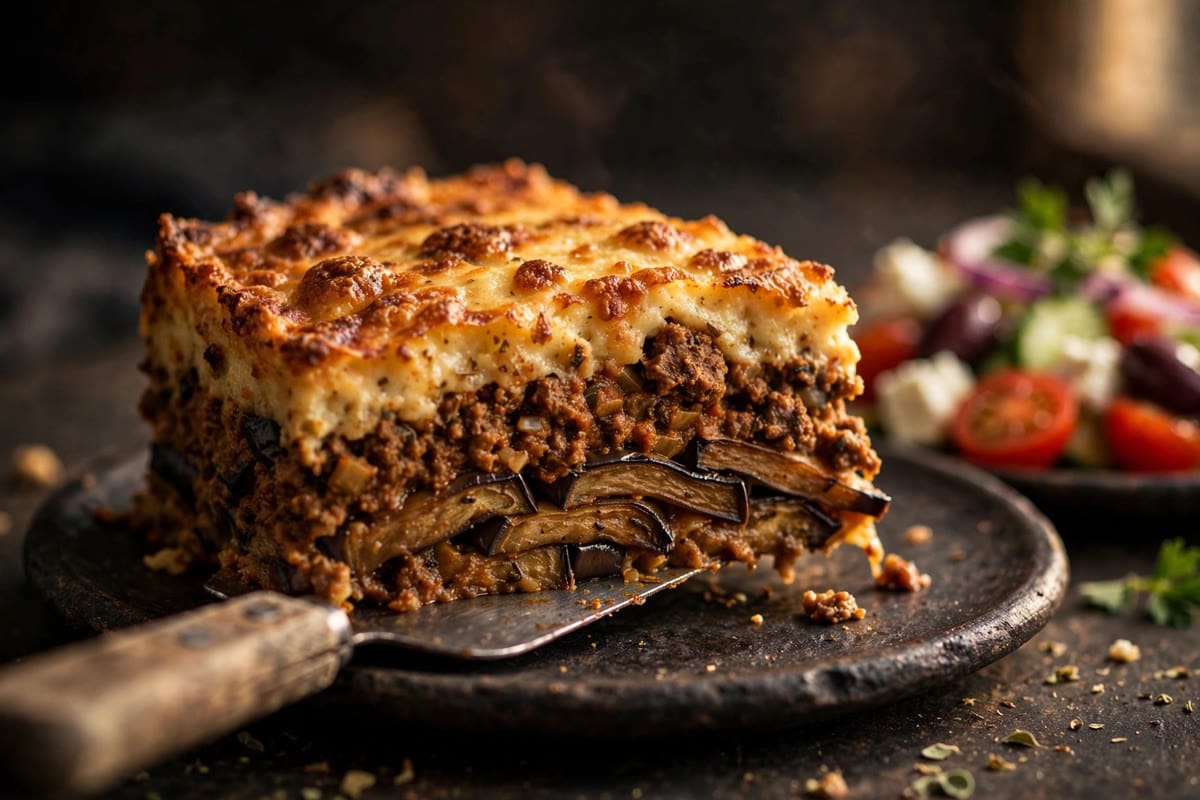
If there’s one dish that makes my whole kitchen smell like a tiny taverna on the Aegean coast, it’s moussaka. I still remember the first time I tasted the real thing — not the overly heavy restaurant version, but a homemade slice pulled straight from a well-loved baking dish, the bechamel golden and just barely wobbling. I knew right then that I had to learn how to make it at home.
And here’s the thing: this Greek moussaka recipe is easier than it looks. Yes, it has a few steps, but each one is simple, and the payoff is enormous. Layers of silky roasted eggplant, a cinnamon-spiced lamb sauce, and a thick, creamy bechamel that bakes up golden and bubbling — it’s the kind of dinner that makes people go quiet around the table. Let’s make it together.
Why You’ll Love This Recipe
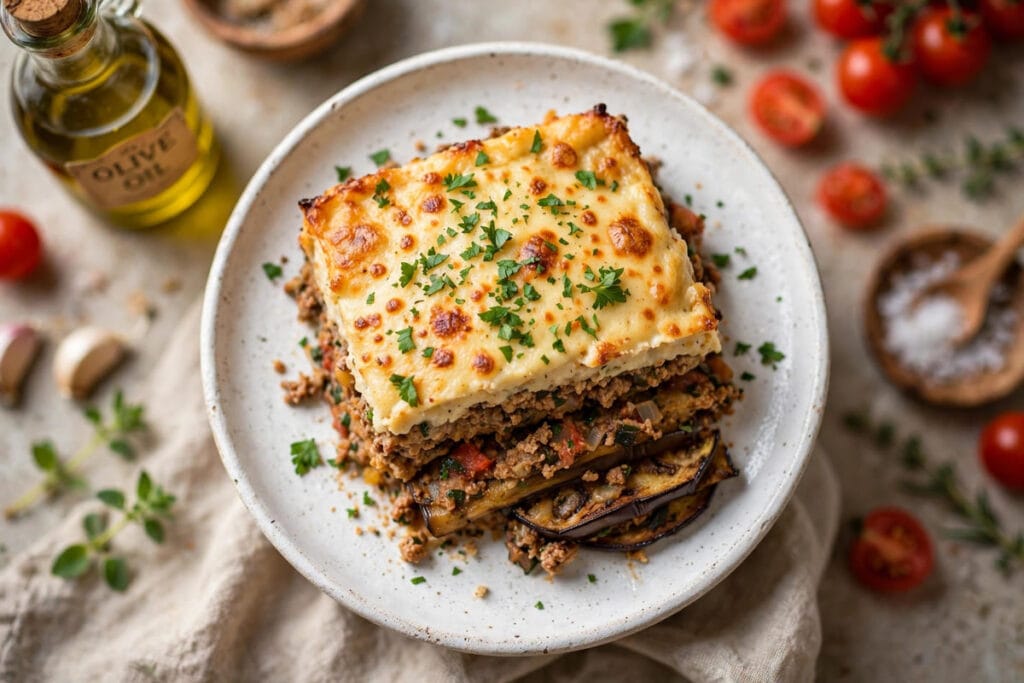
First, let’s talk flavor. Moussaka is often called the Greek lasagna, and the comparison isn’t wrong — but honestly, I think moussaka wins. The eggplant turns almost custardy in the oven, the lamb sauce is warm with cinnamon and oregano, and that bechamel topping is pure luxury. It’s rich without being heavy, especially when you roast the eggplant instead of frying it (my preferred method, and far less fussy).
Second, it’s a showstopper. If you’re hosting friends or cooking Sunday dinner, this is the dish that makes everyone think you spent all day in the kitchen. It feeds a crowd, it reheats beautifully, and leftovers might be even better the next day.
Finally, it fits the Mediterranean diet beautifully — olive oil, lean-ish lamb, vegetables, and moderate dairy. This is comfort food you can actually feel good about.
Ingredients
For the eggplant:
- 2 large eggplants (about 2 lbs total), sliced 1/4-inch thick
- 2 tablespoons olive oil, plus more for brushing
- 1 teaspoon kosher salt
For the spiced lamb sauce:
- 1 lb ground lamb (ground beef works too)
- 1 medium yellow onion, finely diced
- 2 cloves garlic, minced
- 1 can (14 oz) crushed tomatoes
- 2 tablespoons tomato paste
- 1 teaspoon ground cinnamon
- 1/2 teaspoon dried oregano
- 1/2 teaspoon sugar
- Salt and freshly ground black pepper to taste
For the bechamel:
- 3 tablespoons unsalted butter
- 3 tablespoons all-purpose flour
- 2 cups whole milk, warmed
- 1/2 cup grated parmesan cheese, plus 2 tablespoons for the top
- 1 large egg yolk
- Pinch of nutmeg
- Salt to taste
Instructions
- Salt the eggplant: Arrange the eggplant slices on a baking sheet, sprinkle generously with salt, and let them rest for 20 minutes. This draws out bitterness and excess moisture. Rinse, then pat completely dry with paper towels.
- Roast the eggplant: Preheat your oven to 425°F. Brush the slices lightly with olive oil and roast for 20 minutes, flipping once, until golden and tender. Set aside and reduce the oven temperature to 375°F.
- Brown the lamb: In a large skillet over medium-high heat, brown the ground lamb, breaking it up with a spoon, until no longer pink — about 8 minutes. Drain excess fat.
- Build the sauce: Add the onion to the lamb and cook 5 minutes until soft. Stir in the garlic, tomato paste, cinnamon, and oregano, cooking 1 minute until fragrant. Pour in the crushed tomatoes, add the sugar, and simmer for 15 minutes until thickened. Season with salt and pepper.
- Make the bechamel: Melt the butter in a saucepan over medium heat. Whisk in the flour and cook 1 minute. Slowly pour in the warm milk, whisking constantly, until the sauce thickens and coats a spoon. Remove from heat; whisk in the parmesan, egg yolk, nutmeg, and a pinch of salt.
- Layer it up: In a 9×13-inch baking dish, arrange half the eggplant in a single layer. Spread over all the lamb sauce. Top with the remaining eggplant. Pour the bechamel evenly over everything and smooth it out. Sprinkle with the extra parmesan.
- Bake: Bake at 375°F for 35–40 minutes, until the top is deeply golden and the edges are bubbling. Let it rest for 15 minutes before slicing — this is important, because it lets the layers set so you get those beautiful clean slices.
Tips for the Best Results
- Don’t skip salting the eggplant. It takes 20 extra minutes, but it makes the texture silky instead of spongy, and the dish less watery.
- Warm your milk before adding it to the bechamel. Cold milk in hot roux equals lumps, and nobody wants lumpy bechamel.
- Let it rest. I know it’s hard — it smells incredible — but 15 minutes of resting is the difference between a gorgeous slice and a sloppy scoop.
- Make it ahead: Assemble the whole dish up to a day in advance, refrigerate, and bake when ready. Add 10 extra minutes to the bake time.
FAQs
Can I use zucchini instead of eggplant?
You can, though it won’t be traditional. Slice zucchini 1/4-inch thick, salt and roast the same way. The result is lighter and still delicious — just a different dish at that point.
Can I make moussaka without meat?
Absolutely. Swap the lamb for 2 cups of cooked lentils or finely chopped mushrooms. The cinnamon-spiced tomato sauce works beautifully with lentils, and it’s a great vegetarian option.
Can I freeze moussaka?
Yes — it freezes wonderfully. Bake it fully, cool completely, then wrap tightly and freeze for up to 3 months. Thaw overnight in the fridge and reheat at 350°F until hot through.
Why is my moussaka watery?
Usually it’s one of two things: the eggplant wasn’t salted and dried well enough, or the dish was sliced before resting. Both fixes are easy — take your time with the eggplant and give it those 15 minutes.
Watch the quick video reel to see the layers come together in action — there’s nothing like watching that golden bechamel slice being lifted from the dish. If you make this Greek moussaka recipe, come back and tell me how it turned out. I read every comment, and your kitchen wins are my favorite thing. Happy baking — or as they say in Greece, kali orexi!