
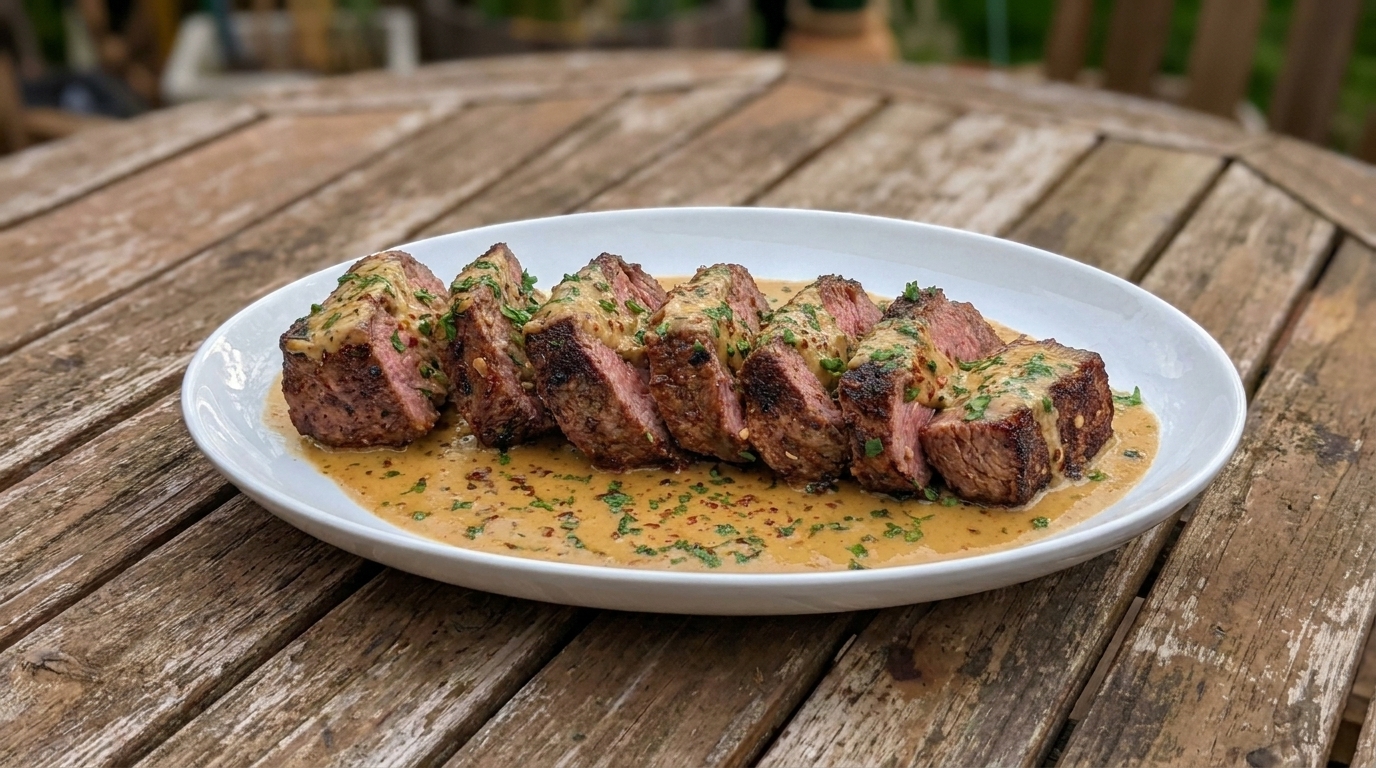
If you are looking for an elegant steak dinner with a juicy, buttery center and a rich pan sauce, this Filet Mignon with Creamy Parmesan Mustard Sauce is a perfect recipe to make. Thick filet mignon steaks are seasoned simply, seared in a hot skillet, basted with garlic herb butter, then finished with a creamy sauce made from Dijon mustard, Parmesan, beef broth, and heavy cream.
This recipe is ideal for date night, holidays, special occasions, dinner parties, or anytime you want a restaurant-style meal at home. Filet mignon is naturally tender and mild, so the creamy mustard sauce adds just enough richness and tang without overpowering the steak.
Serve it with mashed potatoes, roasted vegetables, asparagus, or crispy potatoes, and spoon plenty of warm Parmesan mustard sauce over the steak just before serving.
Why You’ll Love This Filet Mignon with Creamy Parmesan Mustard Sauce
Filet mignon is one of the most tender cuts of beef, and a quick skillet sear creates a deeply browned exterior while keeping the center juicy.
Garlic, butter, rosemary, and thyme add classic steakhouse flavor.
The sauce combines Dijon mustard with cream and Parmesan for a balance of savory, tangy, and creamy flavors.
Everything is made in the same skillet, allowing the sauce to pick up the flavorful browned bits left behind by the steak.
Despite looking impressive, the entire dish is straightforward enough for home cooks.
Ingredients
For the Filet Mignon
- 4 filet mignon steaks, about 6–8 ounces each and 1½–2 inches thick
- 1½ teaspoons kosher salt
- 1 teaspoon freshly ground black pepper
- 1 tablespoon neutral high-heat oil
- 2 tablespoons unsalted butter
- 4 garlic cloves, lightly crushed
- 2 sprigs fresh rosemary
- 3–4 sprigs fresh thyme
For the Creamy Parmesan Mustard Sauce
- 1 tablespoon unsalted butter
- 2 garlic cloves, finely minced
- ½ cup low-sodium beef broth
- 1 cup heavy cream
- 2 tablespoons Dijon mustard
- 1 teaspoon Worcestershire sauce
- ½ cup freshly grated Parmesan cheese
- ½ teaspoon dried thyme or 1 teaspoon fresh thyme leaves
- ¼ teaspoon freshly ground black pepper
- Salt, to taste
Optional Finishing Ingredients
- 1 teaspoon fresh lemon juice
- 1 tablespoon chopped fresh parsley
- Extra Parmesan
- Freshly cracked black pepper
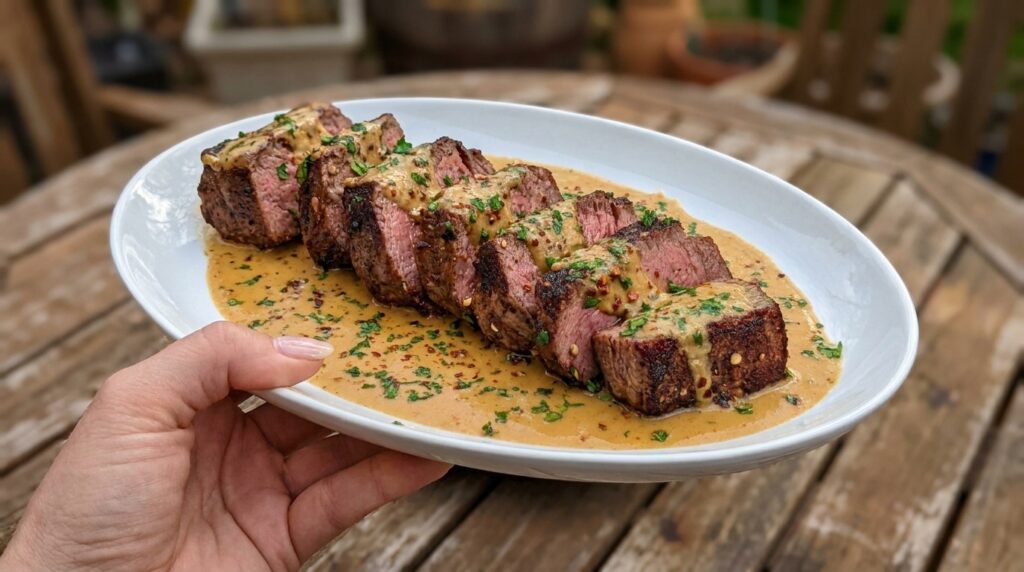
How to Make Filet Mignon with Creamy Parmesan Mustard Sauce
1. Prepare the Steaks
Remove the filet mignon steaks from their packaging.
Pat them thoroughly dry with paper towels.
A dry surface helps create a better crust in the skillet.
If necessary, tie each filet around the middle with kitchen twine to help maintain a neat round shape.
2. Season Generously
Season all sides of the steaks with kosher salt and freshly ground black pepper.
Because filet mignon has a relatively mild flavor, proper seasoning is especially important.
3. Preheat the Oven
Preheat the oven to 400°F (200°C).
This gives you the option of finishing particularly thick steaks in the oven after searing.
4. Heat the Skillet
Place a heavy cast-iron or stainless-steel skillet over medium-high to high heat.
Let it become very hot.
Add the neutral oil.
The oil should shimmer before the steaks go into the pan.
5. Sear the First Side
Place the steaks in the hot skillet.
Do not crowd them.
Sear without moving for approximately 3–4 minutes, or until a deep brown crust develops.
6. Sear the Second Side
Flip each steak.
Cook the second side for another 3–4 minutes.
7. Sear the Edges
Using tongs, briefly hold each steak on its sides for approximately 30–60 seconds per section.
This gives the exterior more even browning.
8. Add Garlic Herb Butter
Reduce the heat slightly.
Add 2 tablespoons butter, crushed garlic, rosemary, and thyme.
As the butter melts and foams, tilt the skillet slightly and spoon the aromatic butter repeatedly over the steaks for approximately 1–2 minutes.
9. Finish in the Oven if Needed
For steaks around 1½–2 inches thick, transfer the skillet to the preheated oven if the centers need additional cooking.
Roast for several minutes, checking frequently with an instant-read thermometer.
Cooking time will depend on thickness and your preferred doneness.
10. Check the Steak Temperature
For approximate doneness, you can remove the steak a few degrees before your final target because the temperature will continue rising during rest.
Typical serving ranges are:
- Rare: about 120–125°F
- Medium-rare: about 130–135°F
- Medium: about 135–145°F
- Medium-well: about 145–155°F
For the best tenderness, filet mignon is commonly served medium-rare to medium.
11. Rest the Steaks
Transfer the steaks to a clean plate or cutting board.
Tent loosely with foil.
Rest for approximately 5–10 minutes while you make the sauce.
Do not slice immediately.
12. Remove Excess Fat
Carefully discard excess oil from the skillet, leaving the browned bits and approximately 1 tablespoon of fat behind.
Remove any dark or burned herb pieces.
13. Add Butter and Garlic
Place the skillet over medium-low heat.
Add 1 tablespoon butter.
Once melted, add the minced garlic.
Cook for approximately 30 seconds, stirring continuously.
14. Deglaze with Beef Broth
Pour in the beef broth.
Use a wooden spoon or silicone spatula to scrape up the browned bits from the bottom of the skillet.
Simmer for approximately 2–3 minutes until slightly reduced.
15. Add the Cream
Reduce the heat to medium-low.
Pour in the heavy cream.
Stir until completely combined with the broth.
Bring the sauce to a gentle simmer.
Avoid a hard boil.
16. Add Dijon Mustard
Whisk in the Dijon mustard and Worcestershire sauce.
Continue stirring until the mustard is fully incorporated.
The mustard provides tanginess that balances the richness of the cream and steak.
17. Add Parmesan
Reduce the heat to low.
Add the freshly grated Parmesan gradually while stirring.
Let each addition melt before adding more.
Continue until the sauce becomes smooth and creamy.
18. Add Herbs and Pepper
Stir in the thyme and black pepper.
Taste before adding additional salt because Parmesan and beef broth already contribute saltiness.
19. Adjust the Sauce
If the sauce becomes too thick, add a splash of beef broth.
If it is too thin, simmer gently for another minute or two.
For extra brightness, stir in 1 teaspoon lemon juice just before serving.
20. Return the Steak Juices
Pour any juices that accumulated on the resting plate into the sauce.
Stir gently.
This adds even more beef flavor.
21. Plate the Filet Mignon
Place each rested filet on a warm plate.
Remove the kitchen twine if used.
22. Add the Sauce
Spoon the creamy Parmesan mustard sauce generously over the top or around the steak.
You can also serve extra sauce on the side.
23. Garnish and Serve
Finish with fresh parsley, cracked black pepper, or a small amount of Parmesan.
Serve immediately.
What to Serve With Filet Mignon with Creamy Parmesan Mustard Sauce
Creamy mashed potatoes are one of the best pairings because they absorb the Parmesan mustard sauce beautifully.
Roasted baby potatoes, garlic Parmesan potatoes, scalloped potatoes, or crispy potato wedges are also excellent.
For vegetables, serve asparagus, green beans, Brussels sprouts, broccoli, roasted carrots, or sautéed spinach.
A crisp arugula salad or simple Caesar salad can add freshness to the rich steak and sauce.
For a steakhouse-style dinner, serve the filet with mashed potatoes, roasted asparagus, and warm crusty bread.
Tips for the Best Filet Mignon
Choose steaks with similar thickness.
Pat them very dry before seasoning.
Use a heavy skillet that can hold high heat.
Get the skillet properly hot before adding the steaks.
Do not move the steaks excessively while the crust forms.
Add butter only after the initial high-heat sear.
Use garlic and herbs for basting.
Check doneness with an instant-read thermometer rather than cutting into the steak.
Rest the meat before serving.
Keep the cream sauce at gentle heat.
Add freshly grated Parmesan gradually.
Do not aggressively boil the sauce after adding cheese.
Easy Recipe Variations
Garlic Parmesan Filet Mignon
Reduce the Dijon slightly and increase the Parmesan for a more garlic-forward creamy sauce.
Peppercorn Parmesan Filet
Add 1–2 teaspoons crushed black peppercorns to the sauce.
Mushroom Parmesan Filet
Sauté 8 ounces sliced mushrooms after removing the steaks, then prepare the sauce in the same skillet.
Creamy Horseradish Filet
Replace 1 tablespoon Dijon with prepared horseradish for a sharper steakhouse flavor.
Bourbon-Style Mustard Sauce
Deglaze with a small amount of bourbon before adding the beef broth, allowing the alcohol to cook off before continuing.
Blue Cheese Filet Mignon
Replace part of the Parmesan with crumbled blue cheese for a stronger flavor.
Herb Mustard Filet
Add additional rosemary, thyme, and parsley to the sauce.
Spicy Mustard Filet
Add a pinch of cayenne pepper or red pepper flakes.
How to Store Leftovers
Allow leftover steak and sauce to cool before refrigerating.
Store the steak and sauce separately whenever possible.
Refrigerate for up to 3–4 days.
To reheat the steak without drying it out, place it in a covered skillet over low heat with a small splash of beef broth.
Warm only until heated through.
Reheat the sauce separately over low heat.
Add a splash of cream or broth if it has thickened too much.
Avoid boiling the sauce because the Parmesan can separate.
Freezing cooked filet mignon is possible, but the texture is best when enjoyed fresh. The cream sauce may also become slightly grainy after freezing and thawing.
Frequently Asked Questions
What is the best doneness for filet mignon?
Medium-rare to medium is especially popular because it keeps the steak tender and juicy while still developing a flavorful crust.
Do I need to finish filet mignon in the oven?
Not always.
Thinner steaks may finish entirely in the skillet, while thick filets often benefit from a short oven finish.
Can I use another steak cut?
Yes.
Beef tenderloin steaks, sirloin, ribeye, or New York strip can all be paired with the same sauce.
Can I use yellow mustard instead of Dijon?
Dijon is strongly recommended because it has a smoother, more refined flavor for cream sauces.
Why did my Parmesan sauce become grainy?
The sauce was probably too hot when the cheese was added.
Reduce the heat and stir in freshly grated Parmesan gradually.
Can I make the sauce ahead?
Yes.
Prepare it ahead and refrigerate it, then reheat gently over low heat with a splash of broth or cream.
Can I add mushrooms?
Absolutely.
Brown sliced mushrooms in the steak pan before preparing the sauce.
Can I make the sauce thicker?
Yes.
Simmer it gently for a few additional minutes. Remember that Parmesan also thickens the sauce as it melts and as the sauce cools slightly.
Final Thoughts
This Filet Mignon with Creamy Parmesan Mustard Sauce combines beautifully seared tender steak with garlic herb butter and a silky sauce made from Dijon mustard, beef broth, cream, Worcestershire sauce, and Parmesan.
The key is developing a good crust, monitoring the steak with a thermometer, allowing it to rest, and keeping the Parmesan sauce over gentle heat so it remains smooth and luxurious.
Serve it with mashed potatoes, roasted vegetables, or asparagus for an elegant steakhouse-style dinner that is impressive enough for special occasions but straightforward enough to prepare at home.