
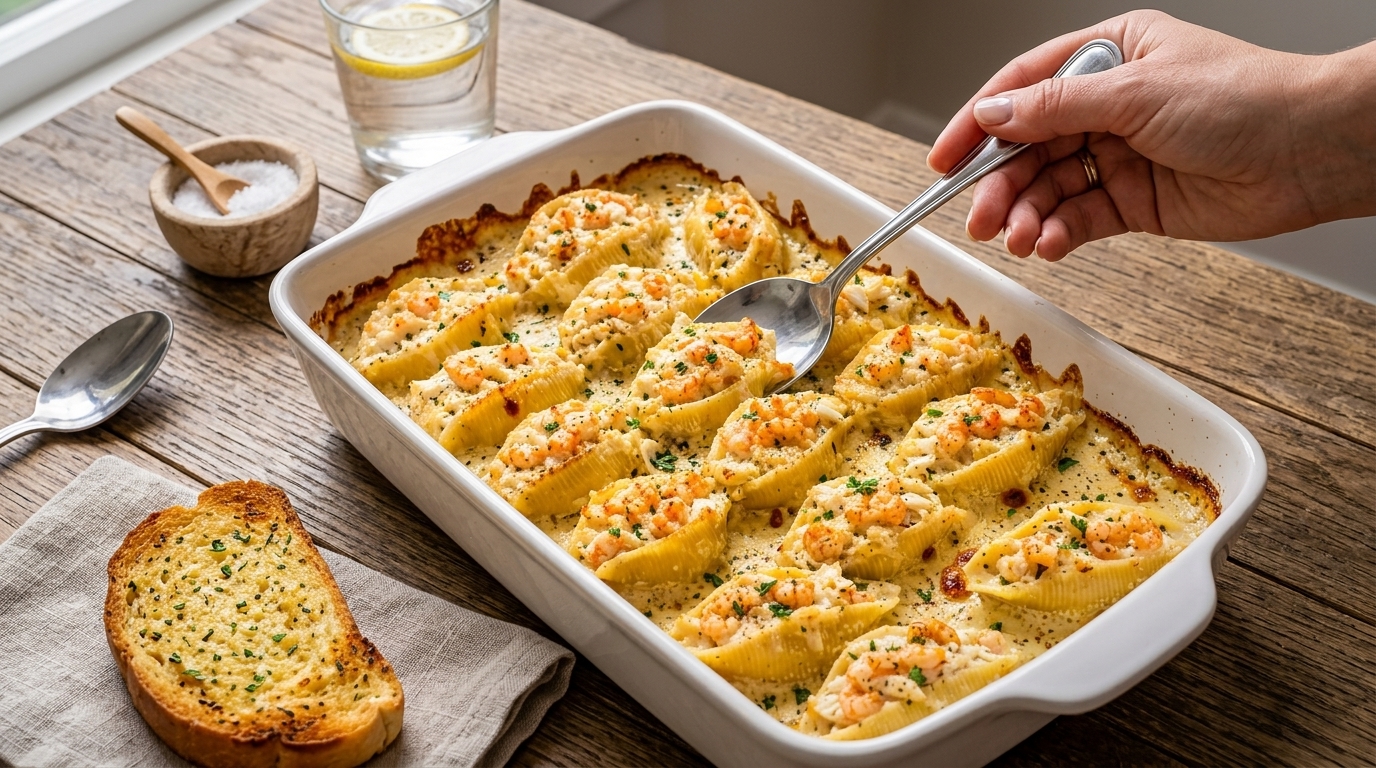
Creamy Garlic Shrimp-Stuffed Shells are an indulgent baked pasta dish filled with tender shrimp, creamy ricotta, mozzarella, Parmesan, garlic, and fresh herbs. The stuffed shells are arranged in a rich Parmesan cream sauce and baked until bubbling, lightly golden, and irresistibly comforting.
This recipe combines the elegance of a seafood dinner with the familiar satisfaction of cheesy baked pasta. Each jumbo shell holds a generous portion of shrimp filling, ensuring a delicious balance of pasta, seafood, cheese, and sauce in every bite.
Serve these stuffed shells for a special family dinner, holiday meal, romantic evening, or dinner party. They look restaurant-worthy but can be assembled using simple ingredients and straightforward steps.
Why You’ll Love This Recipe
These shrimp-stuffed shells are rich, flavorful, and beautifully presented. Jumbo pasta shells create convenient individual portions, while the creamy filling keeps the shrimp moist as the dish bakes.
The homemade garlic-Parmesan sauce is smooth and savory without overpowering the delicate seafood. Fresh lemon adds brightness, helping balance the cream and cheese.
The recipe can also be partially prepared in advance. You can make the filling and sauce, stuff the shells, and refrigerate the assembled casserole until you are ready to bake it.
It is an excellent alternative to traditional meat-filled shells and a memorable way to serve shrimp.
Ingredients
For the Pasta and Shrimp
- 20 jumbo pasta shells
- 1 pound medium shrimp, peeled and deveined
- 1 tablespoon olive oil
- 1 tablespoon butter
- ½ teaspoon salt
- ¼ teaspoon ground black pepper
- ½ teaspoon garlic powder
- ½ teaspoon smoked or sweet paprika
- 1 tablespoon fresh lemon juice
For the Cheese Filling
- 15 ounces whole-milk ricotta cheese
- 1 cup shredded mozzarella cheese
- ½ cup freshly grated Parmesan cheese
- 1 large egg
- 2 garlic cloves, finely minced
- 2 tablespoons chopped fresh parsley
- 1 tablespoon chopped fresh chives
- 1 teaspoon lemon zest
- ½ teaspoon Italian seasoning
- ¼ teaspoon salt
- ¼ teaspoon ground black pepper
For the Creamy Garlic Sauce
- 4 tablespoons unsalted butter
- 4 garlic cloves, finely minced
- 3 tablespoons all-purpose flour
- 2 cups whole milk
- 1 cup heavy cream
- ¾ cup freshly grated Parmesan cheese
- ½ teaspoon Italian seasoning
- ¼ teaspoon ground black pepper
- ¼ teaspoon grated nutmeg, optional
- Salt to taste
- ½ cup shredded mozzarella cheese for topping
- Fresh parsley for garnishing
Ingredients Overview
Jumbo pasta shells are designed for filling and baking. Cook a few more than you need because several may tear during boiling.
Medium shrimp are ideal because they are easy to chop and distribute throughout the filling. Larger shrimp may also be used, but they should be cut into bite-sized pieces.
Whole-milk ricotta creates a rich, creamy center. Mozzarella provides stretch, while Parmesan adds a savory, nutty flavor.
Heavy cream and whole milk create a balanced sauce that is luxurious without becoming excessively thick. Flour stabilizes and thickens the sauce so it coats the shells.
Fresh lemon juice and zest brighten the seafood flavors and keep the filling from tasting too heavy.
How to Make Creamy Garlic Shrimp-Stuffed Shells
1. Prepare the Baking Dish
Preheat the oven to 375°F.
Lightly grease a 9-by-13-inch baking dish with butter or nonstick cooking spray. Set it aside while you prepare the pasta, filling, and sauce.
A ceramic or glass baking dish works particularly well because it distributes heat gently and keeps the cream sauce warm during serving.
2. Boil the Pasta Shells
Bring a large pot of generously salted water to a boil. Add the jumbo shells and cook them for approximately two minutes less than the package recommends.
The shells should be flexible but still firm. They will continue cooking in the oven, so boiling them completely can cause them to become soft or tear.
Stir carefully during the first few minutes to prevent the shells from sticking together.
Drain and rinse briefly under cool water. Arrange them separately on an oiled baking sheet or clean kitchen towel.
3. Season the Shrimp
Pat the shrimp dry with paper towels. Season them with salt, black pepper, garlic powder, and paprika.
Drying the shrimp is important because excess moisture can prevent browning and make the filling watery.
If using large shrimp, cut them into smaller pieces after cooking. Reserve several attractive pieces for placing on top of the shells if desired.
4. Cook the Shrimp
Heat the olive oil and one tablespoon of butter in a large skillet over medium-high heat.
Add the shrimp in a single layer. Cook for approximately one to two minutes on each side, just until they begin turning opaque.
Do not cook them completely because they will finish baking inside the shells.
Transfer the shrimp to a cutting board and drizzle them with lemon juice. Allow them to cool for several minutes, then chop most of them into small pieces.
5. Make the Cheese Filling
Place the ricotta in a large mixing bowl. Add one cup of mozzarella, Parmesan, egg, garlic, parsley, chives, lemon zest, Italian seasoning, salt, and black pepper.
Mix until evenly combined. Fold in the chopped shrimp gently.
If the ricotta contains considerable liquid, drain it in a fine-mesh strainer before mixing. A thick filling remains inside the pasta more successfully.
Avoid overmixing the shrimp, as this can break the pieces down too much.
6. Begin the Garlic Cream Sauce
Melt four tablespoons of butter in a medium saucepan over medium heat.
Add the minced garlic and cook for approximately 30 seconds, stirring continuously. The garlic should become fragrant without turning dark brown.
Sprinkle the flour over the melted butter. Whisk constantly for one to two minutes to create a smooth roux.
Cooking the flour briefly removes its raw taste and helps prevent lumps in the sauce.
7. Add the Milk and Cream
Slowly pour in the milk while whisking continuously. Begin with a small amount and whisk until smooth before adding more.
Pour in the heavy cream and continue whisking.
Bring the mixture to a gentle simmer over medium-low heat. Cook for approximately four to six minutes, stirring regularly, until it thickens enough to coat the back of a spoon.
8. Finish the Sauce
Reduce the heat to low. Add the Parmesan gradually, whisking after each addition until it melts.
Stir in the Italian seasoning, black pepper, optional nutmeg, and a small amount of salt.
Taste before adding much salt because Parmesan is naturally salty.
The sauce should be creamy and pourable. If it becomes too thick, add a splash of milk. Avoid boiling after adding the Parmesan, as high heat can make the cheese grainy.
9. Fill the Pasta Shells
Spread approximately one-third of the garlic cream sauce across the bottom of the prepared baking dish.
Hold one shell gently in your hand and spoon approximately two tablespoons of the shrimp and ricotta mixture inside.
Do not overfill the shells. The filling should be generous but still contained within the pasta.
Arrange the completed shells in the baking dish with the open sides facing upward. Continue until all the filling has been used.
10. Add the Sauce and Topping
Spoon the remaining garlic cream sauce around and lightly over the stuffed shells.
Leave some of the filling visible so the shrimp can be seen in the finished presentation.
Sprinkle the remaining ½ cup of mozzarella over the casserole. If you reserved whole shrimp, place one or two small pieces over selected shells.
Finish with a light sprinkle of Parmesan and black pepper.
11. Bake the Stuffed Shells
Cover the baking dish loosely with aluminum foil. To prevent sticking, spray the underside of the foil lightly with cooking spray.
Bake for 20 minutes. Remove the foil and continue baking for another 10 to 15 minutes.
The sauce should be bubbling around the edges, the shells should be tender, and the cheese should have small golden spots.
For additional browning, broil the dish for one or two minutes at the end. Watch it closely.
12. Rest and Serve
Remove the casserole from the oven and allow it to rest for approximately 10 minutes.
This resting period helps the sauce thicken slightly and makes the shells easier to serve without losing their filling.
Garnish with fresh parsley, chives, black pepper, and optional lemon zest.
Helpful Cooking Tips
Cook the shells only until slightly underdone. Soft pasta is more likely to tear during filling and may become mushy after baking.
Prepare extra shells because a few will almost always split while boiling.
Do not fully cook the shrimp in the skillet. Overcooking before baking will make them firm or rubbery.
Pat the shrimp dry and drain the ricotta if necessary. Controlling moisture is essential for a creamy rather than watery casserole.
Use freshly grated Parmesan. It melts more smoothly and gives the sauce a better texture.
Keep the heat low after adding cheese to the sauce.
Serving Suggestions
Serve Creamy Garlic Shrimp-Stuffed Shells with garlic bread, toasted sourdough, or warm dinner rolls.
A fresh garden salad with lemon vinaigrette provides a crisp contrast to the rich pasta. Caesar salad is another excellent choice.
For vegetables, pair the casserole with roasted asparagus, broccoli, green beans, zucchini, or sautéed spinach.
Because the dish is rich and satisfying, two or three stuffed shells are usually enough for each person, depending on their size.
Recipe Variations
Add cooked crabmeat or chopped lobster to the shrimp filling for a luxurious seafood combination.
Wilted spinach can be mixed with the ricotta, but it must be squeezed thoroughly to remove moisture.
For mild heat, add red pepper flakes or a pinch of cayenne to the sauce.
Replace part of the ricotta with cream cheese for a denser, richer filling.
You can also add chopped mushrooms, artichoke hearts, or roasted red peppers.
Storage and Reheating
Store leftovers in an airtight container in the refrigerator for up to three days.
Reheat the shells in a covered baking dish at 325°F. Add a small splash of milk or cream around the pasta before warming to loosen the sauce.
Individual portions may be reheated in the microwave using short intervals at medium power.
Avoid overheating because shrimp can become tough and cream sauce may separate.
Make-Ahead Instructions
Assemble the casserole up to 12 hours before baking. Cover it tightly and refrigerate.
Allow it to stand at room temperature for approximately 20 minutes before placing it in the oven. Add five to ten minutes to the covered baking time if it is still cold.
For the best seafood texture, avoid freezing the fully assembled casserole. Cream sauce and ricotta can become slightly grainy after thawing.
Leftover Ideas
Chop leftover shells and warm them with additional milk to create a quick creamy shrimp pasta.
Place the filling and pasta inside a small baking dish, add mozzarella, and bake it as an individual casserole.
Leftover shrimp filling can also be spread over toasted bread and broiled for a savory seafood appetizer.
Frequently Asked Questions
Can I use frozen shrimp?
Yes. Thaw them completely, drain them, and pat them thoroughly dry before seasoning.
Can I use jarred Alfredo sauce?
Yes. You will need approximately three cups. Homemade sauce provides fresher garlic and Parmesan flavor, but jarred sauce is a convenient shortcut.
Why did my sauce become grainy?
The heat may have been too high when the Parmesan was added. Use low heat and add freshly grated cheese gradually.
Can I prepare the filling ahead?
Yes. Prepare it, cover tightly, and refrigerate for up to 12 hours before stuffing the shells.
How do I prevent watery shells?
Drain the ricotta, dry the shrimp, thicken the sauce properly, and avoid overcooking the pasta.
Final Thoughts
Creamy Garlic Shrimp-Stuffed Shells combine tender seafood, rich cheeses, delicate pasta, and a velvety Parmesan sauce in one elegant baked dinner.
The recipe is comforting enough for a family meal yet impressive enough for entertaining. Finished with fresh herbs and served alongside garlic bread, these creamy seafood shells are certain to become a memorable favorite.