
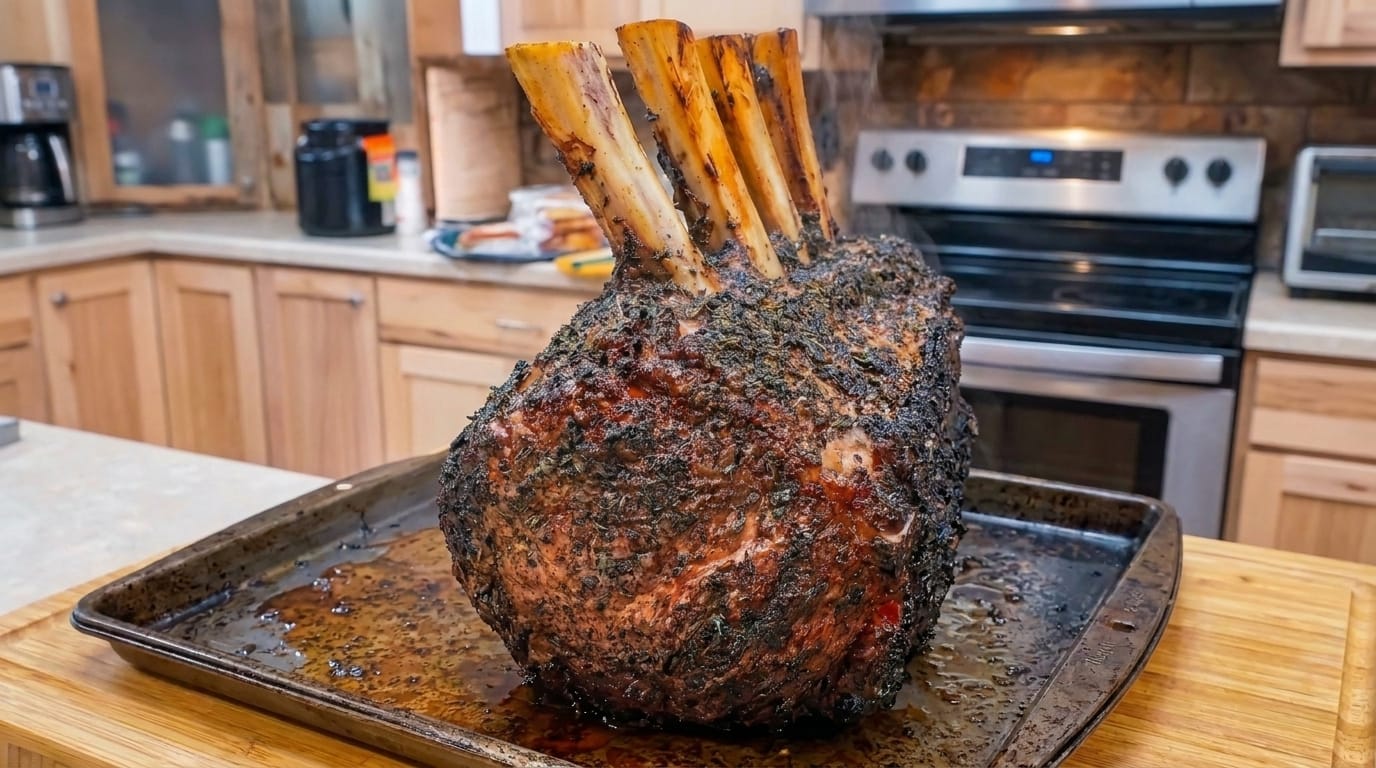
Welcome to your ultimate, deeply comprehensive guide for preparing a show-stopping, majestic culinary centerpiece: Herb-Crusted Prime Rib Roast. If you want a masterclass in achieving a deeply caramelized, savory herb exterior while maintaining a succulent, buttery-soft pink interior that will amaze your family and guests, this extended guide is built for you.
Why This Roast is the King of Special Occasions
The prime rib roast—often referred to as a standing rib roast—is widely considered the ultimate crown jewel of holiday dinners, milestone celebrations, and epic weekend feasts. When treated with respect and cooked using precise temperature control, it delivers an eating experience unlike any other cut of beef.
- Exceptional Marbling: Because prime rib is cut from the rib primal section, it features intricate marbling of fat throughout the muscle grain. As it cooks, this internal fat melts and bastes the meat from the inside out, guaranteeing phenomenal juiciness.
- The Crust-to-Center Contrast: An herb-and-garlic paste roasted at high temperatures creates a dark, savory crust packed with flavor, contrasting perfectly with the tender, juicy beef slices inside.
- Complete Showmanship: Serving a towering bone-in standing rib roast on a carving board instantly elevates any dining table into a fine-dining restaurant experience.
Comprehensive Ingredient Selection
To build a magnificent prime rib roast, quality and freshness matter immensely. Gather these ingredients before you begin:
- The Beef: A 4 to 7-bone standing rib roast (prime grade or high-choice grade), preferably bone-in and Frenched (with the bone ends cleaned of meat for presentation).
- The Herb Paste & Aromatics:
- 1/4 cup extra-virgin olive oil or softened unsalted butter to bind the crust.
- 6 cloves of fresh garlic, finely minced or mashed into a paste.
- 3 tablespoons fresh rosemary leaves, finely chopped.
- 3 tablespoons fresh thyme leaves, stripped and chopped.
- 2 tablespoons coarse sea salt or kosher salt.
- 1 tablespoon freshly cracked black pepper.
- 1 teaspoon Dijon mustard (optional, for added tang and binder).
Step-by-Step Culinary Masterclass
Phase 1: Preparation and Dry Brining
- Bring to Temperature: Remove your prime rib roast from the refrigerator at least 2 to 3 hours before cooking. Allowing the meat to lose its chill ensures even cooking throughout the thick roast.
- Dry Brining (Recommended): Generously salt the entire surface of the beef with coarse salt 24 hours in advance, placing it uncovered on a wire rack inside the refrigerator. This draws out surface moisture, seasons deep within the muscle, and sets you up for an exceptional crust.
- Pat Dry: If you did not dry brine overnight, pat the roast completely dry with paper towels immediately before applying the seasoning paste.
Phase 2: Applying the Herb Crust
- Mix the Paste: In a small mixing bowl, combine the extra-virgin olive oil (or softened butter), minced garlic, chopped rosemary, chopped thyme, coarse salt, and black pepper until a thick, fragrant paste forms.
- Coat the Beef: Rub the herb paste thoroughly over all sides of the prime rib roast, pressing it firmly into the fat cap and exposed meat. If your bones are Frenched, you can wrap them in small squares of aluminum foil to prevent them from charring too darkly during roasting.
Phase 3: The Roasting Process
- Preheat the Oven: Preheat your oven to a high searing temperature of 450°F (230°C) for the first 15 to 20 minutes to lock in juices and build the outer crust, then drop the temperature down to 325°F (165°C) for slow, gentle cooking. Alternatively, use the low-and-slow reverse sear method.
- Monitor Internal Temperature: Insert a digital meat thermometer into the very center of the thickest part of the roast, avoiding bone contact.
- Rare: Pull at 120°F to 125°F (49°C to 52°C)
- Medium-Rare: Pull at 130°F to 135°F (54°C to 57°C)
- Medium: Pull at 140°F to 145°F (60°C to 63°C)
- The Crucial Rest: Remove the prime rib from the oven when it is 5 degrees below your target temperature. Transfer it to a warm cutting board, tent loosely with aluminum foil, and let it rest for 25 to 30 minutes. This resting window allows the muscle fibers to relax and the juices to redistribute evenly across every slice.
Master Chef Pro-Tips for Perfection
- Do Not Skip the Bones: Even though boneless roasts are easier to carve, cooking your prime rib bone-in acts as a natural insulation barrier, protecting the meat near the bone from overcooking while adding deep, savory flavor to the roast.
- Make a Quick Au Jus: Deglace the roasting pan with a splash of red wine or beef broth, scraping up all those caramelized brown bits from the bottom, and simmer it down into a rich, savory au jus to drizzle over the slices.
- Carving Technique: Slice the roast by cutting along the natural seam of the bone, removing the entire rack of ribs in one piece, and then slicing individual portions against the grain to your desired thickness.
What side dish do you prefer to pair alongside a magnificent prime rib roast, such as roasted garlic potatoes or creamed spinach?