
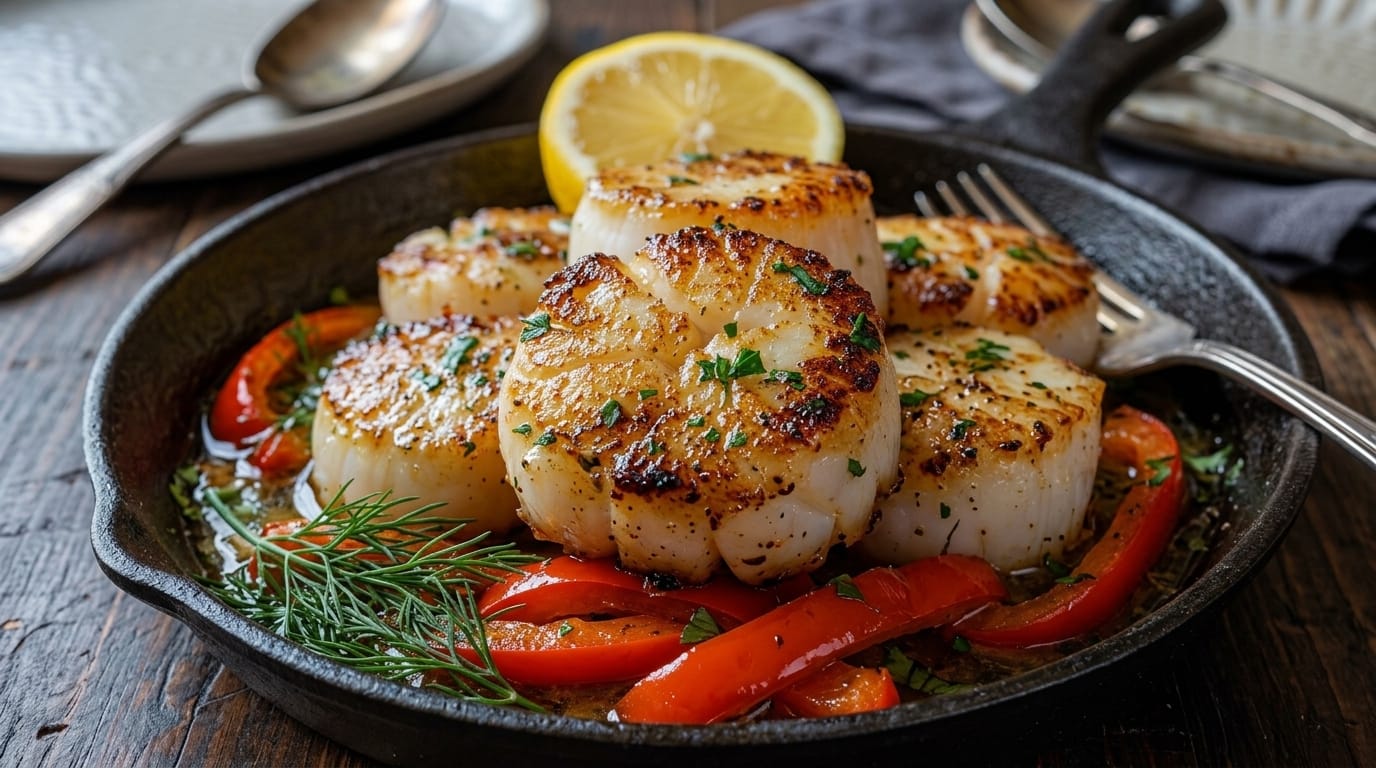
If you are looking for a seafood dinner that feels elegant, impressive, and restaurant-worthy but takes surprisingly little time to prepare, these Garlic Butter Seared Scallops are an excellent choice. Large sea scallops are seasoned simply, seared in a hot skillet until they develop a deep golden crust, then finished with melted butter, fresh garlic, lemon, and herbs.
Scallops have a naturally sweet, delicate flavor, so they do not need complicated seasoning. The secret is in the cooking technique. A very dry scallop and a properly heated pan create that beautiful caramelized exterior, while a short cooking time keeps the center tender and juicy.
This recipe can be ready in around 20 minutes, making it perfect for date nights, dinner parties, holidays, or an upgraded weeknight meal. Serve the scallops over creamy mashed potatoes, risotto, pasta, rice, or roasted vegetables, and spoon the warm garlic butter from the skillet over everything.
Why You’ll Love Garlic Butter Seared Scallops
These scallops are incredibly quick to prepare. Unlike many seafood dishes that require marinades or long cooking times, scallops need only a few minutes in a hot pan.
The contrast in texture is one of the best parts of the recipe. The outside becomes deeply golden and slightly caramelized while the inside remains tender and buttery.
Fresh garlic and butter complement the scallops without overpowering their naturally sweet flavor. Lemon adds brightness, while parsley provides freshness and color.
This recipe is also easy to adapt. Add Parmesan, chili flakes, herbs, cream, or white wine depending on the style of dinner you want to create.
Most importantly, learning how to properly sear scallops gives you an easy restaurant-style technique that you can use again and again.
Ingredients
For the Scallops
- 1½ pounds large sea scallops
- 1 tablespoon olive oil
- ½ teaspoon kosher salt
- ½ teaspoon freshly ground black pepper
- ½ teaspoon garlic powder
- ¼ teaspoon paprika
For the Garlic Butter
- 4 tablespoons unsalted butter
- 5 garlic cloves, finely minced
- 1 tablespoon fresh lemon juice
- 1 teaspoon finely grated lemon zest
- 2 tablespoons chopped fresh parsley
- ½ teaspoon fresh thyme leaves, optional
- ¼ teaspoon crushed red pepper flakes, optional
For Serving
- Fresh parsley
- Lemon wedges
- Freshly cracked black pepper
- Extra melted butter, optional
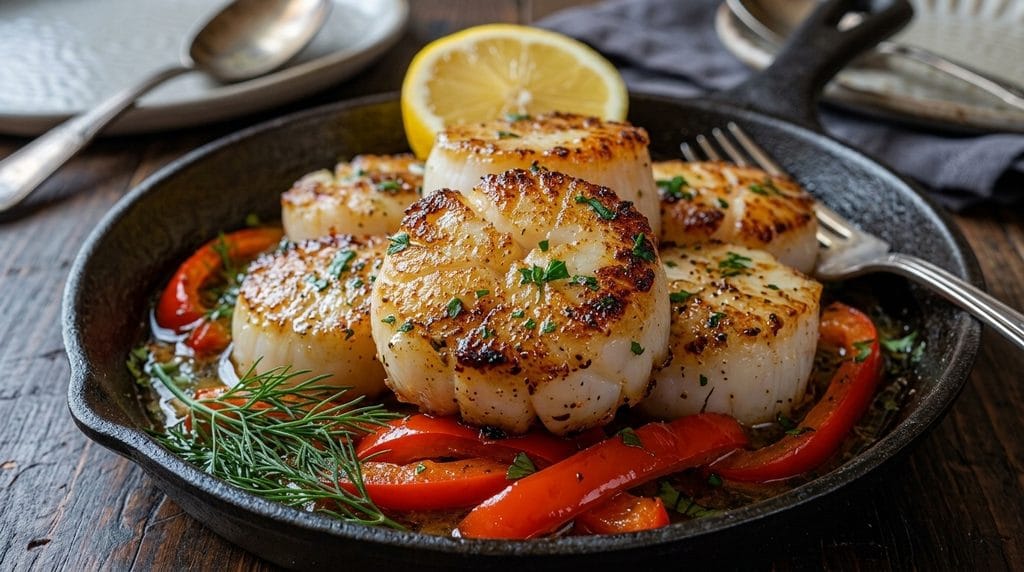
How to Make Garlic Butter Seared Scallops
1. Choose the Right Scallops
Large sea scallops are best for pan searing because they are thick enough to develop a golden crust without overcooking in the center.
When possible, look for dry-packed scallops rather than scallops treated with added liquid.
Wet-packed scallops tend to release more moisture into the pan, which makes browning more difficult.
If your scallops have a small, firm side muscle attached, gently pull it away and discard it.
2. Dry the Scallops Thoroughly
Place the scallops between layers of paper towels.
Pat them very dry on all sides.
This is one of the most important steps in the entire recipe.
Surface moisture turns into steam when it hits the skillet. If the scallops are wet, they may cook through before they ever develop that beautiful golden crust.
Let them sit uncovered for several minutes while you prepare the remaining ingredients.
3. Season the Scallops
Season both sides of the scallops with salt, black pepper, garlic powder, and paprika.
Keep the seasoning fairly simple.
Scallops have a delicate sweetness that you want to complement rather than cover.
4. Heat the Skillet
Place a large cast-iron or heavy-bottomed skillet over medium-high to high heat.
Allow it to heat thoroughly.
Add the olive oil.
When the oil is hot and shimmering, the pan is ready.
A hot skillet is essential because the scallops need to caramelize quickly before their interiors overcook.
5. Arrange the Scallops
Carefully place the scallops into the skillet.
Leave space between each one.
Do not overcrowd the pan.
If your skillet is not large enough, cook the scallops in two batches.
Crowding releases too much moisture and lowers the temperature of the skillet, resulting in pale or steamed scallops.
6. Sear the First Side
Let the scallops cook completely undisturbed for approximately 2–3 minutes.
Do not move, shake, or repeatedly check them.
When properly seared, the scallops should naturally release more easily from the skillet.
The bottom should develop a rich golden-brown crust.
7. Flip the Scallops
Using tongs, carefully turn each scallop.
Cook the second side for approximately 1½–2 minutes.
The exact cooking time depends on the size of the scallops.
Scallops cook very quickly, so watch them carefully.
8. Add the Butter
Reduce the heat slightly.
Add the butter to the skillet.
As it melts, tilt the pan gently so the butter pools toward one side.
Add the minced garlic, optional thyme, and optional crushed red pepper flakes.
Cook the garlic for approximately 20–30 seconds.
Avoid letting it become dark brown.
9. Baste the Scallops
Use a spoon to repeatedly pour the warm garlic butter over the scallops.
Continue basting for approximately 30–60 seconds.
This gives the scallops extra flavor while finishing the cooking process.
10. Check for Doneness
Scallops should be opaque around the edges with a tender center.
For food-safety guidance, seafood can be cooked to an internal temperature of 145°F (63°C).
Because scallops are small and cook quickly, remove them as soon as they are done.
Overcooking can turn their naturally tender texture firm and rubbery.
11. Add Lemon
Remove the skillet from the heat.
Add fresh lemon juice and lemon zest to the garlic butter.
Swirl the skillet gently.
Adding lemon after removing the pan from direct heat helps preserve its fresh, bright flavor.
12. Add Fresh Parsley
Sprinkle chopped parsley over the scallops.
Spoon additional garlic butter over the top.
If desired, add freshly cracked black pepper or a few extra red pepper flakes.
13. Rest Briefly
Allow the scallops to rest for approximately 1–2 minutes.
Unlike a large steak, scallops do not need an extended resting period.
Serve them while they are still warm and the butter sauce is fluid.
What to Serve With Garlic Butter Seared Scallops
Creamy mashed potatoes are one of the best sides for scallops. The smooth potatoes soak up the garlic butter beautifully and create a comforting restaurant-style plate.
Risotto is another classic choice. Parmesan risotto, mushroom risotto, or lemon risotto all pair especially well with scallops.
For pasta, try linguine, angel hair, fettuccine, or spaghetti tossed with olive oil, Parmesan, or a light cream sauce.
Rice is a simpler option. Jasmine rice, garlic butter rice, or herb rice all work well.
For vegetables, serve scallops with asparagus, broccoli, green beans, spinach, zucchini, or roasted Brussels sprouts.
A fresh salad with lemon vinaigrette can also provide a refreshing contrast to the buttery seafood.
Tips for the Best Seared Scallops
Dry the scallops extremely well. Moisture is the biggest enemy of proper browning.
Use a heavy skillet. Cast iron or stainless steel maintains the high heat needed for searing.
Get the pan hot before cooking. A lukewarm skillet will steam the scallops.
Do not overcrowd the pan. Cook in batches if necessary.
Do not move the scallops while the first side sears. Leaving them alone creates a better crust.
Use butter near the end. Butter can burn under the very high heat required for the initial sear.
Cook the garlic briefly. Garlic burns quickly and can become bitter.
Watch the cooking time. Scallops usually need only a few minutes total.
Easy Recipe Variations
Garlic Parmesan Scallops
Sprinkle freshly grated Parmesan over the finished scallops and broil briefly until lightly melted.
Spicy Garlic Butter Scallops
Add ½ teaspoon crushed red pepper flakes or a pinch of cayenne to the butter.
Creamy Garlic Scallops
After removing the cooked scallops, add ¾ cup heavy cream and ½ cup Parmesan to the garlic butter. Simmer gently until creamy, then return the scallops briefly.
Lemon Herb Scallops
Increase the lemon zest and add fresh thyme, parsley, and dill.
Scallops with Mushrooms
Sauté sliced mushrooms until golden before cooking the scallops, then return them to the pan with the garlic butter.
Garlic Butter Scallops and Shrimp
Use half scallops and half large shrimp for an easy mixed-seafood dinner.
Storage and Reheating
Scallops are best eaten immediately after cooking because their texture is most tender when fresh.
Store leftovers in an airtight container in the refrigerator for up to 2 days.
To reheat, place the scallops in a skillet over low heat with a small amount of butter.
Heat only until warmed through.
Avoid prolonged reheating because scallops can quickly become rubbery.
The microwave can be used in short intervals, but gentle stovetop reheating generally preserves the texture better.
Make-Ahead Instructions
Scallops should ideally be cooked shortly before serving, but several parts of the recipe can be prepared ahead.
The scallops can be cleaned and refrigerated uncovered on a paper towel-lined plate for a short period to help keep their surfaces dry.
Garlic can be minced, parsley chopped, and lemon zested ahead of time.
You can also prepare your side dishes before searing the scallops because the seafood cooks so quickly.
Have everything ready before heating the skillet so you can serve the scallops immediately.
Final Thoughts
These Garlic Butter Seared Scallops prove that an impressive seafood dinner does not need to be complicated. With just a few simple ingredients, you can create tender scallops with deeply caramelized edges and a rich garlic butter finish in less than 20 minutes.
The most important steps are drying the scallops thoroughly, using a very hot skillet, avoiding overcrowding, and keeping the cooking time short. Finish them with fresh garlic, butter, lemon, and herbs, and you have a beautifully balanced dish with restaurant-quality flavor.
Serve the scallops over creamy mashed potatoes for comforting elegance, pair them with risotto for a special dinner, or add pasta and roasted vegetables for an easy seafood feast.