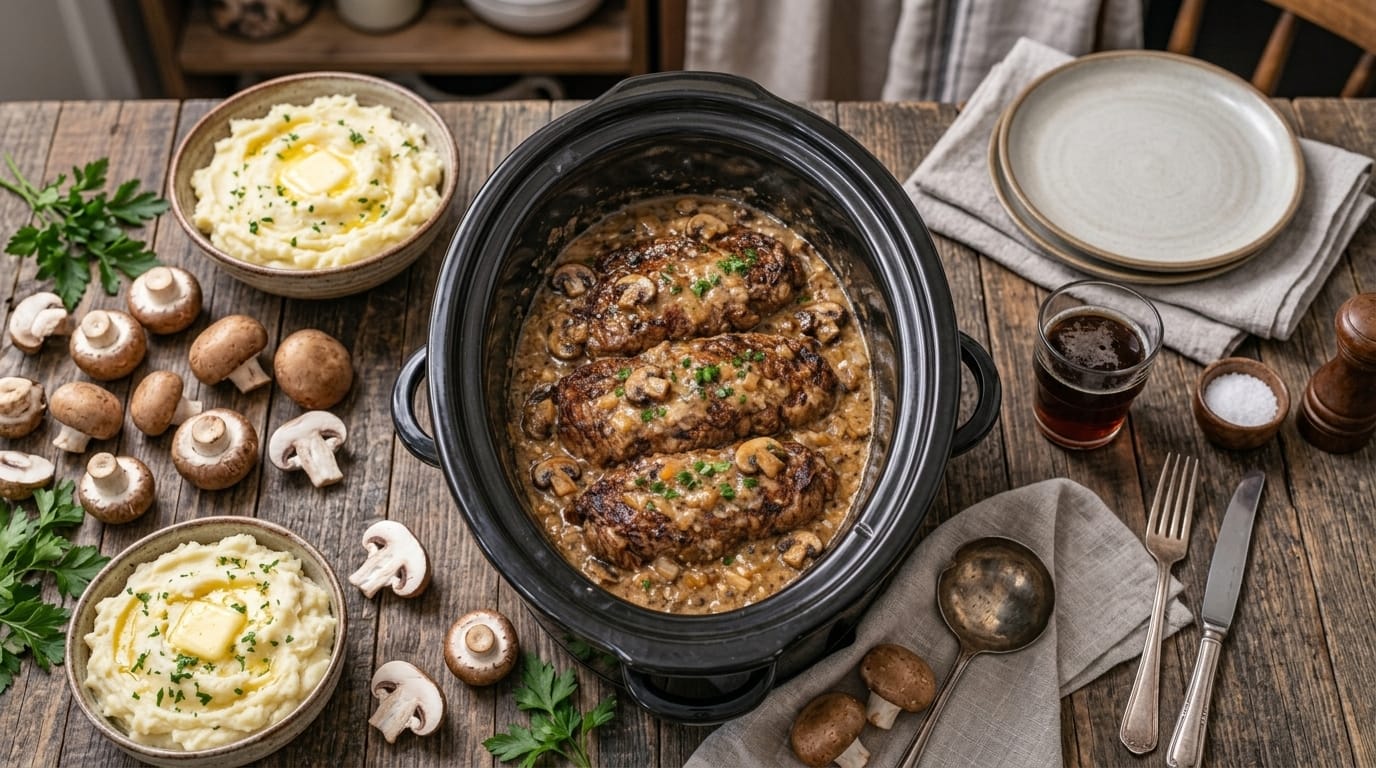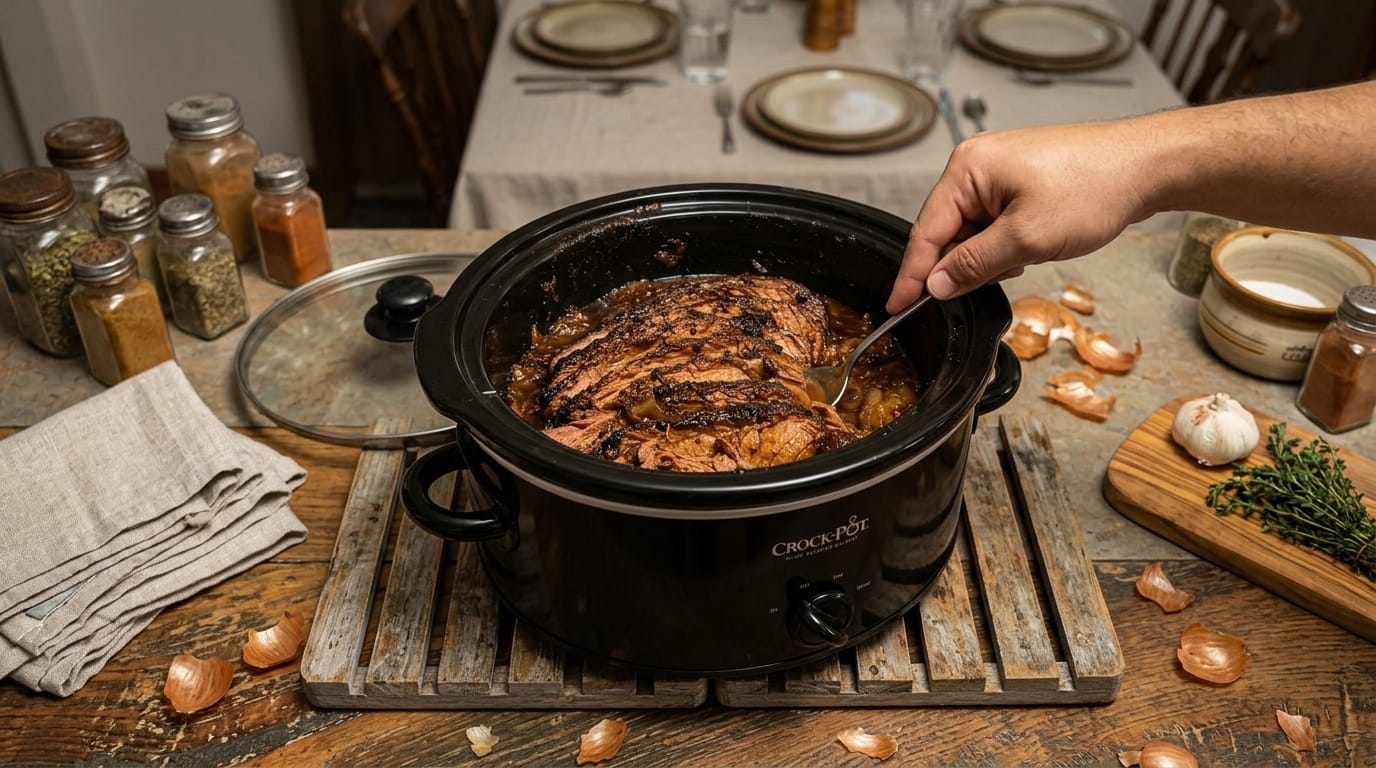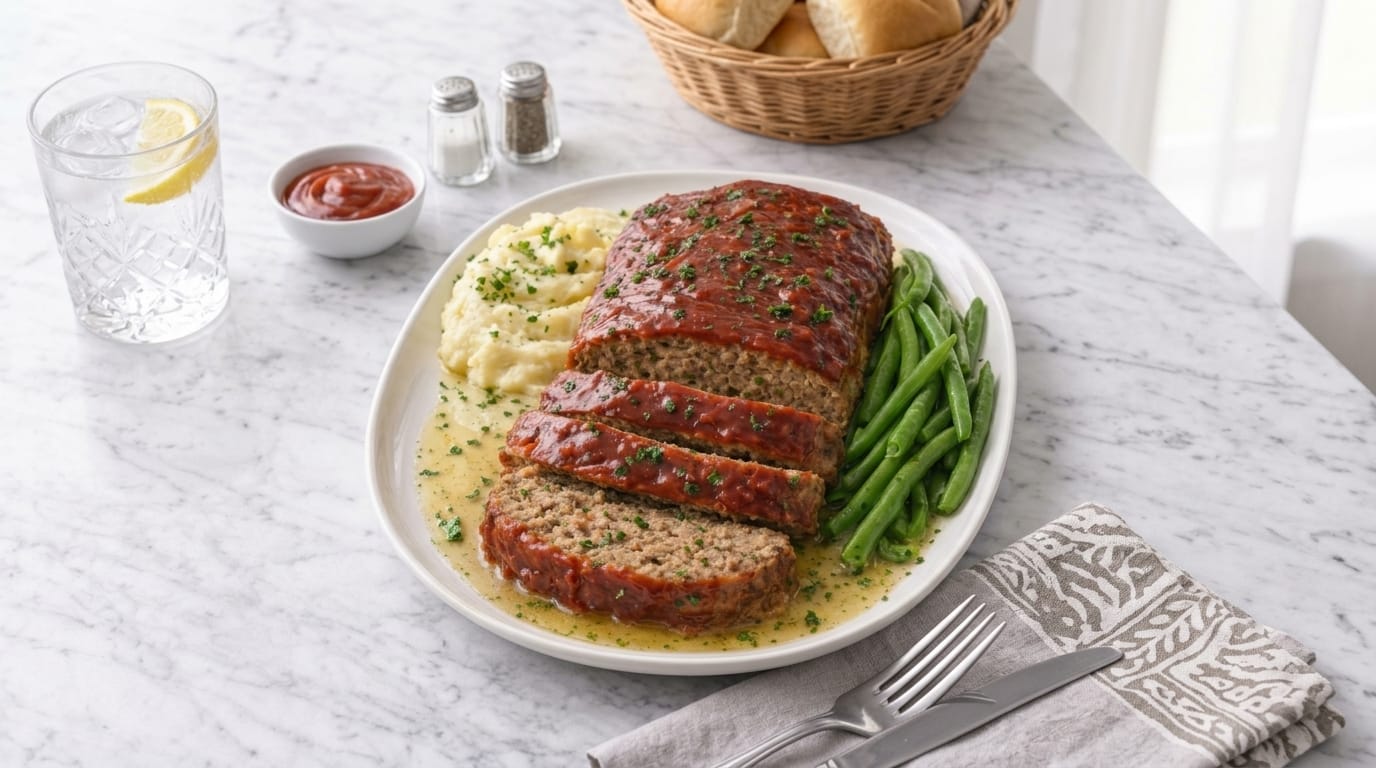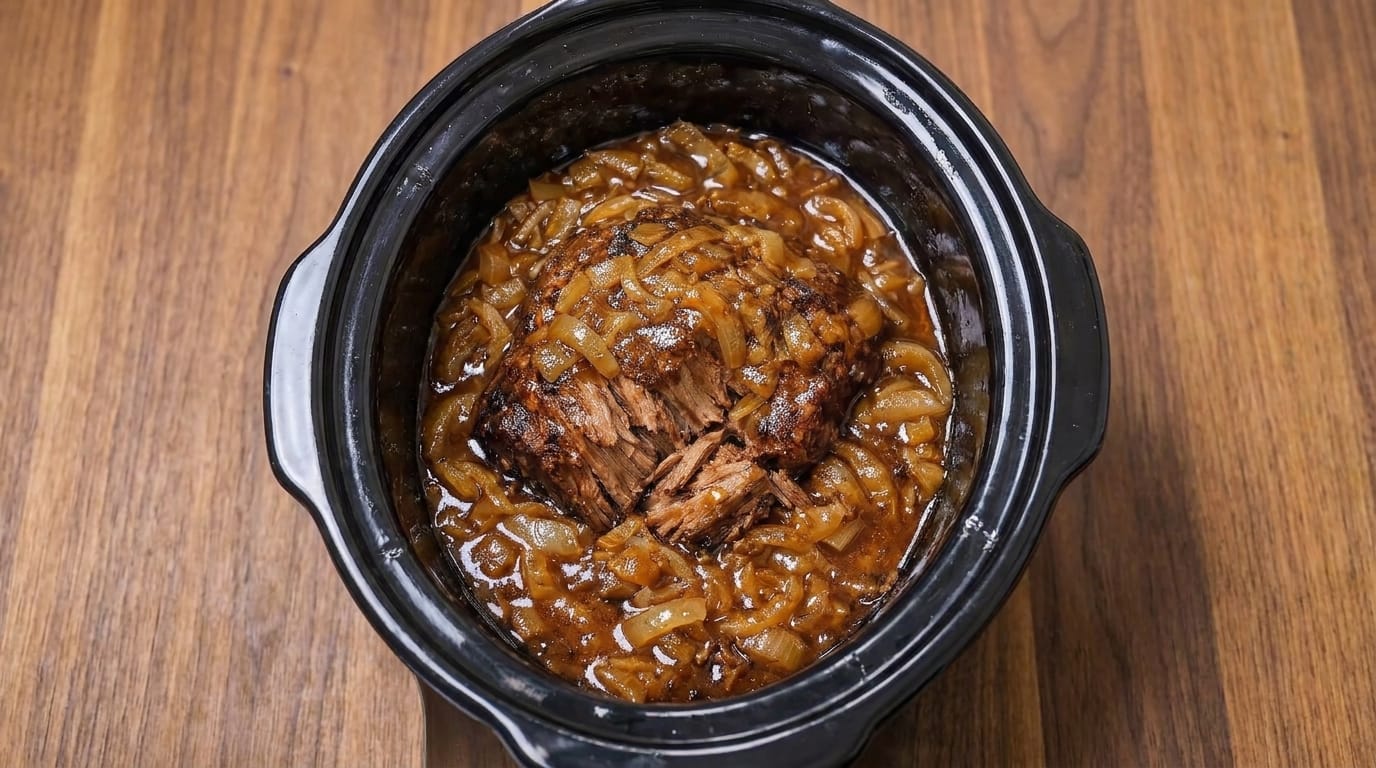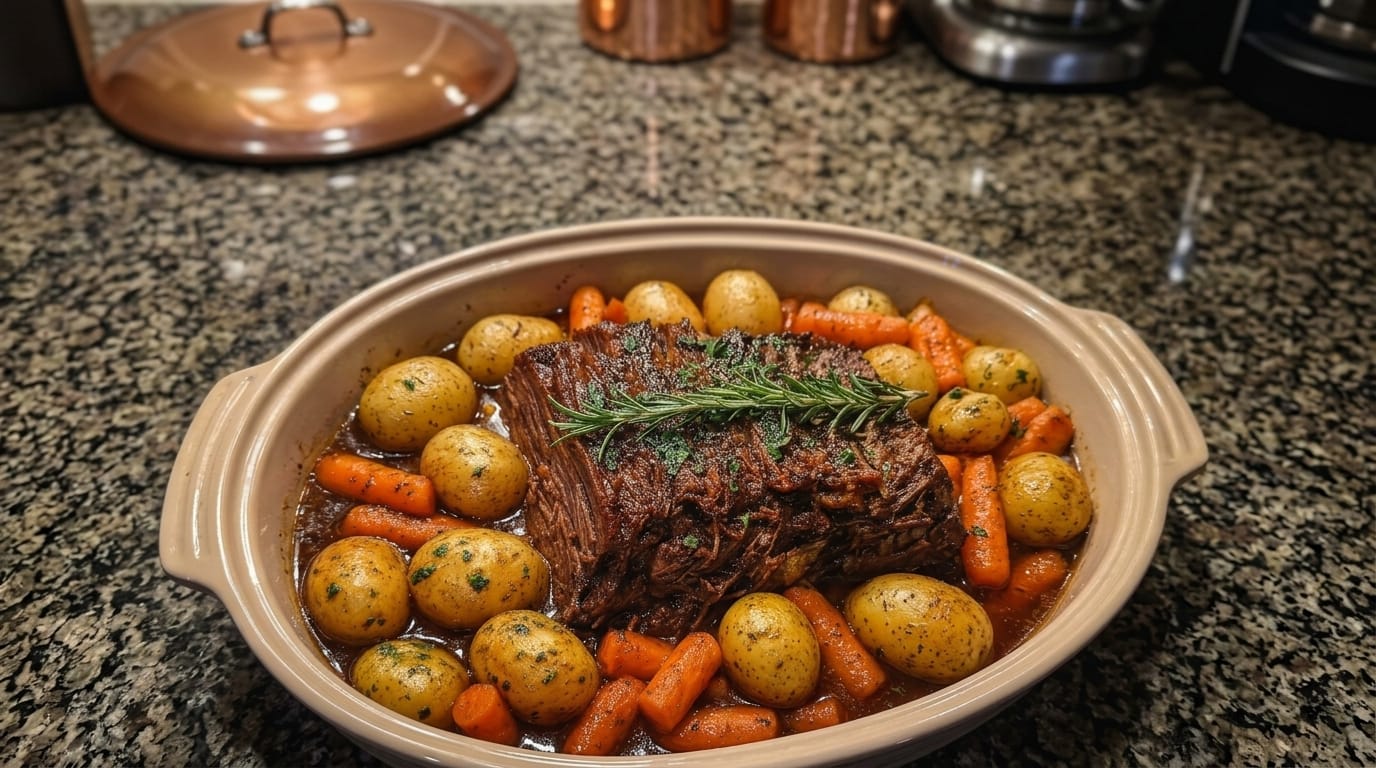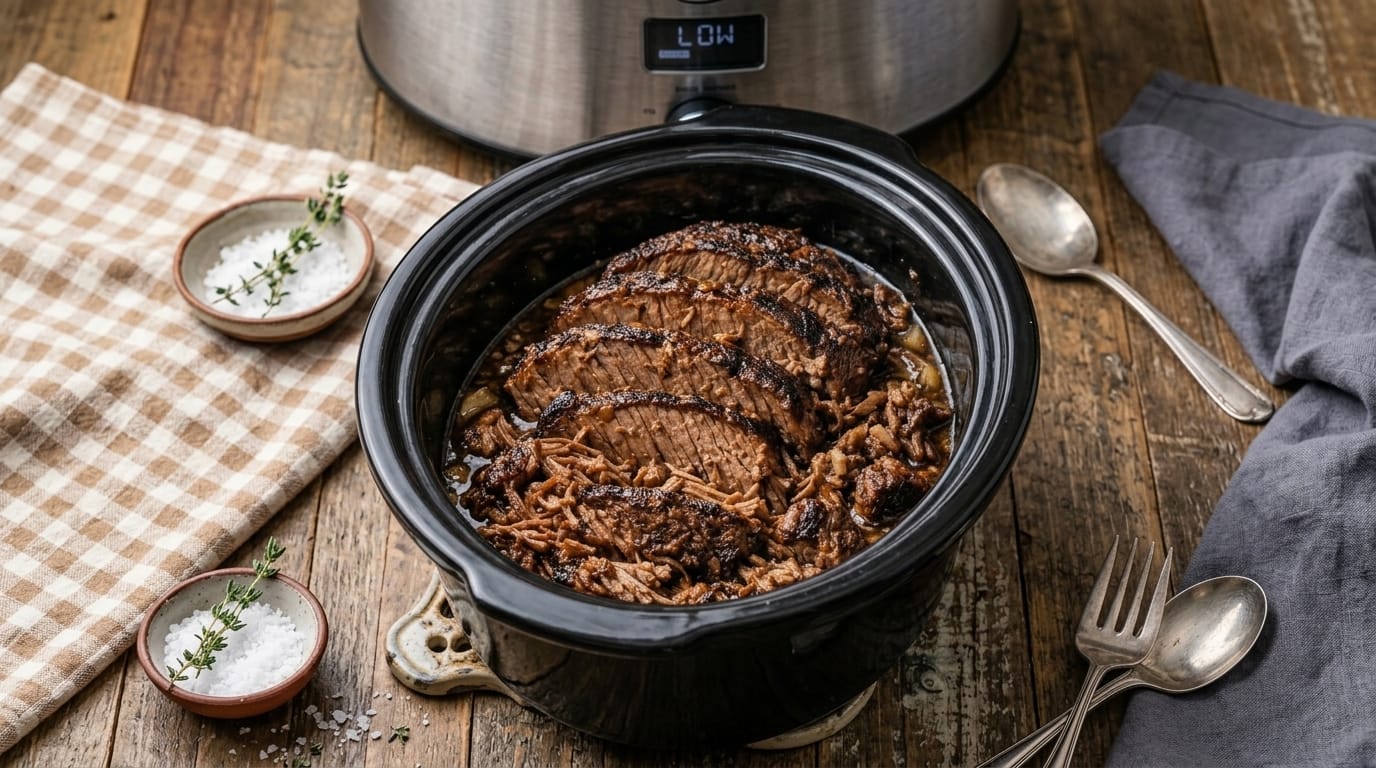
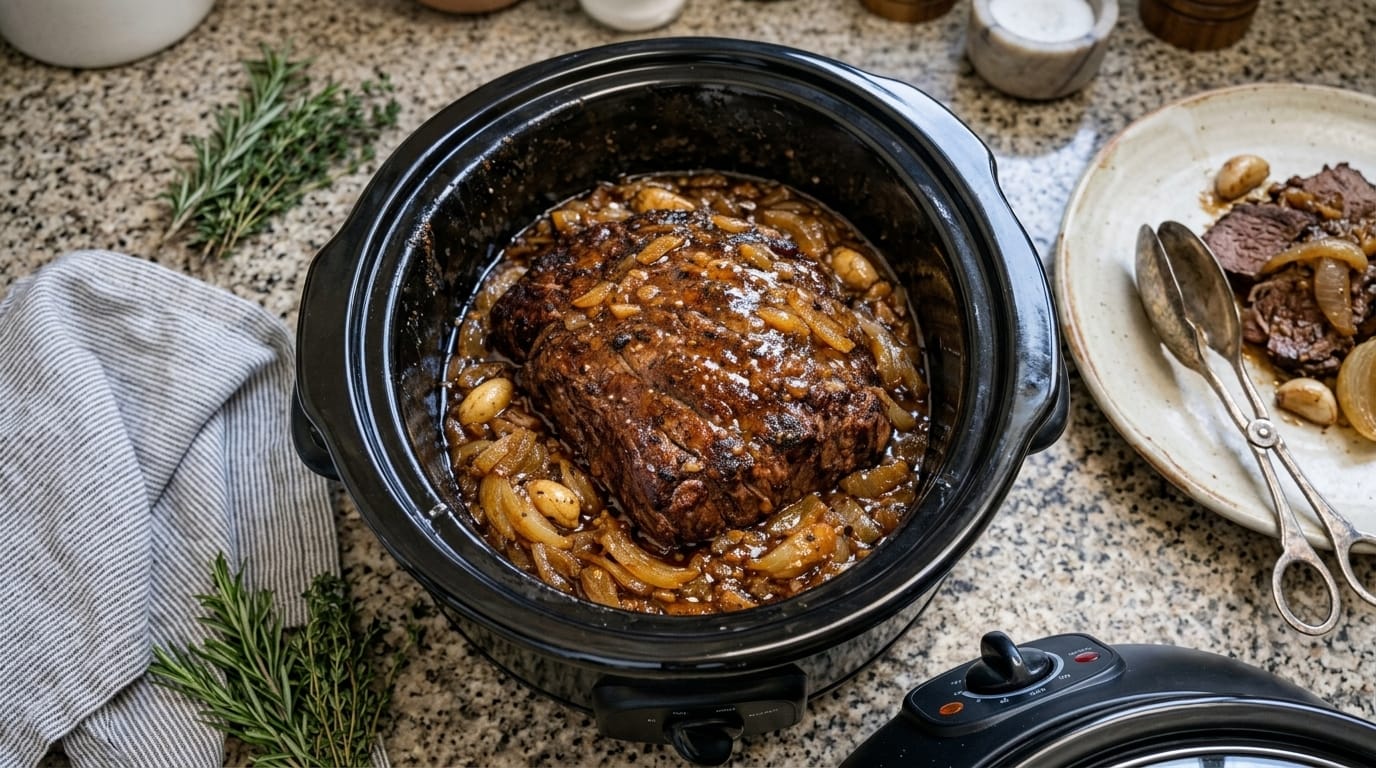
This Slow Cooker Garlic Butter Pot Roast is the ultimate comfort food recipe featuring a juicy, tender beef roast slowly cooked until it practically falls apart. The image shows a beautifully browned beef roast surrounded by caramelized onions and a rich, glossy garlic-infused cooking sauce. The slow cooking process creates incredibly flavorful meat with a deep roasted crust and a savory gravy-like sauce that makes every bite unforgettable.
Perfect for Sunday family dinners, holiday gatherings, or cozy weeknight meals, this recipe transforms a simple cut of beef into a restaurant-quality dish with minimal effort. The combination of garlic, butter, onions, herbs, and slow-cooked beef creates a classic homemade meal that fills your kitchen with an amazing aroma.
Why You’ll Love This Slow Cooker Garlic Butter Pot Roast
There are many reasons this pot roast becomes a family favorite:
- The beef becomes incredibly tender and juicy
- The garlic butter sauce adds rich, savory flavor
- Caramelized onions create natural sweetness
- The slow cooker does most of the work
- It pairs perfectly with mashed potatoes and vegetables
- Leftovers taste even better the next day
The secret to a great pot roast is patience. Cooking the beef slowly allows the tough fibers to break down, creating meat that is tender enough to shred with a fork.
Ingredients
For the Beef Roast
- 4–5 pounds chuck roast or beef shoulder roast
- 2 tablespoons olive oil
- 2 teaspoons kosher salt
- 1½ teaspoons black pepper
- 2 teaspoons garlic powder
- 1 teaspoon onion powder
- 1 teaspoon smoked paprika
- 1 teaspoon dried thyme
- 1 teaspoon dried rosemary
Garlic Butter Sauce
- 6 tablespoons unsalted butter
- 8 cloves garlic, minced
- 2 large yellow onions, sliced
- 2 cups beef broth
- 2 tablespoons Worcestershire sauce
- 1 tablespoon soy sauce
- 1 tablespoon tomato paste
- 1 teaspoon Dijon mustard
- 2 bay leaves
- 2 sprigs fresh rosemary
- 3 sprigs fresh thyme
Optional Vegetables
- 4 large carrots, chopped
- 1½ pounds baby potatoes
- 3 celery stalks, sliced
- Fresh parsley for garnish
How to Make Slow Cooker Garlic Butter Pot Roast
Step 1: Prepare the Roast
Remove the beef roast from the refrigerator about 30 minutes before cooking. Allowing the meat to come closer to room temperature helps it cook more evenly.
Pat the roast completely dry using paper towels.
Season all sides generously with:
- Salt
- Black pepper
- Garlic powder
- Onion powder
- Smoked paprika
- Thyme
- Rosemary
Make sure the seasoning covers the entire surface because this creates the flavor foundation for the finished roast.
Step 2: Sear the Beef for Maximum Flavor
Heat olive oil in a large skillet over medium-high heat.
Place the seasoned roast into the hot pan.
Sear each side for about:
3–5 minutes per side
until a deep golden-brown crust forms.
This step is extremely important because browning creates rich roasted flavors through caramelization. The slow cooker will make the meat tender, but searing gives it that incredible steakhouse-style taste.
Transfer the browned roast into the slow cooker.
Step 3: Cook the Garlic Butter Onions
Using the same skillet, reduce the heat to medium.
Add butter and allow it to melt.
Add sliced onions and cook for:
5–8 minutes
until they become soft and lightly golden.
Add minced garlic and cook for another:
30 seconds
until fragrant.
The onions absorb the leftover beef flavor from the skillet, creating an incredibly flavorful base for the sauce.
Step 4: Build the Slow Cooker Sauce
Add the onion and garlic butter mixture over the roast.
Pour in:
- Beef broth
- Worcestershire sauce
- Soy sauce
- Tomato paste
- Dijon mustard
Add:
- Bay leaves
- Fresh rosemary
- Fresh thyme
The liquid should come about halfway up the roast. The beef will release additional juices as it cooks, creating a rich natural gravy.
Step 5: Slow Cook Until Tender
Cover the slow cooker with the lid.
Cook:
Low Setting:
8–10 hours
or
High Setting:
5–6 hours
The roast is ready when:
- A fork easily slides into the meat
- The beef pulls apart easily
- The sauce becomes rich and flavorful
Avoid opening the slow cooker too often because heat escapes and increases cooking time.
Step 6: Add Vegetables (Optional)
If adding potatoes, carrots, and celery, place them around the roast before cooking.
The vegetables will absorb the garlic butter sauce and become tender and flavorful.
For firmer vegetables, add them halfway through cooking instead.
Step 7: Make the Final Gravy
Once the roast is finished, carefully remove the beef and place it on a serving board.
Let it rest for:
10–15 minutes
before slicing or shredding.
For thicker gravy:
Mix:
- 2 tablespoons cornstarch
- 3 tablespoons cold water
Stir into the slow cooker juices.
Cook on high for another:
10–15 minutes
until the sauce thickens.
Serving Suggestions
This garlic butter pot roast is delicious served with classic comfort food sides.
Creamy Mashed Potatoes
The buttery potatoes soak up the rich garlic sauce perfectly.
Roasted Vegetables
Serve with:
- Green beans
- Broccoli
- Carrots
- Brussels sprouts
for a balanced meal.
Dinner Rolls
Soft bread is perfect for soaking up every drop of the flavorful gravy.
Egg Noodles
The rich sauce turns simple noodles into a delicious complete meal.
Expert Tips for the Best Pot Roast
Choose the Right Cut of Beef
Chuck roast is the best choice because it contains enough marbling and connective tissue to become tender during slow cooking.
Other options:
- Shoulder roast
- Bottom round roast
- Brisket
Always Sear Before Slow Cooking
While you can cook the roast without searing, browning adds a much deeper flavor.
The caramelized crust creates the foundation of the final dish.
Do Not Rush the Cooking Time
Pot roast becomes tender because collagen slowly breaks down during cooking.
If the meat feels tough, it usually needs more time.
Continue cooking until it easily pulls apart.
Let the Meat Rest
Resting allows the juices to redistribute throughout the roast, making every slice more tender and flavorful.
Storage Instructions
Store leftovers in an airtight container with some of the gravy.
Refrigerate for:
3–4 days
The flavor often improves overnight as the beef continues absorbing the sauce.
Freezing Instructions
Allow the roast and gravy to cool completely.
Place in freezer-safe containers.
Freeze for up to:
3 months
Thaw overnight in the refrigerator before reheating.
Reheating Instructions
For best results:
Stovetop:
Heat gently with extra broth or gravy.
Microwave:
Warm in short intervals while covering to prevent drying.
Final Thoughts
This Slow Cooker Garlic Butter Pot Roast is everything a comfort meal should be: tender beef, rich garlic butter flavor, sweet caramelized onions, and a delicious homemade sauce that brings everything together.
With simple ingredients and a slow cooker doing most of the work, this recipe is perfect for busy families who still want a warm, homemade dinner. Whether served for a special occasion or a relaxing weekend meal, this pot roast delivers incredible flavor that everyone will love.