
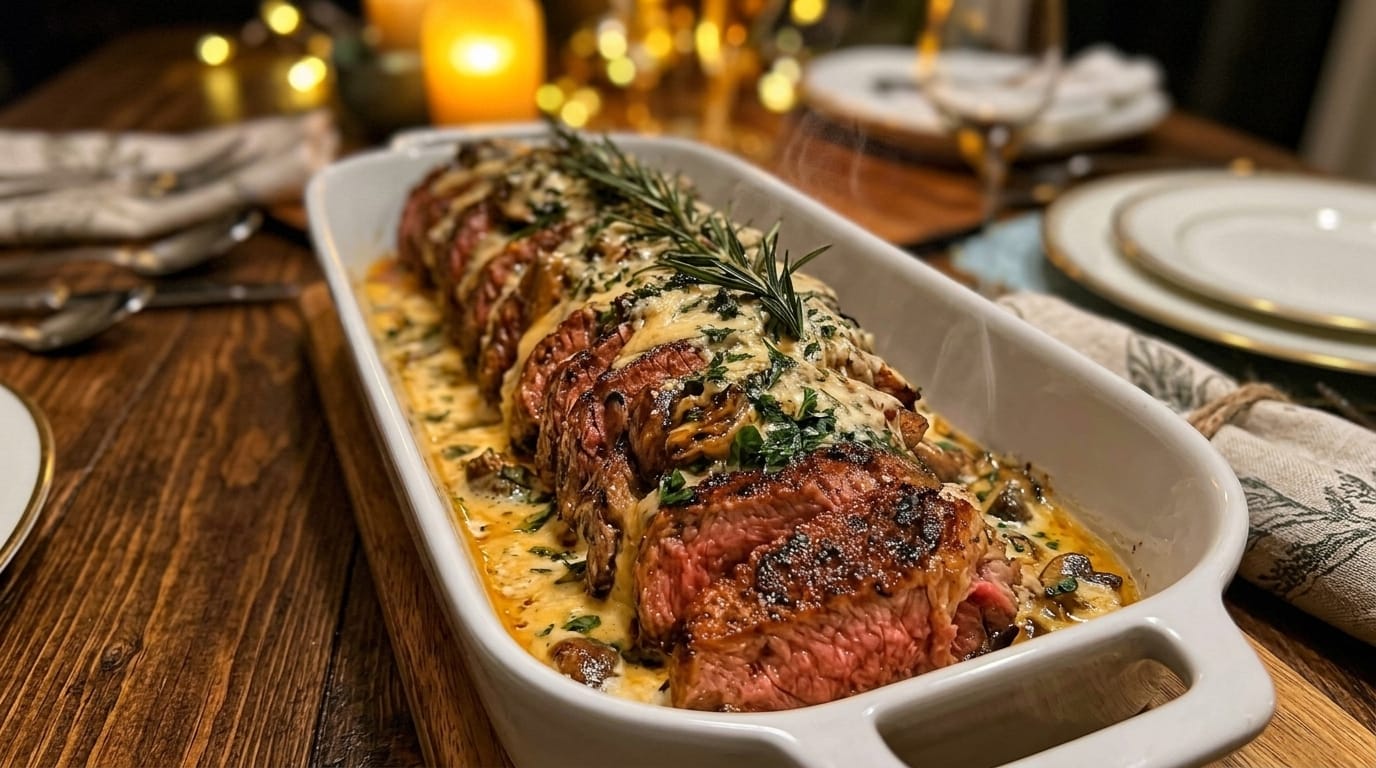
There is something timeless and comforting about a beautifully Herb-Roasted Chicken. With crisp golden skin, juicy meat, fresh garlic, butter, lemon, rosemary, thyme, and parsley, this classic roast chicken is simple enough for a family dinner but impressive enough to serve for holidays, Sunday lunch, or special occasions.
The secret to an excellent roast chicken is not complicated seasoning—it is good technique. Drying the chicken thoroughly helps the skin become crisp, while rubbing herb butter both underneath and over the skin adds flavor directly to the meat. Roasting at a fairly high temperature creates beautiful browning, and allowing the chicken to rest before carving keeps the juices inside.
This recipe also creates flavorful pan juices that can be spooned over the chicken or turned into an easy gravy. Serve it with roasted potatoes, carrots, green beans, mashed potatoes, or a fresh salad for a complete homemade dinner.
Why You’ll Love This Herb-Roasted Chicken
This recipe uses simple ingredients to create a chicken that tastes rich, savory, and wonderfully aromatic.
Fresh rosemary and thyme add classic roasted-herb flavor, while garlic and lemon brighten the chicken without overpowering it. Butter keeps the meat flavorful and encourages the skin to become beautifully golden.
Another advantage is versatility. You can roast vegetables underneath or around the chicken so they absorb the buttery herb juices while cooking.
It is also a great recipe for leftovers. Extra chicken can be used in sandwiches, salads, soups, pasta, wraps, casseroles, or chicken pot pie.
Ingredients
For the Chicken
- 1 whole chicken, about 4–5 pounds
- 2 tablespoons olive oil
- 1 teaspoon kosher salt
- ½ teaspoon freshly ground black pepper
- 1 teaspoon garlic powder
- ½ teaspoon onion powder
- ½ teaspoon paprika
For the Garlic Herb Butter
- 6 tablespoons unsalted butter, softened
- 5 garlic cloves, finely minced
- 1 tablespoon finely chopped fresh rosemary
- 1 tablespoon fresh thyme leaves
- 2 tablespoons chopped fresh parsley
- 1 teaspoon finely grated lemon zest
- 1 tablespoon fresh lemon juice
- ½ teaspoon kosher salt
- ¼ teaspoon black pepper
For the Cavity
- 1 lemon, halved
- ½ yellow onion, quartered
- 3 garlic cloves, lightly crushed
- 2 sprigs fresh rosemary
- 4 sprigs fresh thyme
Optional Vegetables
- 1 pound baby potatoes, halved
- 3 carrots, cut into large pieces
- 1 onion, cut into wedges
- 1 tablespoon olive oil
- Salt and black pepper to taste
How to Make Herb-Roasted Chicken
1. Preheat the Oven
Preheat your oven to 425°F (220°C).
Place a roasting rack inside a roasting pan, or use a large oven-safe skillet.
If you are adding potatoes, carrots, and onions, arrange them around the chicken rather than directly underneath it whenever possible so hot air can circulate.
2. Prepare the Chicken
Remove any giblets from the cavity of the chicken if included.
Pat the entire chicken extremely dry with paper towels, including the cavity.
This is one of the most important steps for achieving crisp skin.
Excess moisture creates steam in the oven, which can prevent the skin from browning properly.
3. Make the Garlic Herb Butter
In a small bowl, combine softened butter, minced garlic, rosemary, thyme, parsley, lemon zest, lemon juice, salt, and black pepper.
Mix until evenly combined.
The butter should be soft enough to spread easily but not melted.
4. Loosen the Skin
Carefully slide your fingers underneath the skin covering the chicken breasts.
Gently separate the skin from the meat without tearing it.
Spread approximately one-third of the garlic herb butter underneath the skin.
This adds flavor directly to the breast meat and helps keep it juicy.
5. Season the Outside
Rub olive oil over the entire chicken.
Spread the remaining herb butter over the breast, legs, thighs, and sides.
Sprinkle evenly with salt, black pepper, garlic powder, onion powder, and paprika.
The paprika helps give the chicken an especially beautiful golden color.
6. Fill the Chicken Cavity
Place the lemon halves, onion, crushed garlic, rosemary, and thyme inside the chicken cavity.
Do not pack the cavity too tightly.
These aromatics perfume the chicken from the inside while it roasts.
7. Tie the Legs
Use kitchen twine to loosely tie the legs together.
Tuck the wing tips underneath the chicken to help prevent them from burning.
Trussing is not absolutely necessary, but it gives the finished chicken a neater appearance and can help it cook more evenly.
8. Prepare the Vegetables
If using potatoes, carrots, and onion, place them in a bowl.
Drizzle with olive oil and season with salt and black pepper.
Arrange them around the chicken.
The vegetables will roast in the herb butter and flavorful chicken juices.
9. Begin Roasting
Place the chicken in the preheated oven.
Roast at 425°F (220°C) for approximately 20 minutes.
This initial high heat encourages the skin to begin browning.
10. Reduce the Temperature
After 20 minutes, reduce the oven temperature to 375°F (190°C).
Continue roasting for approximately 45–65 minutes, depending on the size of your chicken.
A 4-pound chicken will usually cook faster than a 5-pound chicken.
Always judge doneness by internal temperature rather than relying only on time.
11. Baste the Chicken
About halfway through roasting, carefully spoon some of the buttery pan juices over the chicken.
You can baste it once or twice, but avoid opening the oven repeatedly because heat escapes each time.
If the top becomes too dark before the chicken is cooked through, loosely cover it with foil.
12. Check for Doneness
Insert an instant-read thermometer into the thickest part of the thigh without touching the bone.
The chicken should reach at least 165°F (74°C).
Also check the thickest part of the breast.
Once the chicken reaches a safe temperature and the juices run clear, remove it from the oven.
13. Rest the Chicken
Transfer the roasted chicken to a cutting board.
Loosely cover with foil.
Let it rest for approximately 15–20 minutes before carving.
Resting is essential because it allows the juices to redistribute through the meat instead of spilling out immediately when you cut into it.
14. Finish the Vegetables
If the chicken is done before the vegetables are fully tender, remove the chicken and return the vegetables to the oven for another 10–15 minutes.
They should be tender inside with golden, caramelized edges.
15. Carve and Serve
Remove the kitchen twine and discard the aromatics from the cavity.
Carve the chicken into breasts, thighs, drumsticks, and wings.
Arrange everything on a serving platter.
Spoon the warm pan juices over the chicken and vegetables.
Finish with fresh parsley and lemon wedges.
What to Serve With Herb-Roasted Chicken
Roasted potatoes are one of the most natural side dishes because they can cook alongside the chicken and absorb its flavorful juices.
Creamy mashed potatoes are another classic option, especially if you make a quick gravy from the pan drippings.
For vegetables, serve roasted carrots, green beans, asparagus, Brussels sprouts, broccoli, or glazed parsnips.
A fresh green salad with lemon vinaigrette provides a lighter contrast to the rich roasted chicken.
Warm dinner rolls, crusty bread, or garlic bread are also excellent for soaking up the buttery juices.
Tips for the Best Herb-Roasted Chicken
Dry the chicken thoroughly. This improves browning and helps create crisp skin.
Use softened butter. It spreads more easily under and over the skin.
Season underneath the skin. This puts flavor directly against the meat.
Do not overcrowd the cavity. Aromatics need some room for heat and steam to circulate.
Use a meat thermometer. It is the most reliable way to prevent undercooking or overcooking.
Rest before carving. A 15–20 minute rest makes a noticeable difference in juiciness.
Save the pan juices. They are full of concentrated garlic, herb, butter, and chicken flavor.
Easy Recipe Variations
Lemon Herb Roasted Chicken
Add extra lemon zest to the herb butter and surround the chicken with lemon wedges before roasting.
Garlic Butter Roasted Chicken
Increase the garlic to 8 cloves and add an extra tablespoon of butter.
Mediterranean Herb Chicken
Add oregano and a little basil to the herb mixture. Serve with roasted tomatoes, olives, and potatoes.
Spicy Herb-Roasted Chicken
Add ½ teaspoon crushed red pepper flakes or cayenne to the butter.
Parmesan Herb Chicken
Mix ¼ cup finely grated Parmesan into the herb butter and sprinkle additional Parmesan over the vegetables.
Storage and Reheating
Store leftover Herb-Roasted Chicken in an airtight container in the refrigerator for up to 3–4 days.
For best results, store the meat with a little pan juice to help keep it moist.
Reheat chicken in a 325°F (165°C) oven until warmed through. Cover loosely with foil to prevent excessive drying.
Individual portions can also be reheated in the microwave in short intervals.
Leftover chicken is excellent in sandwiches, salads, pasta dishes, soups, wraps, or casseroles.
Make-Ahead Instructions
The garlic herb butter can be made up to 3 days ahead and refrigerated.
You can also chop the vegetables and prepare the herbs earlier in the day.
For deeper seasoning, prepare and season the chicken several hours before roasting and keep it uncovered in the refrigerator. This can also help dry the skin for better browning.
Remove it from the refrigerator while the oven preheats, then roast according to the recipe.
Final Thoughts
This Herb-Roasted Chicken is a classic dinner built around simple ingredients and reliable cooking techniques. Garlic, butter, rosemary, thyme, parsley, and lemon create incredible flavor while high initial heat gives the skin a beautiful golden finish.
The most important steps are drying the chicken thoroughly, placing herb butter underneath the skin, monitoring the internal temperature, and allowing the bird to rest before carving.
Serve it with crispy roasted potatoes for a comforting Sunday dinner, pair it with vegetables for a lighter meal, or use the leftovers throughout the week. Juicy, aromatic, and beautifully golden, this herb-roasted chicken is the kind of dependable recipe that belongs in every home cook’s collection.