
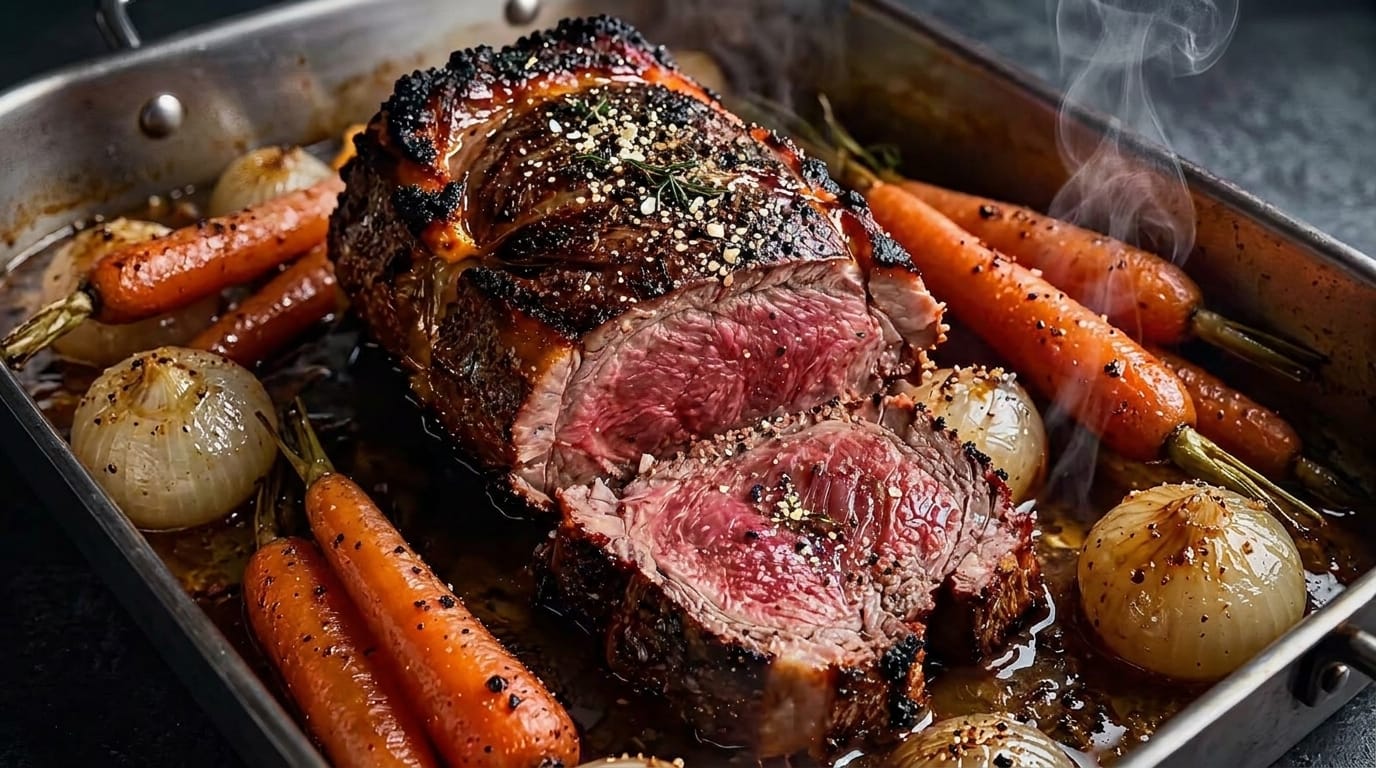
Slow-Roasted Prime Rib Roast is the ultimate centerpiece for a special dinner. This impressive roast delivers a deeply seasoned, beautifully browned exterior with a tender, juicy center and rich beef flavor. The slow-roasting method gives you excellent control over the doneness while allowing the meat to cook gently and evenly.
A garlic and herb crust adds another layer of flavor without overpowering the beef. After roasting, the prime rib rests before being sliced into generous portions and served with the flavorful pan juices. Whether you’re preparing Christmas dinner, a holiday feast, Sunday supper, or an elegant dinner party, this recipe is a true showstopper.
Why You’ll Love This Slow-Roasted Prime Rib Roast
Tender and Juicy
Low-temperature roasting helps the roast cook gently while retaining its natural juices.
Flavorful Garlic Herb Crust
Garlic, rosemary, thyme, and black pepper create a savory crust around the beef.
Restaurant-Quality Results
A final high-heat blast gives the outside a beautiful browned finish.
Perfect for Special Occasions
This roast makes an impressive centerpiece for:
- Christmas dinner
- New Year’s celebrations
- Holiday gatherings
- Sunday dinner
- Dinner parties
- Family celebrations
Ingredients You’ll Need
For the Prime Rib
- 5–6 lb bone-in prime rib roast
- 2 tablespoons olive oil
- 2 tablespoons kosher salt
- 1½ tablespoons freshly ground black pepper
- 1 tablespoon garlic powder
- 1 tablespoon onion powder
- 2 teaspoons smoked paprika
For the Garlic Herb Crust
- 6 garlic cloves, finely minced
- 2 tablespoons fresh rosemary, chopped
- 2 tablespoons fresh thyme leaves
- 2 tablespoons fresh parsley, chopped
- 2 tablespoons Dijon mustard
- 2 tablespoons olive oil
For the Pan Juices
- 1½ cups beef broth
- ½ cup dry red wine
- 1 onion, roughly chopped
- 2 garlic cloves, smashed
- 2 sprigs fresh rosemary
- 3 sprigs fresh thyme
How to Make Slow-Roasted Prime Rib Roast
Step 1: Bring the Roast to Room Temperature
Remove the prime rib from the refrigerator about 1–2 hours before cooking.
Pat the surface thoroughly dry with paper towels.
A drier surface helps create a better crust.
Step 2: Season the Beef
Combine salt, black pepper, garlic powder, onion powder, and smoked paprika.
Rub the seasoning generously over every surface of the roast.
For the best flavor, let the seasoned roast rest uncovered in the refrigerator overnight if possible. Bring it to room temperature before roasting.
Step 3: Prepare the Garlic Herb Mixture
In a small bowl, combine:
- Minced garlic
- Rosemary
- Thyme
- Parsley
- Dijon mustard
- Olive oil
Mix into a thick paste.
Spread the mixture evenly over the exterior of the seasoned roast.
Step 4: Prepare the Roasting Pan
Preheat the oven to:
250°F (120°C)
Place the chopped onion, garlic, rosemary, and thyme in the bottom of a roasting pan.
Pour in the beef broth and red wine.
Place a roasting rack over the pan and position the prime rib on top, bone-side down.
Step 5: Slow Roast the Prime Rib
Place the roast in the oven.
Roast until the center reaches approximately:
120–125°F (49–52°C) for medium-rare
The exact cooking time varies according to the size and shape of the roast, so use an instant-read or probe thermometer rather than relying only on time.
A 5–6 pound roast will often take approximately 3½–5 hours at 250°F.
Step 6: Rest the Roast
Remove the prime rib from the oven.
Transfer it to a cutting board and loosely tent it with foil.
Rest for:
30–45 minutes
This allows the juices to redistribute while giving the roast time to finish cooking slightly.
Step 7: Create the Final Crust
Increase the oven temperature to:
500°F (260°C)
Return the rested roast to the oven and cook for approximately:
5–10 minutes
until the exterior becomes deeply browned and beautifully caramelized.
Watch carefully because the high heat can quickly darken the herb crust.
Step 8: Slice and Serve
Remove the roast from the oven.
If using a bone-in roast, carefully separate the bones before slicing.
Cut the prime rib into thick slices.
Spoon some of the flavorful pan juices over each serving.
Serve immediately.
Tips for the Best Slow-Roasted Prime Rib
Use a Meat Thermometer
Prime rib is too expensive to judge by cooking time alone. Monitor the internal temperature for the most reliable results.
Season Generously
A large roast needs enough seasoning to flavor the exterior and complement the rich beef.
Dry the Surface
Patting the beef dry before seasoning helps create a better browned crust.
Don’t Skip the Rest
Resting is essential for juicy slices and allows the temperature to stabilize.
Sear at the End
The slow roast develops tenderness while the final high-temperature blast creates the beautiful crust.
Slice Against the Grain
This makes each bite more tender and easier to chew.
What to Serve With Slow-Roasted Prime Rib
Creamy Horseradish Sauce
The sharp flavor provides a perfect contrast to rich beef.
Garlic Mashed Potatoes
Creamy potatoes are ideal with the pan juices.
Yorkshire Pudding
A classic pairing for a traditional prime rib dinner.
Roasted Asparagus
Adds freshness and color to the plate.
Creamed Spinach
A rich steakhouse-inspired side.
Roasted Brussels Sprouts
Their caramelized edges complement the beef beautifully.
Dinner Rolls
Perfect for soaking up the flavorful juices.
How to Store Leftover Prime Rib
Place leftover beef in an airtight container and refrigerate for up to 4 days.
For best results, reheat gently rather than cooking the slices at high heat.
Warm individual slices in a covered skillet with a small amount of beef broth or pan juices.
You can also enjoy leftover prime rib cold or at room temperature in sandwiches.
For longer storage, wrap tightly and freeze for up to 3 months.
Delicious Ways to Use Leftover Prime Rib
Prime Rib Sandwiches
Layer thinly sliced beef with horseradish sauce and caramelized onions.
Steak and Eggs
Serve slices alongside eggs and crispy potatoes for an indulgent breakfast.
Prime Rib French Dip
Pile thin slices onto crusty rolls and serve with warm au jus.
Beef Hash
Dice leftover roast with potatoes, onions, and peppers.
Creamy Beef Pasta
Add thinly sliced prime rib to a creamy mushroom pasta.
Frequently Asked Questions
What temperature should prime rib be cooked to?
For medium-rare, remove the roast from the slow oven around 120–125°F, then allow it to rest before the final high-heat browning. Always use a thermometer and account for carryover cooking.
Should prime rib be covered while roasting?
No. Leaving it uncovered helps the exterior develop a flavorful crust.
Can I prepare the roast the day before?
Yes. Seasoning the roast and leaving it uncovered in the refrigerator overnight can improve flavor and help dry the surface for better browning.
Can I use a boneless prime rib?
Yes. A boneless roast works well, though cooking time will vary based on its size and shape.
Why slow roast prime rib?
The low temperature promotes more even cooking from edge to center, making it easier to achieve a tender roast with the desired level of doneness.
Final Thoughts
This Slow-Roasted Prime Rib Roast is a spectacular centerpiece built around simple ingredients and careful cooking. The low-and-slow roasting method produces tender, juicy beef, while the garlic herb crust and final high-heat finish create an irresistible exterior.
Serve thick slices with creamy mashed potatoes, roasted vegetables, horseradish sauce, and plenty of rich pan juices for an unforgettable special-occasion dinner.