
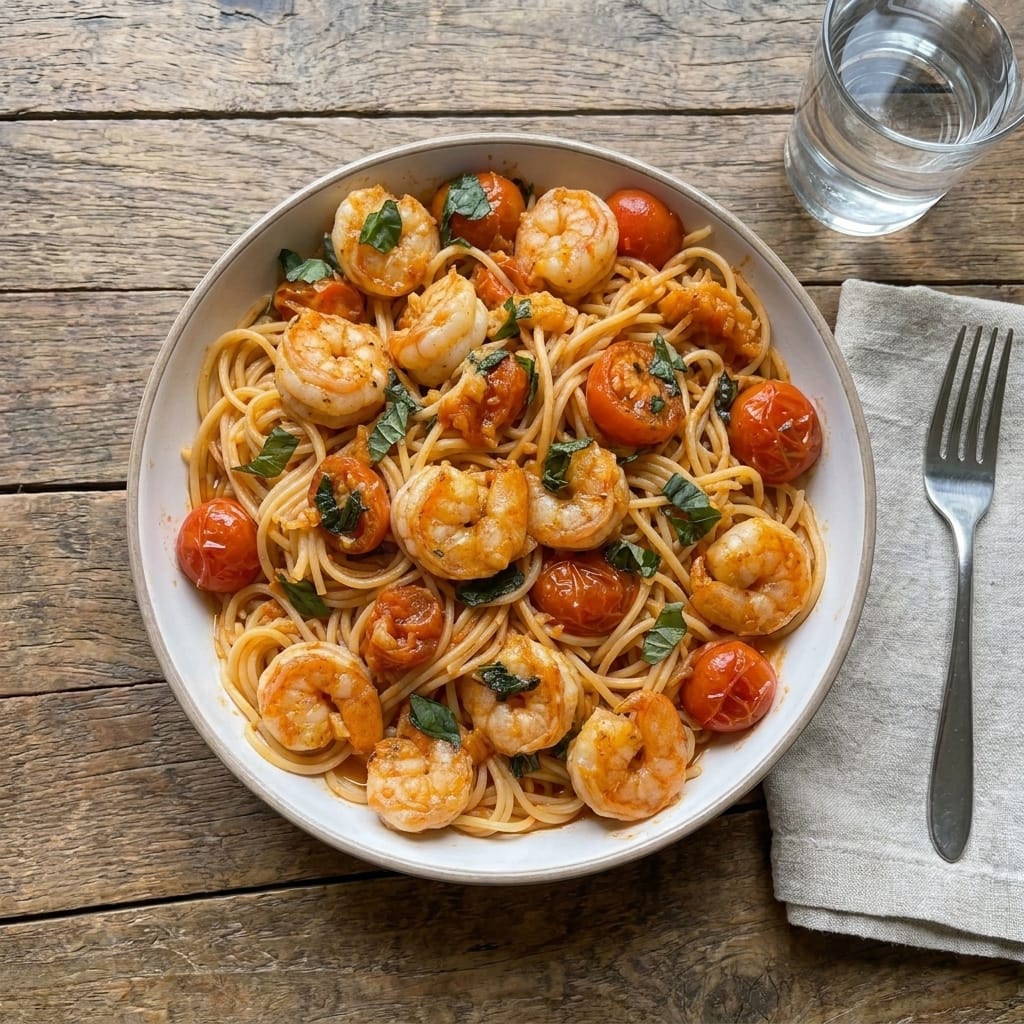
If you are craving a seafood pasta that feels restaurant-worthy but is still easy enough for a weeknight dinner, this Saucy Seafood Tomato Pasta with Garlic Shrimp is an excellent recipe to make. Tender pasta is tossed with juicy garlic shrimp, tomatoes, herbs, white wine or broth, and a rich tomato sauce that clings beautifully to every strand.
The shrimp cooks quickly in garlic butter and olive oil before being removed from the skillet, allowing you to build the sauce in the same pan without overcooking the seafood. Tomatoes, garlic, tomato paste, herbs, and a splash of pasta water create a glossy, deeply savory sauce, while fresh parsley and lemon brighten everything at the end.
This recipe is ideal for date nights, family dinners, special occasions, or whenever you want a seafood pasta that looks impressive without requiring complicated techniques.
Why You’ll Love This Saucy Seafood Tomato Pasta with Garlic Shrimp
The shrimp cooks in just a few minutes.
Fresh garlic and butter give the seafood plenty of flavor.
Tomato paste and crushed tomatoes create a rich sauce without needing hours of simmering.
Pasta water helps the sauce cling beautifully to the noodles.
The recipe is easy to customize with scallops, mussels, calamari, salmon, or additional shrimp.
It also pairs beautifully with garlic bread and a simple green salad.
Ingredients
For the Pasta
- 12 ounces linguine, spaghetti, fettuccine, or your favorite pasta
- 1 tablespoon kosher salt, for the pasta water
- 1 cup reserved pasta water
For the Garlic Shrimp
- 1½ pounds large shrimp, peeled and deveined
- 1 tablespoon olive oil
- 2 tablespoons unsalted butter
- 4 garlic cloves, finely minced
- ½ teaspoon kosher salt
- ½ teaspoon freshly ground black pepper
- ½ teaspoon smoked paprika
- ½ teaspoon garlic powder
- ¼ teaspoon red pepper flakes, optional
- 1 tablespoon fresh lemon juice
For the Tomato Seafood Sauce
- 2 tablespoons olive oil
- 1 small yellow onion, finely diced
- 5 garlic cloves, finely minced
- 2 tablespoons tomato paste
- 1 can crushed tomatoes, 28 ounces
- ½ cup dry white wine or seafood/chicken broth
- 1 teaspoon Worcestershire sauce, optional
- 1 teaspoon Italian seasoning
- 1 teaspoon dried oregano
- ½ teaspoon dried basil
- ½ teaspoon smoked paprika
- ¼ teaspoon red pepper flakes, or more to taste
- ½ teaspoon kosher salt, or to taste
- ½ teaspoon freshly ground black pepper
- 1 teaspoon sugar or honey, optional
- 2 tablespoons unsalted butter
Optional Additional Seafood
- ½ pound sea scallops
- ½ pound calamari rings
- 1 pound mussels, cleaned
- ½ pound cooked crab meat
For Finishing
- ¼ cup chopped fresh parsley
- 2 tablespoons chopped fresh basil
- 1–2 tablespoons fresh lemon juice
- Extra virgin olive oil
- Freshly cracked black pepper
- Red pepper flakes
- Freshly grated Parmesan, optional
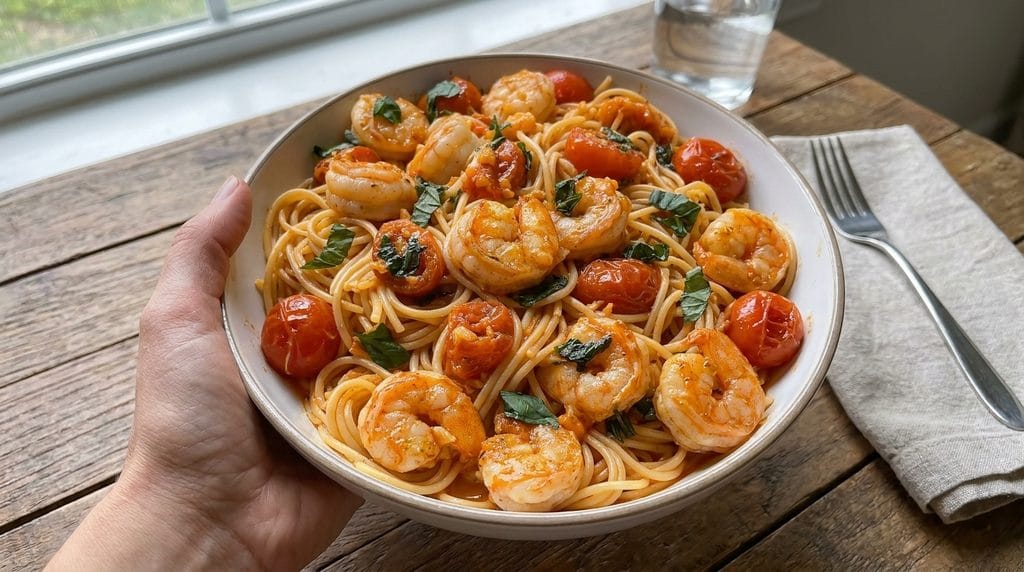
How to Make Saucy Seafood Tomato Pasta with Garlic Shrimp
1. Prepare the Shrimp
Pat the shrimp thoroughly dry with paper towels.
Removing excess moisture helps the shrimp sear rather than steam.
2. Season the Shrimp
Season with:
- Salt
- Black pepper
- Smoked paprika
- Garlic powder
- Red pepper flakes, if using
Toss gently until evenly coated.
3. Bring the Pasta Water to a Boil
Fill a large pot with water.
Season generously with salt.
Bring to a rolling boil.
4. Cook the Pasta
Add the pasta.
Cook until approximately 1 minute shy of al dente, according to package instructions.
The pasta will finish cooking in the tomato sauce.
5. Reserve Pasta Water
Before draining, scoop out approximately 1 cup pasta water.
Set it aside.
6. Drain the Pasta
Drain the pasta.
Do not rinse it.
The starch on the surface helps the sauce cling.
7. Heat the Shrimp Skillet
While the pasta cooks, place a large deep skillet over medium-high heat.
Add the olive oil and butter.
8. Add the Shrimp
Arrange the shrimp in a single layer.
Cook in batches if necessary.
9. Sear the First Side
Cook for approximately 1½–2 minutes.
The shrimp should begin turning pink and lightly golden.
10. Flip the Shrimp
Turn each shrimp.
11. Add Garlic
Add the minced garlic around the shrimp.
Cook for approximately 30–60 seconds.
12. Finish the Shrimp
Continue cooking for another 1–2 minutes, just until the shrimp are opaque and cooked through.
Shrimp should reach 145°F (63°C) if checking with a thermometer.
13. Add Lemon
Drizzle with fresh lemon juice.
Toss briefly.
14. Remove the Shrimp
Transfer the shrimp to a plate.
Do not leave them in the skillet while the tomato sauce simmers or they may become rubbery.
15. Add Olive Oil
Reduce the skillet heat to medium.
Add another 2 tablespoons olive oil.
16. Cook the Onion
Add the diced onion.
Cook for approximately 4–5 minutes, until softened.
17. Add Garlic
Add the remaining garlic.
Cook for approximately 30 seconds.
18. Add Tomato Paste
Stir in the tomato paste.
Cook for approximately 1–2 minutes.
The paste should darken slightly.
19. Deglaze the Skillet
Pour in the white wine or broth.
Scrape up the browned shrimp and garlic bits from the bottom of the pan.
20. Reduce
Simmer for approximately 2–3 minutes.
If using wine, allow some of the alcohol aroma to cook off.
21. Add Crushed Tomatoes
Pour in the crushed tomatoes.
Stir well.
22. Season the Sauce
Add:
- Worcestershire sauce
- Italian seasoning
- Oregano
- Basil
- Smoked paprika
- Red pepper flakes
- Salt
- Black pepper
23. Add Optional Sweetness
If your tomatoes are very acidic, add a teaspoon of sugar or honey.
This is optional.
24. Simmer the Tomato Sauce
Reduce the heat to medium-low.
Simmer for approximately 10–15 minutes, stirring occasionally.
The sauce should become slightly thicker and richer.
25. Add Additional Seafood if Using
If adding other seafood, time it carefully.
For scallops, sear separately and add near the end.
For calamari, cook briefly.
For mussels, add to the simmering sauce, cover, and cook until the shells open.
Discard any mussels that remain closed after cooking.
26. Add Butter
Stir in 2 tablespoons butter.
This gives the tomato sauce a smoother, glossier finish.
27. Add the Pasta
Transfer the drained pasta directly into the skillet.
28. Toss
Use tongs to toss the pasta through the tomato sauce.
29. Add Pasta Water
Add approximately ¼ cup reserved pasta water.
Toss vigorously.
30. Adjust the Sauce
Add more pasta water, a few tablespoons at a time, until the sauce coats the noodles without becoming watery.
31. Finish Cooking the Pasta
Cook for approximately 1–2 minutes in the sauce.
The pasta should become fully al dente.
32. Return the Shrimp
Add the garlic shrimp and any juices from the plate back to the skillet.
33. Toss Gently
Cook for approximately 30–60 seconds, just long enough to warm the shrimp.
Do not simmer them for several minutes.
34. Add Fresh Herbs
Stir in:
- Parsley
- Basil
35. Add Lemon Juice
Finish with fresh lemon juice.
36. Taste and Adjust
Taste the pasta.
Adjust with:
- Salt
- Black pepper
- Red pepper flakes
- Lemon juice
37. Add Olive Oil
Drizzle with a small amount of extra virgin olive oil.
38. Serve
Divide the pasta between bowls.
Arrange plenty of garlic shrimp over each serving.
39. Garnish
Finish with:
- Fresh parsley
- Basil
- Black pepper
- Red pepper flakes
Add Parmesan if desired, although many seafood pasta preparations are also excellent without cheese.
What to Serve With Saucy Seafood Tomato Pasta
This pasta pairs especially well with bread and lighter vegetables.
Try:
- Cheesy garlic bread
- Garlic herb bread
- Crusty Italian bread
- Focaccia
- Breadsticks
For vegetables and salads:
- Caesar salad
- Arugula salad
- Garden salad
- Garlic asparagus
- Roasted broccoli
- Green beans
- Roasted zucchini
For a special seafood dinner, add:
- Calamari
- Garlic mussels
- Crab cakes
- Grilled scallops
Tips for the Best Seafood Tomato Pasta
Dry the Shrimp
Wet shrimp will steam rather than sear.
Don’t Overcook Seafood
Shrimp becomes tough very quickly.
Cook it first, remove it, and return it only at the end.
Cook Pasta Slightly Under
The pasta should finish cooking in the tomato sauce.
Save Pasta Water
The starch is essential for helping the sauce cling to the noodles.
Cook Tomato Paste
Letting tomato paste cook for a minute or two develops deeper flavor.
Use a Wide Skillet
A large skillet makes it easier to toss the pasta with the sauce.
Add Garlic Carefully
Garlic burns quickly.
Cook it only until fragrant.
Finish With Lemon
Fresh lemon keeps a rich tomato seafood sauce tasting bright.
Easy Recipe Variations
Spicy Garlic Shrimp Tomato Pasta
Increase:
- Red pepper flakes
- Chili oil
- Fresh chili peppers
Creamy Seafood Tomato Pasta
Add ½–1 cup heavy cream to the tomato sauce after it has simmered.
Let it cook gently for several minutes before adding the pasta.
Seafood Marinara Pasta
Add:
- Shrimp
- Mussels
- Scallops
- Calamari
Keep the seafood cooking times separate so nothing becomes overcooked.
Garlic Butter Shrimp Pasta
Increase the butter and reduce the amount of tomato sauce for a lighter garlic-butter preparation.
Tuscan Seafood Pasta
Add:
- Spinach
- Sun-dried tomatoes
- Heavy cream
- Fresh basil
Shrimp & Scallop Pasta
Use approximately:
- 1 pound shrimp
- ¾ pound sea scallops
Sear the scallops separately until golden.
Crab & Shrimp Tomato Pasta
Fold in 8 ounces cooked crab meat during the final minute of cooking.
Vegetable Seafood Pasta
Add:
- Zucchini
- Spinach
- Mushrooms
- Cherry tomatoes
How to Store Leftovers
Allow leftovers to cool before transferring them to an airtight container.
Refrigerate for up to 2–3 days.
Seafood is delicate, so leftovers are best eaten sooner rather than later.
Reheating on the Stovetop
Place the pasta in a skillet over medium-low heat.
Add a splash of:
- Water
- Broth
- Tomato sauce
Heat gently, stirring frequently.
Avoid prolonged cooking because the shrimp can become tough.
Reheating in the Microwave
Microwave in short intervals at reduced power if possible.
Stir between intervals.
Heat only until warmed through.
Freezing
The tomato sauce itself freezes very well.
For the best seafood texture, freeze the sauce without the shrimp and pasta.
Freeze the sauce for up to approximately 2–3 months.
Thaw overnight in the refrigerator.
Cook fresh pasta and fresh shrimp when ready to serve.
Fully assembled shrimp pasta can technically be frozen, but both the pasta and seafood will have a softer texture after thawing.
Frequently Asked Questions
Can I use frozen shrimp?
Yes. Thaw the shrimp completely and pat them very dry before cooking.
Can I use cooked shrimp?
Yes. Add already-cooked shrimp only during the final minute so they do not overcook.
What pasta works best?
Linguine, spaghetti, fettuccine, bucatini, and penne all work well.
Can I make this without wine?
Absolutely. Replace the wine with seafood broth, chicken broth, or additional pasta water.
Can I add cream?
Yes. Heavy cream turns this into a creamy tomato seafood pasta.
Can I use fresh tomatoes?
Yes. Use approximately 5–6 cups chopped ripe tomatoes and simmer longer until they break down into a sauce.
Can I add scallops or mussels?
Yes. Both are excellent additions, but cook each seafood according to its own ideal timing.
Why is my shrimp rubbery?
It was likely cooked too long. Shrimp needs only a few minutes and should be removed from the skillet while the tomato sauce cooks.
Final Thoughts
This Saucy Seafood Tomato Pasta with Garlic Shrimp combines juicy garlic-butter shrimp, tender pasta, tomatoes, onion, herbs, red pepper flakes, and a glossy savory sauce in one satisfying seafood dinner.
The key is searing the shrimp quickly and removing it before building the sauce, slightly undercooking the pasta before tossing it with the tomatoes, and using reserved pasta water to create a sauce that beautifully coats every noodle.
Finish with lemon, parsley, basil, and extra garlic shrimp for a vibrant seafood pasta that is saucy, savory, garlicky, and perfect for both weeknight dinners and special occasions.