
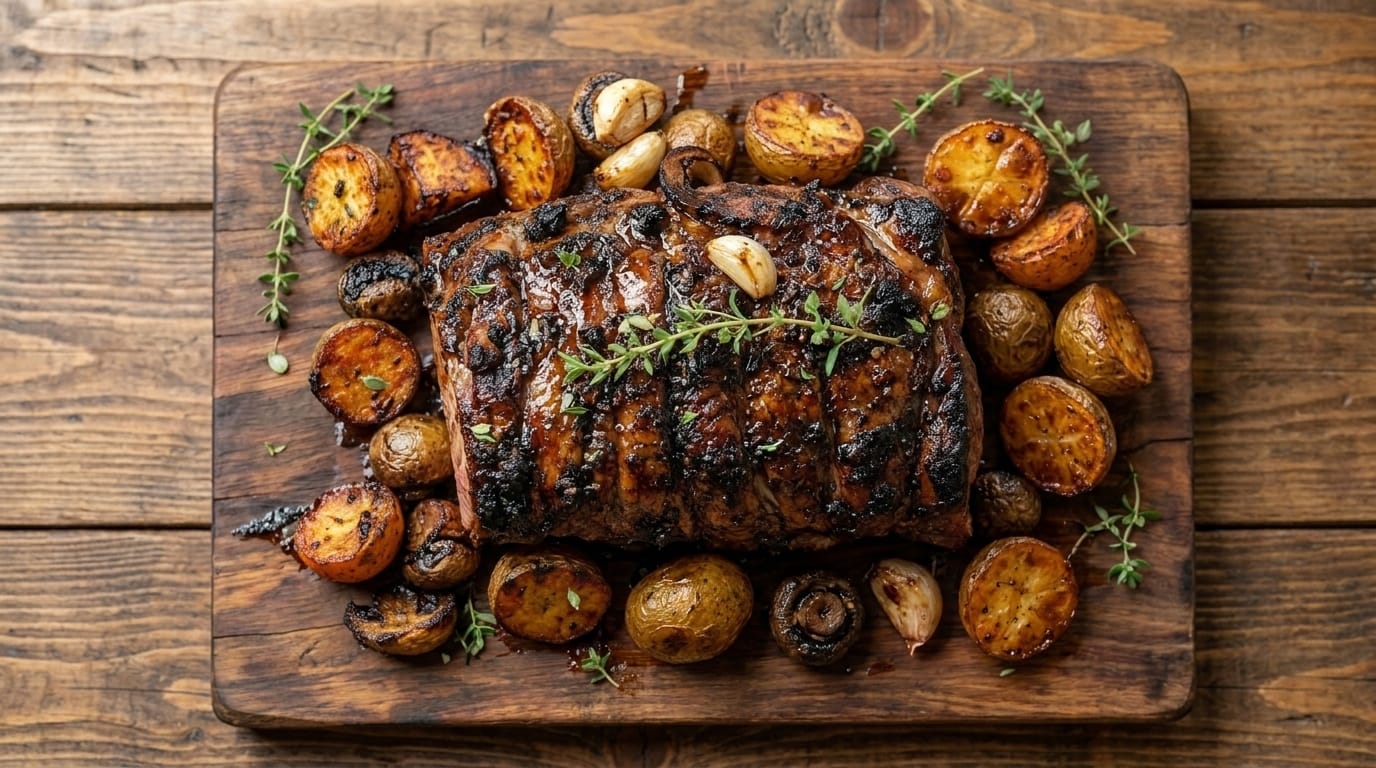
If you are looking for an easy slow-cooker dinner with tender pork and a rich, glossy sauce, this Slow Cooker Balsamic Glazed Pork Roast is a delicious recipe to add to your family dinner rotation. A seasoned pork roast is lightly seared, then slowly cooked with garlic, balsamic vinegar, honey, brown sugar, Dijon mustard, Worcestershire sauce, herbs, and broth until juicy and flavorful.
The real highlight is the balsamic glaze. Once the pork is finished cooking, the flavorful slow-cooker juices are simmered and thickened into a sweet, tangy, savory glaze that can be brushed generously over the sliced roast. Balsamic vinegar gives the sauce depth and acidity, while honey and brown sugar balance it with just enough sweetness.
Serve this tender pork roast with creamy mashed potatoes, roasted vegetables, rice, or green beans for an easy comfort-food dinner that feels special enough for Sunday dinner or entertaining.
Why You’ll Love This Slow Cooker Balsamic Glazed Pork Roast
This recipe delivers plenty of flavor without requiring hours of hands-on cooking.
A boneless pork loin roast stays sliceable and works especially well with the sticky balsamic glaze.
Garlic, rosemary, thyme, Dijon, Worcestershire sauce, honey, and balsamic vinegar create a sauce that is savory, slightly sweet, and pleasantly tangy.
Searing the pork first gives it better color and deeper flavor, but most of the cooking happens unattended in the slow cooker.
The leftover pork is also extremely versatile and can be used for sandwiches, grain bowls, wraps, salads, or meal-prep lunches.
Ingredients
For the Pork Roast
- 3–4 pound boneless pork loin roast
- 1½ teaspoons kosher salt
- 1 teaspoon freshly ground black pepper
- 1 teaspoon garlic powder
- 1 teaspoon onion powder
- 1 teaspoon smoked paprika
- 1 teaspoon dried rosemary
- 1 teaspoon dried thyme
- 2 tablespoons olive or avocado oil
For the Balsamic Cooking Sauce
- ¾ cup low-sodium chicken broth
- ½ cup balsamic vinegar
- ⅓ cup honey
- ¼ cup packed brown sugar
- 5 garlic cloves, finely minced
- 2 tablespoons Worcestershire sauce
- 1 tablespoon Dijon mustard
- 1 tablespoon tomato paste
- 1 teaspoon dried rosemary
- 1 teaspoon dried thyme
- ½ teaspoon freshly ground black pepper
- ¼ teaspoon red pepper flakes, optional
For the Onion Base
- 1 large yellow onion, thickly sliced
For Thickening the Balsamic Glaze
- 2 tablespoons cornstarch
- 3 tablespoons cold water
- 1 tablespoon unsalted butter, optional
For Garnishing
- Fresh parsley
- Fresh rosemary
- Fresh thyme
- Freshly cracked black pepper
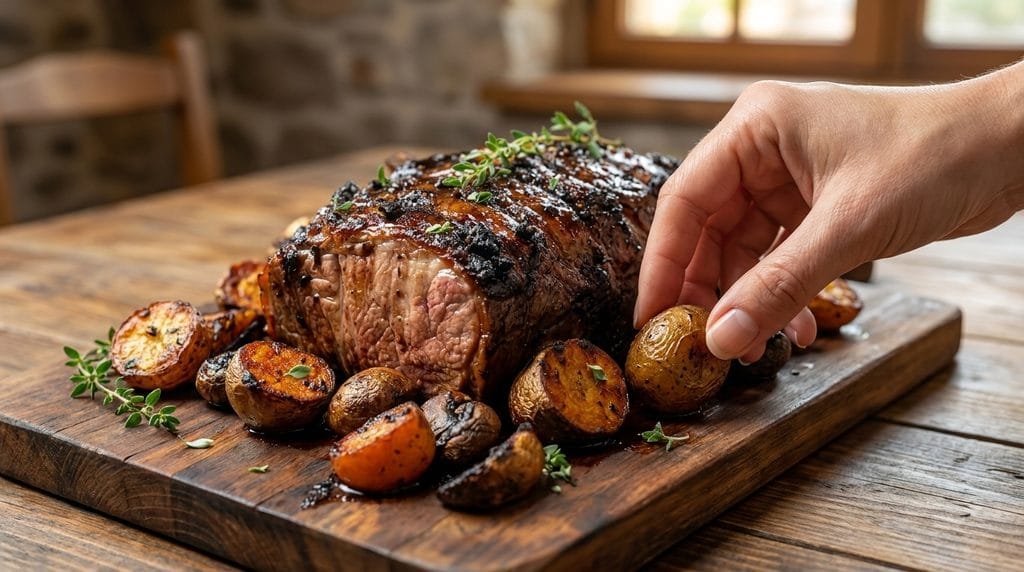
How to Make Slow Cooker Balsamic Glazed Pork Roast
1. Prepare the Pork Roast
Remove the pork roast from its packaging.
Pat it thoroughly dry with paper towels.
Drying the surface helps the seasoning adhere and allows the pork to brown properly during searing.
2. Season the Pork
In a small bowl, combine:
- Salt
- Black pepper
- Garlic powder
- Onion powder
- Smoked paprika
- Rosemary
- Thyme
Rub the seasoning evenly over every side of the pork roast.
3. Heat a Skillet
Place a large heavy skillet over medium-high heat.
Add the olive oil.
Allow the skillet to become hot before adding the pork.
4. Sear the First Side
Place the pork roast in the skillet.
Let it cook without moving for approximately 3–4 minutes.
The surface should develop a deep golden-brown crust.
5. Brown the Remaining Sides
Turn the roast with tongs.
Sear each remaining large side for approximately 2–3 minutes.
Briefly brown the ends as well.
6. Prepare the Slow Cooker
Arrange the thickly sliced onion across the bottom of a 6-quart slow cooker.
This creates a flavorful base and keeps the roast slightly elevated from the bottom.
7. Add the Pork
Place the seared pork roast over the onions.
8. Cook the Garlic
Reduce the skillet heat to medium-low.
Add the minced garlic.
Cook for approximately 30 seconds, stirring constantly.
9. Add Tomato Paste
Stir in the tomato paste.
Cook for about 1 minute.
10. Deglaze the Skillet
Pour in approximately half of the chicken broth.
Scrape the bottom of the skillet with a wooden spoon to release the browned bits from searing the pork.
Those browned bits add extra flavor to the final sauce.
11. Make the Balsamic Sauce
Add the remaining broth along with:
- Balsamic vinegar
- Honey
- Brown sugar
- Worcestershire sauce
- Dijon mustard
- Rosemary
- Thyme
- Black pepper
- Red pepper flakes, if using
Whisk until evenly combined.
12. Simmer Briefly
Bring the mixture to a gentle simmer.
Cook for approximately 1–2 minutes.
This helps dissolve the sugar and combine the flavors.
13. Pour the Sauce Over the Pork
Carefully pour the balsamic mixture over and around the pork roast.
Turn the roast once if necessary so the exterior is lightly coated.
14. Cover the Slow Cooker
Place the lid securely on the slow cooker.
15. Cook on LOW
Cook on LOW for approximately 4–6 hours.
Because pork loin is relatively lean, begin checking it toward the earlier end of the cooking window.
Slow cookers vary considerably, and an unnecessarily long cooking time can dry out pork loin.
16. Check the Internal Temperature
Insert an instant-read thermometer into the thickest part of the roast.
For a whole pork roast, cook to at least 145°F (63°C) and allow it to rest before slicing.
If you prefer your pork slightly more done, you can let it rise a little beyond that, but avoid cooking a lean pork loin until it becomes dry.
17. Remove the Pork
Once the roast is properly cooked, carefully transfer it to a cutting board or serving platter.
18. Rest the Roast
Tent loosely with foil.
Let the pork rest for at least 10 minutes.
Resting allows the juices to redistribute and makes the roast easier to slice.
19. Strain or Skim the Cooking Liquid
Pour the slow-cooker liquid into a saucepan.
You can strain out the onions for a smooth glaze or leave them in for a rustic sauce.
Skim away excess surface fat if necessary.
20. Bring the Sauce to a Simmer
Place the saucepan over medium heat.
Bring the balsamic liquid to a gentle simmer.
21. Reduce the Sauce
Simmer for approximately 5–8 minutes.
The flavors will become more concentrated as the liquid reduces.
22. Make the Cornstarch Slurry
In a small bowl, whisk together:
- 2 tablespoons cornstarch
- 3 tablespoons cold water
Whisk until completely smooth.
23. Thicken the Balsamic Glaze
Slowly pour the slurry into the simmering sauce while whisking.
Cook for approximately 2–3 minutes.
The sauce should become shiny and thick enough to coat the back of a spoon.
24. Add Butter
For an extra-silky finish, stir in 1 tablespoon butter.
25. Taste and Adjust
Taste the glaze.
If it is too sweet, add another small splash of balsamic vinegar or Dijon mustard.
If it tastes too tangy, stir in a teaspoon or two of honey.
26. Slice the Pork
Slice the rested pork roast against the grain into approximately ½-inch slices.
27. Arrange for Serving
Place the slices on a large serving platter.
Slightly overlap them for an attractive presentation.
28. Add the Balsamic Glaze
Spoon the warm glaze generously over the sliced pork.
Serve additional glaze on the side.
29. Garnish
Finish with fresh parsley, rosemary, thyme, and cracked black pepper.
30. Serve
Serve immediately with your favorite sides.
What to Serve With Slow Cooker Balsamic Glazed Pork Roast
This sweet-savory pork works particularly well with potatoes.
Try:
- Creamy mashed potatoes
- Garlic mashed potatoes
- Roasted baby potatoes
- Scalloped potatoes
- Parmesan potato wedges
- Sweet potato mash
Rice and grains are also excellent because they absorb the balsamic glaze:
- White rice
- Brown rice
- Wild rice
- Parmesan rice
- Creamy polenta
For vegetables, serve with:
- Green beans
- Roasted carrots
- Brussels sprouts
- Broccoli
- Garlic asparagus
- Roasted zucchini
- Sautéed spinach
A crisp garden salad can provide a lighter contrast to the rich glaze.
Tips for the Best Balsamic Pork Roast
Use Pork Loin, Not Pork Tenderloin
Pork loin and pork tenderloin are different cuts.
This recipe is designed for a 3–4 pound pork loin roast.
Tenderloin is much smaller and cooks considerably faster.
Don’t Start with Frozen Pork
Thaw the roast completely before putting it in the slow cooker.
Sear the Pork First
Searing is technically optional, but it produces better color and much deeper flavor.
Don’t Overcook Pork Loin
Unlike pork shoulder, pork loin is lean.
Leaving it in the slow cooker long after it reaches its target temperature can make it dry.
Use a Thermometer
Slow-cooker times are estimates.
Internal temperature is the most reliable way to determine when a pork loin roast is ready.
Use Good Balsamic Vinegar
You do not need an expensive aged vinegar, but use one with a pleasant sweet-tangy flavor.
Keep the Cooking Liquid
Do not discard those slow-cooker juices.
They are the foundation of the balsamic glaze.
Thicken the Sauce Separately
Removing the pork before reducing the sauce prevents the meat from overcooking.
Rest Before Slicing
Give the pork at least 10 minutes after cooking.
Easy Recipe Variations
Honey Garlic Balsamic Pork Roast
Increase the honey to ½ cup and add 2 extra garlic cloves.
Maple Balsamic Pork
Replace the honey with ⅓ cup pure maple syrup.
The maple flavor works especially well with rosemary and pork.
Dijon Balsamic Pork Roast
Increase the Dijon mustard to 3 tablespoons for a tangier, more savory sauce.
Apple Balsamic Pork Roast
Add:
- 1 sliced apple
- ½ cup apple cider
Arrange the apple around the roast during the final portion of cooking.
Rosemary Garlic Pork Roast
Increase the rosemary and add several fresh rosemary sprigs to the slow cooker.
Spicy Balsamic Pork
Add:
- ½ teaspoon red pepper flakes
- Pinch of cayenne
- 1 tablespoon chili garlic sauce
Mushroom Balsamic Pork
Add 8 ounces sliced mushrooms during the final 1½–2 hours.
Balsamic Pork with Carrots
Add thickly sliced carrots around the roast for an easy one-pot vegetable side.
Using Pork Shoulder Instead
If you want a fall-apart shredded pork version, use a 3½–4 pound boneless pork shoulder instead of pork loin.
Cook on:
- LOW for approximately 8–9 hours, or
- HIGH for approximately 4½–5½ hours
Pork shoulder should become fork-tender and shred easily.
For this version, tenderness rather than the minimum safe temperature is the goal. The roast generally needs substantially more cooking than a pork loin to break down its connective tissue.
Shred the cooked pork and toss it directly into the thickened balsamic sauce.
How to Store Leftovers
Allow the pork and sauce to cool before transferring them to airtight containers.
Refrigerate for up to 3–4 days.
Store the pork with some of the balsamic glaze to help retain moisture.
Reheating on the Stovetop
Place pork slices in a skillet.
Add a little glaze, chicken broth, or water.
Cover and warm gently over low heat.
Avoid aggressive simmering, which can make the pork dry.
Reheating in the Oven
Arrange slices in a covered baking dish.
Add some balsamic sauce.
Reheat at 325°F (165°C) until hot.
Reheating in the Microwave
Microwave individual portions in short intervals.
Cover loosely and include a spoonful of sauce.
Freezing Balsamic Pork Roast
This pork can be frozen.
Allow it to cool completely.
Slice or portion the pork and transfer it to freezer-safe containers with some glaze.
Freeze for up to approximately 2–3 months.
Thaw overnight in the refrigerator and reheat gently.
Frequently Asked Questions
What pork roast works best for this recipe?
A boneless pork loin roast works particularly well if you want tender slices.
Use pork shoulder instead if you want fall-apart shredded meat.
Is pork loin the same as pork tenderloin?
No.
Pork tenderloin is much smaller and leaner and cooks much faster.
How long should pork loin cook in a slow cooker?
A 3–4 pound pork loin generally needs roughly 4–6 hours on LOW, but slow cookers vary significantly.
Begin checking its internal temperature early.
What temperature should pork roast reach?
Whole pork cuts should reach at least 145°F (63°C) followed by a rest period.
Can I skip searing?
Yes.
You can put the seasoned pork directly into the slow cooker, although searing produces a richer flavor.
Can I make this without honey?
Yes.
Maple syrup or additional brown sugar can be substituted.
Why is my pork roast dry?
Lean pork loin was probably cooked too long.
Use an instant-read thermometer and remove it once it has reached the desired safe temperature.
Can I make the balsamic glaze thicker?
Yes.
Simmer it longer or add a little more cornstarch slurry, but add additional slurry gradually because the sauce can thicken quickly.
Final Thoughts
This Slow Cooker Balsamic Glazed Pork Roast combines tender pork loin, garlic, balsamic vinegar, honey, brown sugar, Dijon mustard, Worcestershire sauce, rosemary, thyme, and a glossy homemade glaze in one easy slow-cooker dinner.
The most important step is avoiding overcooking the lean pork roast. Cook it gently on LOW, begin checking the temperature early, and remove it once it reaches at least 145°F. Let it rest while you reduce the slow-cooker juices into a rich balsamic glaze.
Slice the pork, spoon that sweet-savory garlic balsamic sauce generously over the top, and serve with mashed potatoes and roasted vegetables for a comforting family dinner that is tender, juicy, and packed with flavor.