
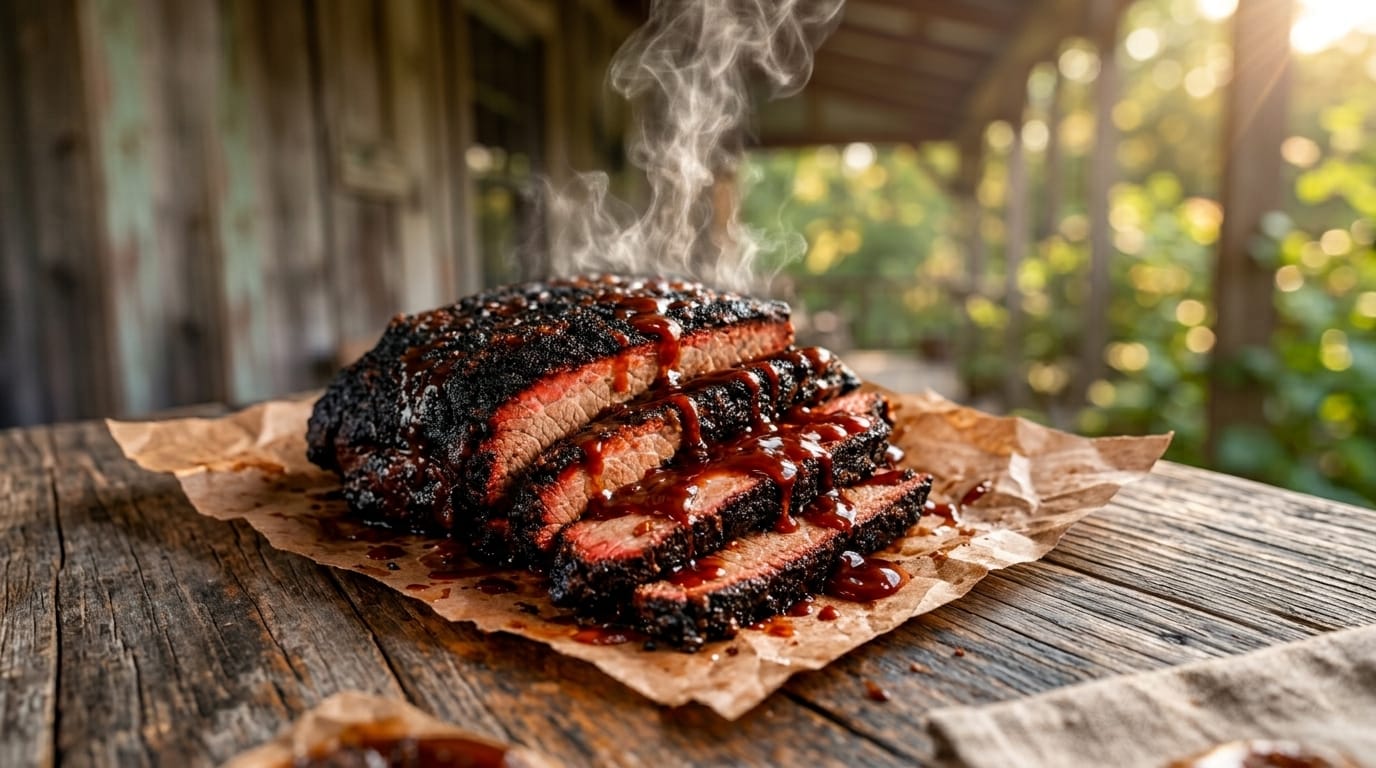
Beef Brisket is a classic comfort-food centerpiece known for its deep beefy flavor, tender texture, and rich cooking juices. When cooked slowly at a gentle temperature, this naturally firm cut of beef transforms into incredibly tender meat that can be sliced beautifully or pulled apart with very little effort.
This easy beef brisket recipe is perfect for Sunday dinners, family gatherings, holidays, meal prep, or any occasion when you want a hearty main dish that feels special without requiring complicated ingredients. Garlic, onions, beef broth, Worcestershire sauce, tomato paste, and warm seasonings create a savory braising liquid that keeps the brisket moist while it cooks.
The secret to great brisket is patience. Brisket contains plenty of connective tissue, so it needs enough time for that collagen to gradually soften. Once properly cooked and rested, the result is juicy, flavorful beef that pairs beautifully with mashed potatoes, roasted vegetables, rice, mac and cheese, or warm bread.
Why You’ll Love This Beef Brisket
One of the best things about brisket is its incredible transformation during slow cooking. What begins as a relatively tough cut of beef becomes tender, juicy, and deeply flavorful after several hours of gentle heat.
The cooking liquid is another highlight. Beef broth, onions, garlic, Worcestershire sauce, tomato paste, and herbs combine with the natural juices from the brisket to create a rich sauce that can be spooned over every serving.
This recipe is also excellent for preparing ahead. Brisket often tastes even better the next day because the meat has more time to absorb the flavorful cooking juices.
It is also versatile. Serve it traditionally with potatoes and vegetables or use leftovers in sandwiches, tacos, pasta, rice bowls, nachos, and loaded baked potatoes.
Ingredients
For the Beef Brisket
- 4 to 5 pounds beef brisket
- 2 teaspoons kosher salt
- 1 teaspoon freshly ground black pepper
- 1½ teaspoons garlic powder
- 1 teaspoon onion powder
- 1½ teaspoons smoked paprika
- ½ teaspoon chili powder
- 1 tablespoon brown sugar
- 2 tablespoons olive oil
For the Braising Sauce
- 1 large yellow onion, sliced
- 6 garlic cloves, minced
- 2 cups low-sodium beef broth
- 2 tablespoons Worcestershire sauce
- 1 tablespoon soy sauce
- 2 tablespoons tomato paste
- 1 tablespoon Dijon mustard
- 1 tablespoon apple cider vinegar
- 1 teaspoon dried thyme
- ½ teaspoon dried rosemary
- 1 bay leaf
For Finishing
- 1 tablespoon unsalted butter, optional
- 2 tablespoons chopped fresh parsley
- Salt and black pepper, to taste
- Reserved cooking juices, for serving
How to Make Beef Brisket
1. Prepare the Brisket
Place the brisket on a clean cutting board and pat it thoroughly dry with paper towels.
Trim away any very thick areas of hard exterior fat, leaving approximately ¼ inch of fat over the surface.
A thin fat layer helps protect the brisket during cooking and adds flavor, but leaving too much can make the finished sauce greasy.
2. Season the Beef
In a small bowl, combine the salt, black pepper, garlic powder, onion powder, smoked paprika, chili powder, and brown sugar.
Season the brisket generously on every side.
Press the seasoning into the meat so it adheres evenly.
For even deeper flavor, season the brisket several hours ahead or refrigerate it overnight.
3. Sear the Brisket
Preheat your oven to 325°F.
Heat the olive oil in a large Dutch oven or heavy oven-safe pot over medium-high heat.
Once hot, carefully add the brisket.
Sear for approximately 4–5 minutes on the first side until a deep brown crust develops.
Turn and brown the opposite side for another 4–5 minutes.
If possible, briefly brown the edges as well.
Searing creates caramelized flavor that makes the finished brisket and sauce noticeably richer.
Transfer the brisket temporarily to a plate.
4. Cook the Onion and Garlic
Reduce the heat to medium.
Add the sliced onion to the same pot.
Cook for approximately 4–5 minutes until the onion begins to soften.
Add the minced garlic and cook for another 30–60 seconds.
Stir frequently so the garlic becomes fragrant without burning.
5. Add the Tomato Paste
Stir in the tomato paste.
Cook for approximately 1–2 minutes.
Briefly caramelizing the tomato paste helps deepen its flavor and removes some of its raw acidity.
6. Prepare the Braising Liquid
Pour in approximately ½ cup of the beef broth.
Use a wooden spoon to scrape the browned bits from the bottom of the pot.
These caramelized pieces contain a tremendous amount of flavor.
Add the remaining beef broth, Worcestershire sauce, soy sauce, Dijon mustard, apple cider vinegar, thyme, rosemary, and bay leaf.
Stir until combined.
7. Return the Brisket to the Pot
Place the brisket back into the braising liquid.
Position it fat-side up.
The liquid should come partway up the sides of the beef but does not need to completely cover it.
Spoon some of the onions and liquid around the meat.
Bring the liquid to a gentle simmer.
8. Slowly Cook the Brisket
Cover the pot tightly with a lid.
Transfer it to the preheated 325°F oven.
Cook for approximately 3½–4½ hours.
Cooking time depends on the thickness and size of your brisket.
Begin checking the meat after about 3½ hours.
The brisket is ready when a fork or temperature probe slides into the thickest part with very little resistance.
For tender brisket, the internal temperature commonly reaches approximately 195–205°F, but tenderness is more important than temperature alone.
9. Check for Tenderness
If the brisket still feels firm or difficult to pierce, continue cooking for another 30 minutes and check again.
Brisket can remain tough until its collagen has had enough time to break down.
Do not rush this stage.
A properly cooked brisket should feel tender without completely disintegrating.
10. Rest the Brisket
Carefully remove the brisket from the cooking liquid and place it on a cutting board.
Loosely cover with aluminum foil.
Allow it to rest for approximately 20–30 minutes.
This resting period allows the juices to redistribute and makes the brisket easier to slice without losing excessive moisture.
11. Prepare the Sauce
Remove and discard the bay leaf.
Skim excess fat from the top of the braising liquid.
For a rustic sauce, leave the onions intact.
For a smoother sauce, blend some of the onions and cooking liquid using an immersion blender.
Place the pot over medium heat and simmer the sauce for approximately 5–10 minutes until slightly reduced.
Stir in the butter if desired for a richer, glossy finish.
Taste and adjust with salt and black pepper.
12. Slice and Serve
Look carefully at the direction of the grain in the brisket.
Slice across the grain into approximately ¼-inch-thick pieces.
Cutting against the grain shortens the muscle fibers and makes each slice feel much more tender.
Arrange the brisket on a serving platter.
Spoon some of the warm sauce and onions over the top.
Garnish with chopped fresh parsley and serve immediately.
What to Serve With Beef Brisket
Creamy mashed potatoes are one of the best sides for brisket because they soak up the rich braising sauce beautifully.
Roasted potatoes, buttered egg noodles, rice, or creamy polenta are also excellent choices.
For vegetables, serve brisket with roasted carrots, green beans, Brussels sprouts, broccoli, corn, or asparagus.
Mac and cheese is another popular comfort-food pairing, especially if you are serving brisket for a larger gathering.
Warm dinner rolls or crusty bread are perfect for soaking up the extra cooking juices.
For a lighter contrast, serve a crisp garden salad or tangy coleslaw.
Tips for the Best Beef Brisket
Choose a brisket with visible marbling. The internal fat helps keep the beef moist throughout the long cooking process.
Leave a thin layer of fat on top rather than trimming the brisket completely lean.
Season generously because brisket is a large cut of meat.
Do not skip searing if you have time. Browning adds deeper flavor to both the meat and sauce.
Keep the cooking temperature moderate and give the brisket enough time to become tender.
Do not rely only on cooking time. Thickness, weight, and individual ovens can all affect how quickly brisket cooks.
Most importantly, always slice brisket against the grain.
Easy Recipe Variations
For BBQ Beef Brisket, brush the cooked brisket with your favorite barbecue sauce and broil for 2–3 minutes before serving.
For Honey Garlic Brisket, add 3 tablespoons honey and 2 extra garlic cloves to the braising liquid.
For Spicy Beef Brisket, add red pepper flakes, cayenne pepper, or chopped jalapeños.
For Balsamic Brisket, replace the apple cider vinegar with balsamic vinegar.
For Brown Sugar Brisket, increase the brown sugar to 3 tablespoons for a slightly sweeter flavor.
For Brisket with Potatoes and Carrots, add large pieces of carrots and baby potatoes during the final 1½–2 hours of cooking.
How to Store and Reheat Beef Brisket
Allow leftover brisket to cool before transferring it to an airtight container.
Store the sliced beef with some of the cooking liquid to help prevent it from drying out.
Refrigerate for up to 3–4 days.
For the best results, reheat brisket gently in a covered baking dish at 300–325°F with several spoonfuls of cooking liquid.
You can also warm slices in a covered skillet over low heat.
Individual portions can be microwaved in short intervals.
For longer storage, freeze the brisket with some sauce in freezer-safe containers for up to 2–3 months.
Thaw overnight in the refrigerator before reheating.
Frequently Asked Questions
What is the best way to make brisket tender?
Cook it slowly at a moderate temperature until a fork or probe slides into the thickest portion with very little resistance.
Brisket needs enough time for its connective tissue to soften.
Should brisket be cooked fat-side up or down?
For this oven-braised recipe, cooking fat-side up works well because the fat gradually renders over the surface of the meat.
Why is my brisket still tough?
It most likely needs more cooking time.
Brisket can remain tough until the collagen has completely softened, so continue cooking and check again after approximately 30 minutes.
Can I make Beef Brisket ahead of time?
Yes.
Brisket is actually excellent for making ahead.
Cook it completely, refrigerate it with the sauce, and gently reheat before serving. Chilled brisket is also easier to slice neatly.
Final Thoughts
This Easy Beef Brisket recipe transforms a hearty cut of beef into tender, juicy slices filled with rich savory flavor. Garlic, onions, beef broth, Worcestershire sauce, herbs, and slow oven cooking create an incredibly comforting main dish with a delicious homemade sauce.
The key is giving the brisket enough time to cook gently and then allowing it to rest before slicing against the grain.
Serve it with mashed potatoes, vegetables, rice, noodles, mac and cheese, or warm bread for a hearty family meal. Whether you are preparing a Sunday dinner, holiday feast, or comforting weekend meal, this Beef Brisket is a classic recipe worth making again and again.