
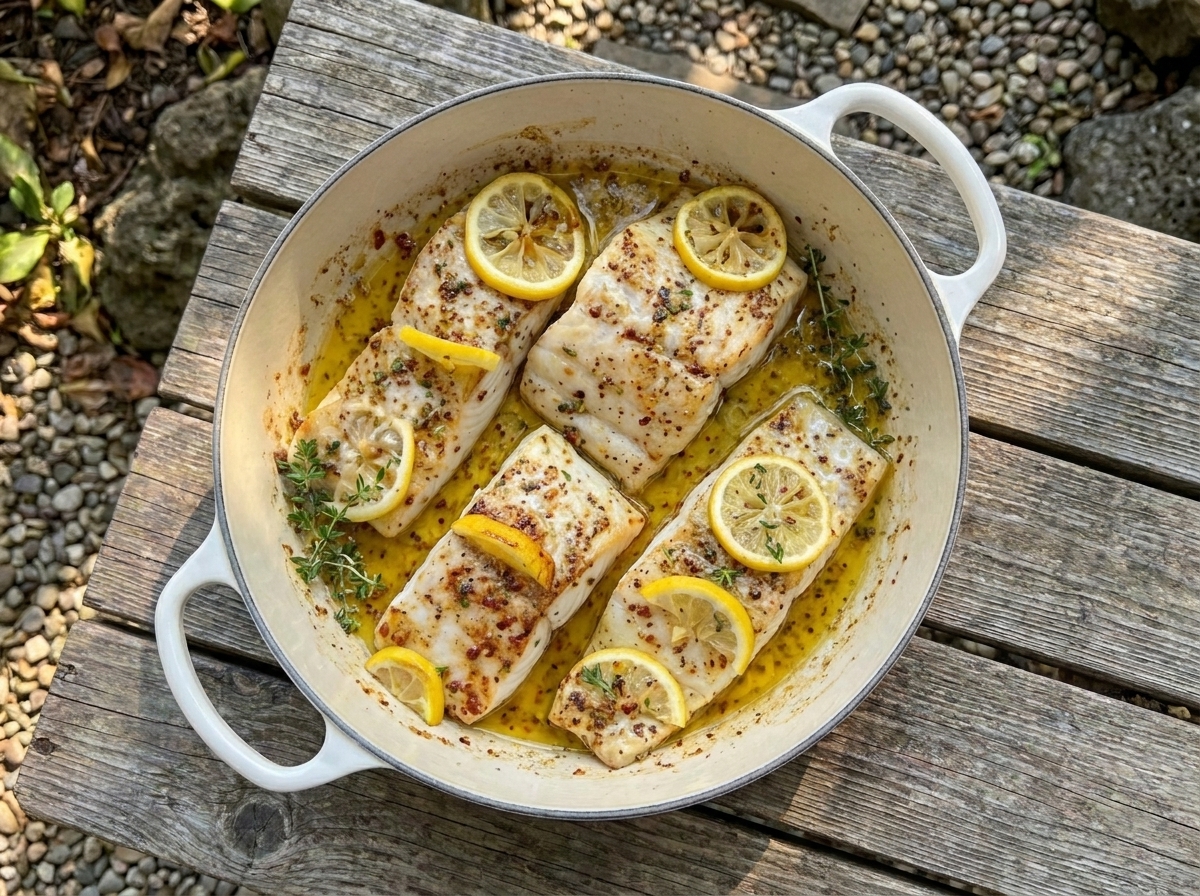
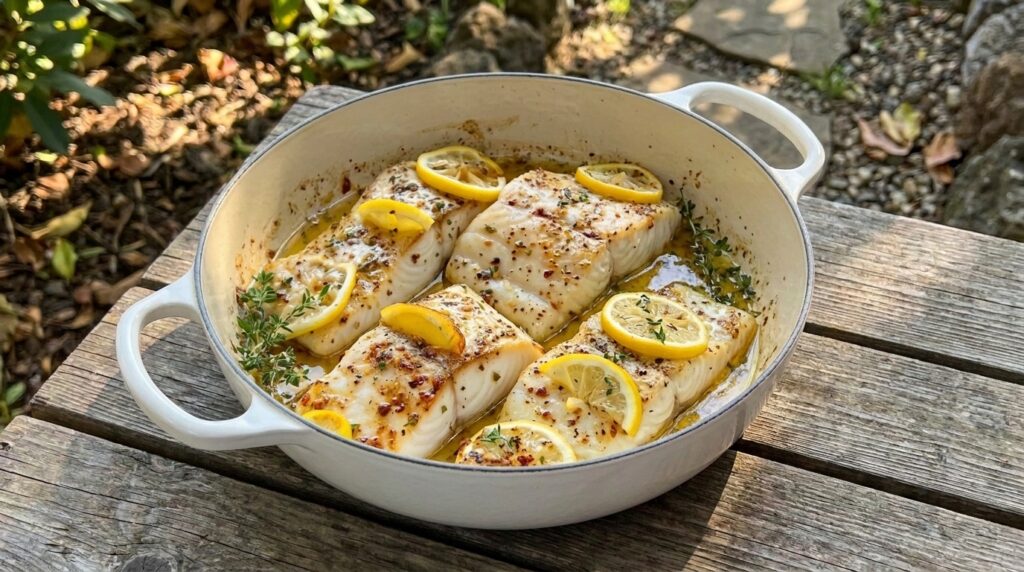
If you are looking for a light seafood dinner that feels elegant without being difficult to prepare, this Lemon and Thyme Roasted Sea Bass is a perfect recipe to make. Tender sea bass fillets are seasoned simply, seared briefly for a golden skin, then roasted with fresh lemon, garlic, thyme, white wine, and butter until the flesh is moist, flaky, and infused with bright Mediterranean flavor.
This recipe is perfect for weeknight dinners, date nights, family meals, or entertaining guests when you want something impressive that still feels fresh and uncomplicated. The lemon adds brightness, thyme contributes gentle herbal flavor, and butter gives the pan juices a rich finish without overpowering the delicate fish.
One of the best things about homemade roasted sea bass is how versatile it is. Serve it with roasted vegetables, potatoes, rice, couscous, salad, or crusty bread and spoon the fragrant lemon-thyme pan juices over every serving.
Why You’ll Love This Lemon and Thyme Roasted Sea Bass
This easy seafood recipe uses a short list of ingredients while still delivering plenty of flavor.
Sea bass has a delicate, mild taste that pairs beautifully with fresh citrus and herbs. Lemon brightens the fish, while thyme adds an earthy aroma that complements rather than covers its natural flavor.
Starting the fillets skin-side down in a hot skillet helps create a more flavorful, crisp exterior before the fish finishes gently in the oven. The linked recipe follows the same skillet-to-oven method.
The white wine, butter, garlic, and fish juices also create a light pan sauce that can be spooned directly over the fillets before serving.
Ingredients
For the Sea Bass
- 4 sea bass fillets, about 6 ounces each
- 2 tablespoons extra-virgin olive oil
- 1 teaspoon kosher salt
- ½ teaspoon freshly ground black pepper
For the Lemon Thyme Pan Sauce
- 4 garlic cloves, finely minced
- 1 lemon, thinly sliced
- 1 teaspoon finely grated lemon zest
- 4–6 sprigs fresh thyme
- ¼ cup dry white wine
- 1 tablespoon unsalted butter
- 1 tablespoon fresh lemon juice
- ¼ teaspoon red pepper flakes, optional
For Garnishing
- Fresh thyme leaves
- Fresh chopped parsley
- Additional lemon wedges
- Freshly ground black pepper
How to Make Lemon and Thyme Roasted Sea Bass
1. Preheat the Oven
Preheat your oven to 400°F (200°C).
Place a large oven-safe skillet nearby.
Using an oven-safe skillet lets you sear and roast the fish in the same pan, preserving all of the garlic, butter, lemon, and browned flavors.
2. Prepare the Sea Bass
Pat the sea bass fillets thoroughly dry with paper towels.
This step is especially important if the fillets still have their skin.
Removing excess moisture helps the skin brown rather than steam.
Check for any pin bones and remove them with clean kitchen tweezers if necessary.
Season both sides with salt and black pepper.
3. Prepare the Lemon and Herbs
Thinly slice the lemon.
Finely grate enough zest for approximately 1 teaspoon.
Set aside several fresh thyme sprigs.
Keep the garlic, wine, butter, and lemon juice measured and ready so you can add them quickly once the fish is seared.
4. Heat the Skillet
Place the oven-safe skillet over medium to medium-high heat.
Add the olive oil.
Allow it to heat until shimmering but not smoking.
A properly heated skillet helps the fish release more easily and develops better color.
5. Cook the Garlic
Add the minced garlic.
Cook for approximately 30–60 seconds, stirring gently.
The garlic should become fragrant without turning dark brown.
Burned garlic can make the pan sauce bitter.
6. Sear the Sea Bass
Place the sea bass fillets skin-side down in the skillet.
Cook for approximately 2–3 minutes without moving them.
This is the same initial crisping approach used in the linked recipe.
The skin should begin to turn golden and crisp.
Avoid pressing down aggressively with a spatula because this can damage the delicate flesh.
7. Flip the Fillets
Carefully turn the sea bass fillets.
Use a thin fish spatula if possible.
Arrange the lemon slices and thyme sprigs around the fish.
Sprinkle the lemon zest over the fillets.
8. Add the Wine and Butter
Pour the dry white wine around the fish rather than directly over the crispy skin.
Add small pieces of butter around the skillet.
Add red pepper flakes if using.
The linked recipe also uses white wine and butter before transferring the skillet to the oven.
Allow the wine to bubble for approximately 30 seconds.
9. Roast the Sea Bass
Transfer the skillet carefully to the preheated oven.
Roast for approximately 10–15 minutes, depending on the thickness of the fillets.
The original linked method gives a roasting range of roughly 12–15 minutes after searing.
The fish should become opaque and flake easily when gently pressed with a fork.
10. Check for Doneness
Insert an instant-read thermometer into the thickest portion of a fillet.
For food safety, fish should reach 145°F (63°C).
Avoid overcooking.
Sea bass is delicate and can dry out quickly once it goes beyond the ideal cooking point.
11. Finish the Pan Sauce
Remove the skillet from the oven.
Carefully transfer the fillets to a serving platter.
Place the skillet over low heat if necessary.
Add the fresh lemon juice and stir the pan juices gently.
Taste and adjust with extra black pepper or a small amount of salt if needed.
If you want a slightly richer sauce, add another teaspoon of butter.
12. Rest the Fish
Allow the sea bass to rest for approximately 2–3 minutes.
This short resting period helps the juices settle while keeping the fish warm.
The linked recipe likewise recommends a brief rest before serving.
13. Garnish and Serve
Spoon the warm lemon-thyme pan juices over the fillets.
Top with fresh thyme leaves and chopped parsley.
Add fresh lemon wedges on the side.
Serve immediately.
What to Serve With Lemon and Thyme Roasted Sea Bass
Roasted baby potatoes are an excellent side because they pair beautifully with the lemon and herb pan juices.
You can also serve the fish with mashed potatoes, rice pilaf, couscous, or quinoa.
For vegetables, roasted asparagus, zucchini, green beans, broccoli, or sautéed spinach all work very well.
A crisp Mediterranean-style salad with tomatoes, cucumbers, olives, and herbs is another excellent option.
Crusty bread is especially useful for soaking up the buttery lemon pan sauce.
The original recipe also recommends simple vegetable or salad sides, keeping the meal light and Mediterranean-inspired.
Tips for the Best Lemon and Thyme Roasted Sea Bass
Pat the fish completely dry before cooking.
Use an oven-safe skillet if possible.
Do not move the fillets too early while crisping the skin.
Use fresh thyme for the brightest herbal flavor.
Pour wine around rather than directly over the skin.
Watch the garlic carefully because it can burn quickly.
Do not overcook the fish.
Use a thermometer when possible for reliable doneness.
Let the fillets rest briefly before serving.
Spoon the pan juices over the fish immediately before serving.
Easy Recipe Variations
Lemon Rosemary Sea Bass
Replace thyme with fresh rosemary for a stronger, more aromatic herb flavor.
Garlic Butter Sea Bass
Omit the wine and add extra butter and garlic.
Spicy Mediterranean Sea Bass
Add red pepper flakes and smoked paprika for extra warmth.
Orange and Thyme Sea Bass
Replace the lemon with orange slices for a slightly sweeter citrus flavor.
Herb-Crusted Sea Bass
Add a topping of breadcrumbs, parsley, thyme, and Parmesan before roasting.
Tomato Olive Sea Bass
Add cherry tomatoes and sliced olives to the skillet before roasting.
Dairy-Free Sea Bass
Omit the butter and use additional extra-virgin olive oil.
Non-Alcoholic Sea Bass
Replace the white wine with low-sodium vegetable broth plus a small splash of white wine vinegar, which is also suggested as a non-alcoholic direction by the linked source.
How to Store Leftovers
Allow leftover sea bass to cool before transferring it to an airtight container.
Store in the refrigerator for up to 2 days.
Seafood has the best flavor and texture when eaten fresh, so enjoy leftovers as soon as possible.
To reheat, place the fish in a covered baking dish.
Warm gently at 300°F (150°C) until heated through.
Avoid using high heat because sea bass can dry out quickly.
You can also enjoy leftover sea bass cold in salads or grain bowls.
Freezing cooked sea bass is possible, but the texture will usually be softer after thawing.
Frequently Asked Questions
Can I use frozen sea bass?
Yes.
Thaw the fillets completely in the refrigerator and pat them very dry before cooking. The linked recipe also notes frozen sea bass can be used once properly thawed.
Can I use another fish?
Absolutely.
Branzino fillets, cod, halibut, snapper, or sea bream can all work.
Adjust the roasting time based on thickness.
Can I make this without wine?
Yes.
Use low-sodium vegetable or fish broth with a small splash of white wine vinegar or extra lemon juice.
Why is my fish skin not crispy?
The fillets may have been too wet, the skillet may not have been hot enough, or the fish may have been moved too early.
Pat the skin dry and let it sear undisturbed.
Can I use dried thyme?
Yes.
Use approximately 1 teaspoon dried thyme instead of fresh sprigs.
Fresh thyme gives the dish a brighter aroma, but dried thyme works in a pinch.
How do I know when sea bass is cooked?
The flesh should be opaque and flake easily.
An instant-read thermometer should read 145°F (63°C) in the thickest portion. The linked recipe gives the same doneness guidance.
Can I prepare this ahead?
You can slice the lemon, mince the garlic, and prepare the seasonings ahead.
For the best texture, cook the fish shortly before serving.
Can I use a baking dish instead of an oven-safe skillet?
Yes.
Sear the fish in a regular skillet, then transfer it with the pan juices to a preheated baking dish before roasting. This alternative is also mentioned in the source recipe.
Final Thoughts
This Lemon and Thyme Roasted Sea Bass combines tender flaky fish, fresh lemon, aromatic thyme, garlic, olive oil, white wine, and butter in one simple Mediterranean-inspired dinner.
The quick skillet sear gives the sea bass a flavorful exterior, while the short oven roast keeps the interior moist and delicate. The lemon-thyme pan juices add just enough richness without covering the natural flavor of the fish.
Serve it hot with roasted vegetables, potatoes, rice, salad, or crusty bread, and enjoy a fresh, elegant seafood dinner that comes together with simple ingredients and classic Mediterranean flavors.