
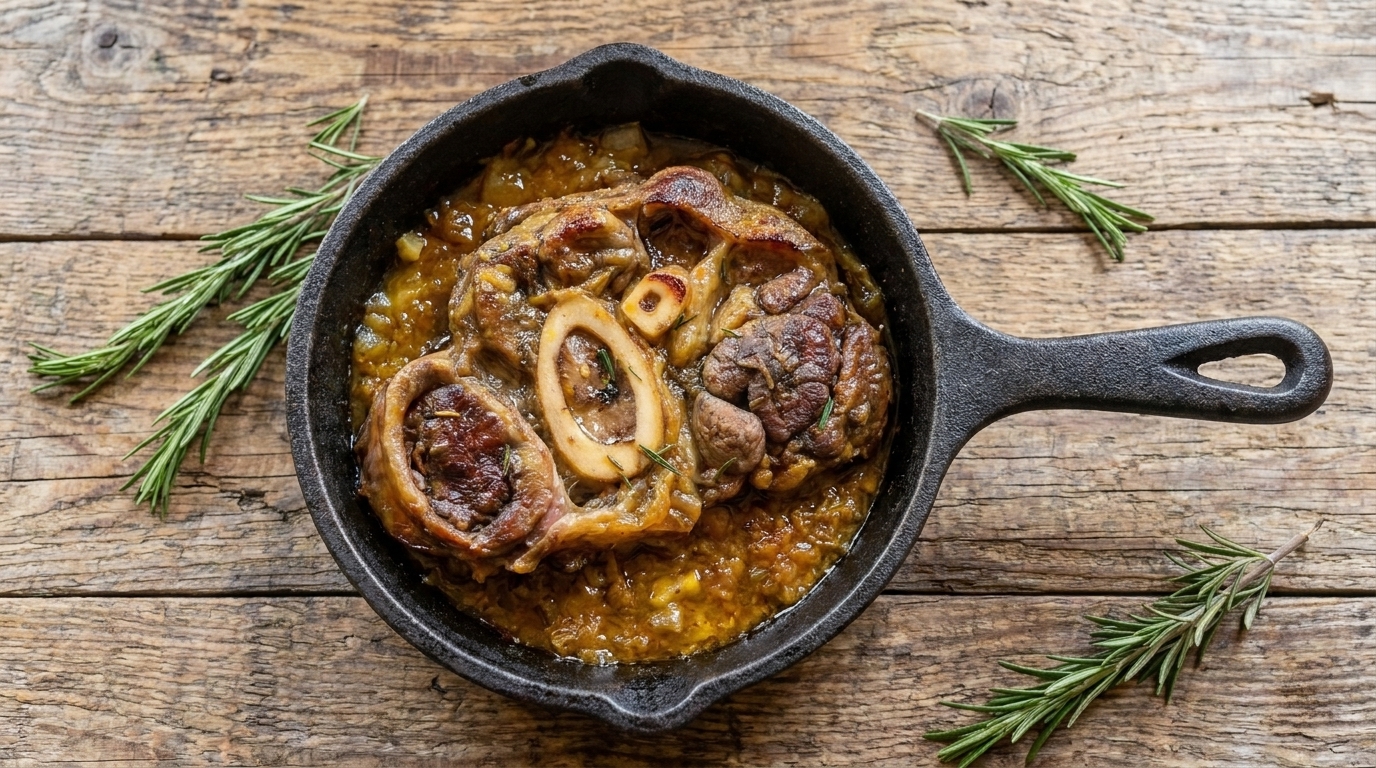
If you are looking for a hearty beef dinner with deep, slow-cooked flavour, these Slow-Braised Beef Shanks with Caramelised Onions & Rosemary are an excellent choice. Beef shanks are browned until deeply golden, then gently braised with sweet caramelised onions, garlic, rosemary, beef broth, and a rich savoury sauce until the meat becomes tender enough to pull apart with a fork.
This recipe is perfect for Sunday dinner, cold-weather meals, family gatherings, or any occasion when you want a comforting meal that feels special without requiring complicated preparation. Beef shanks benefit from slow cooking because their connective tissue gradually breaks down, creating tender meat and a naturally rich sauce.
One of the best things about braised beef shanks is how well they pair with simple sides. Serve them over mashed potatoes, creamy polenta, buttered noodles, roasted vegetables, or cauliflower mash and spoon plenty of the onion-rich braising sauce over the top.
Why You’ll Love These Slow-Braised Beef Shanks with Caramelised Onions & Rosemary
This recipe transforms an economical, flavorful cut of beef into a tender and satisfying main course.
The beef shanks are first seared to create a deeply browned exterior. That caramelization adds important savory flavor to both the meat and the sauce.
Slowly cooked onions become soft, sweet, and almost jam-like, balancing the rich beef beautifully. Fresh rosemary, garlic, thyme, Worcestershire sauce, and tomato paste add layers of flavor without overpowering the meat.
Because the dish braises slowly in the oven, most of the cooking time is hands-off. It is also an excellent make-ahead recipe because the flavors become even richer after resting overnight.
Ingredients
For the Beef Shanks
- 4 beef shanks, approximately 1½–2 inches thick
- 2 teaspoons kosher salt
- 1 teaspoon freshly ground black pepper
- 1 teaspoon garlic powder
- 1 teaspoon smoked paprika
- 3 tablespoons olive oil
- 2 tablespoons all-purpose flour, optional, for light coating
For the Caramelized Onions
- 3 large yellow onions, thinly sliced
- 2 tablespoons unsalted butter
- 1 tablespoon olive oil
- ½ teaspoon salt
- 1 teaspoon brown sugar, optional
For the Braising Sauce
- 5 garlic cloves, finely minced
- 2 tablespoons tomato paste
- 1 tablespoon Worcestershire sauce
- 2½ cups low-sodium beef broth
- ½ cup dry red wine, optional
- 2 sprigs fresh rosemary
- 4 sprigs fresh thyme
- 2 bay leaves
- ½ teaspoon freshly ground black pepper
- 1 tablespoon balsamic vinegar
For Finishing
- 1 tablespoon unsalted butter, optional
- Fresh chopped parsley
- Fresh rosemary leaves
- Salt and black pepper to taste
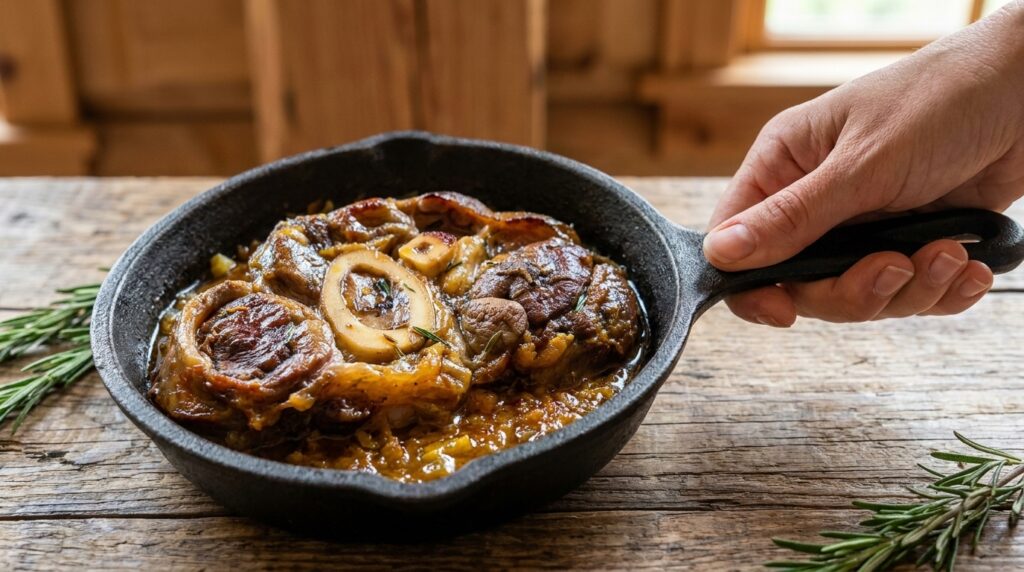
How to Make Slow-Braised Beef Shanks with Caramelised Onions & Rosemary
1. Prepare the Beef Shanks
Remove the beef shanks from the refrigerator approximately 30 minutes before cooking.
Pat them thoroughly dry with paper towels.
Drying the surface is important because excess moisture prevents proper browning.
Season both sides generously with salt, black pepper, garlic powder, and smoked paprika.
If you want a slightly thicker braising sauce, lightly dust the seasoned shanks with flour and shake off the excess.
The flour is optional and can be omitted for a naturally gluten-free version.
2. Sear the Beef Shanks
Preheat your oven to 325°F (165°C).
Heat 2 tablespoons of olive oil in a large Dutch oven or heavy oven-safe pot over medium-high heat.
Once the oil is hot, add the beef shanks without overcrowding the pan.
Work in batches if necessary.
Sear for approximately 4–5 minutes per side, or until a deep golden-brown crust develops.
Do not move the meat too frequently.
Good browning adds significant flavor to the finished sauce.
Transfer the browned shanks to a plate and set aside.
3. Start Caramelizing the Onions
Reduce the heat to medium-low.
Add the butter and remaining tablespoon of olive oil to the same pot.
Add the sliced onions and salt.
Stir well, scraping up some of the browned bits from the bottom.
Cook the onions slowly for approximately 20–30 minutes, stirring every few minutes.
They should gradually become very soft, golden, and sweet.
Avoid using high heat because the goal is caramelization rather than burning.
If the onions begin sticking, add 1–2 tablespoons of beef broth.
4. Deepen the Onion Flavor
Once the onions are soft and golden, add the brown sugar if using.
Cook for another 2–3 minutes.
The sugar is not essential, but a small amount can enhance the natural sweetness of the onions.
Continue cooking until the onions are deeply caramelized.
Transfer approximately one-quarter of the onions to a small bowl if you want to reserve some for serving over the finished beef.
5. Add the Garlic and Tomato Paste
Add the minced garlic to the onions.
Cook for approximately 30–60 seconds until fragrant.
Add the tomato paste.
Cook for approximately 2 minutes, stirring frequently.
Allowing the tomato paste to cook directly against the hot pot helps deepen its flavor and reduces any raw tomato taste.
Stir in the Worcestershire sauce.
6. Deglaze the Pot
If using red wine, pour it into the pot.
Use a wooden spoon to scrape the browned bits from the bottom.
Those browned bits contain concentrated beef flavor and should become part of the braising sauce.
Allow the wine to simmer for approximately 3–4 minutes.
If you prefer not to use wine, simply add about ½ cup of the beef broth instead.
7. Build the Braising Liquid
Pour in the remaining beef broth.
Add the rosemary sprigs, thyme, bay leaves, black pepper, and balsamic vinegar.
Stir gently.
Bring the mixture to a light simmer.
Taste the liquid and add a small amount of salt only if necessary.
Remember that the sauce will become more concentrated as it cooks.
8. Return the Beef Shanks to the Pot
Arrange the browned beef shanks over the caramelized onion mixture.
The braising liquid should come approximately halfway to two-thirds up the sides of the meat.
Do not completely submerge the shanks.
Spoon some of the onions and liquid over the tops.
Cover the Dutch oven tightly with a lid.
9. Slow-Braise in the Oven
Transfer the covered pot to the preheated oven.
Braise for approximately 3–3½ hours.
Check the meat after about 2½ hours.
The shanks are ready when the meat is very tender and pulls away from the bone easily with a fork.
If they still feel tough, continue cooking in 20–30 minute intervals.
Beef shanks generally become most tender when the collagen has had enough time to break down completely.
10. Check for Tenderness
Insert a fork or thin knife into the thickest part of the meat.
It should slide in with very little resistance.
The meat should be soft enough to separate with gentle pressure.
For braised cuts such as beef shanks, tenderness is a better indicator than relying on one exact internal temperature.
They commonly become fork-tender around 195–205°F (90–96°C) internally.
11. Reduce the Braising Sauce
Carefully transfer the cooked beef shanks to a serving platter.
Cover loosely with foil.
Remove the rosemary sprigs, thyme stems, and bay leaves from the pot.
Place the Dutch oven over medium heat.
Simmer the onion-rich sauce uncovered for approximately 8–12 minutes, or until it thickens slightly.
For an extra-rich finish, stir in 1 tablespoon of butter.
Taste and adjust with salt, black pepper, or a small splash of balsamic vinegar if needed.
12. Finish and Serve
Return the beef shanks to the sauce or spoon the sauce generously over them.
Top with any reserved caramelized onions.
Sprinkle with fresh parsley and finely chopped rosemary.
Serve hot with plenty of braising sauce.
What to Serve With Slow-Braised Beef Shanks with Caramelized Onions & Rosemary
Creamy mashed potatoes are one of the best sides for this dish because they absorb the rich beef and onion sauce beautifully.
Creamy polenta is another excellent option and gives the meal a rustic, restaurant-style presentation.
You can also serve the beef with buttered egg noodles, roasted potatoes, or cauliflower mash.
For vegetables, try roasted carrots, green beans, Brussels sprouts, broccoli, or asparagus.
A simple green salad with a bright vinaigrette can help balance the richness of the braised beef.
Crusty bread or dinner rolls are also excellent for soaking up the remaining sauce.
Tips for the Best Slow-Braised Beef Shanks with Caramelized Onions & Rosemary
Pat the beef completely dry before searing.
Use a heavy Dutch oven if possible because it distributes heat evenly.
Do not rush the caramelized onions. Slow cooking creates deeper sweetness and flavor.
Sear the meat in batches if your pot is crowded.
Cook the tomato paste for a couple of minutes before adding liquid.
Keep the braising liquid below the top of the beef instead of completely covering it.
Braise until the meat is truly fork-tender rather than relying only on cooking time.
Do not throw away the marrow inside the bones. It adds exceptional richness and can be enjoyed with the meat or stirred into the sauce.
Reduce the sauce after braising if you want a richer consistency.
This dish is often even better the next day.
Easy Recipe Variations
For Red Wine Rosemary Beef Shanks, increase the red wine to 1½ cups and reduce the beef broth accordingly.
For Garlic Butter Beef Shanks, stir 2 tablespoons of garlic butter into the sauce just before serving.
For Mushroom Beef Shanks, add 10–12 ounces sliced mushrooms during the final hour of braising.
For Balsamic Onion Beef Shanks, increase the balsamic vinegar to 2 tablespoons for a sweeter, tangier sauce.
For Tomato Herb Beef Shanks, add one 14-ounce can of crushed tomatoes to the braising liquid.
For Spicy Braised Beef Shanks, add ½ teaspoon red pepper flakes or a small amount of cayenne.
For Slow Cooker Beef Shanks, complete the searing and onion steps on the stovetop, then transfer everything to a slow cooker and cook on low for approximately 7–8 hours.
For Garlic Rosemary Short Ribs, use the same braising method with beef short ribs instead of shanks.
How to Store Leftovers
Allow the beef shanks and sauce to cool before storing.
Transfer them to an airtight container with plenty of the braising liquid.
Refrigerate for up to 3–4 days.
For the best results, reheat slowly.
Place the beef and sauce in a covered Dutch oven or baking dish and warm at 300°F (150°C) until heated through.
You can also reheat individual portions gently in a saucepan over low heat.
Add a small splash of beef broth if the sauce becomes too thick.
Beef shanks freeze very well.
Transfer cooled portions with their sauce to freezer-safe containers and freeze for up to 3 months.
Thaw overnight in the refrigerator before reheating.
Frequently Asked Questions
What are beef shanks?
Beef shanks are cross-sections of the cow’s leg.
They contain lean meat, connective tissue, bone, and marrow, making them particularly well suited to long, slow cooking.
Why are my beef shanks still tough?
They usually need more time.
Beef shanks contain a lot of connective tissue that must cook slowly before becoming tender.
Keep them covered and continue braising until a fork slides easily into the meat.
Can I make this recipe without wine?
Absolutely.
Replace the wine with additional beef broth.
You can also add an extra teaspoon of balsamic vinegar for additional depth.
Can I make beef shanks ahead of time?
Yes.
This recipe is ideal for making ahead.
Cool the beef in its sauce, refrigerate overnight, and reheat gently the following day.
Do I have to caramelize the onions?
You can shorten the process, but slow caramelization adds much more sweetness and depth to the finished sauce.
It is worth the extra cooking time.
Can I use dried rosemary?
Yes.
Use approximately 1 teaspoon dried rosemary in place of the fresh rosemary sprigs.
Start conservatively because dried rosemary has a concentrated flavor.
Should I remove the marrow?
No.
The marrow is edible and extremely flavorful.
You can enjoy it directly from the bone or stir some into the finished sauce.
Can I make this in a slow cooker?
Yes.
Brown the meat and caramelize the onions first, then transfer everything to the slow cooker.
Cook on low for approximately 7–8 hours or until the beef is fork-tender.
Final Thoughts
These Slow-Braised Beef Shanks with Caramelized Onions & Rosemary are the kind of comforting dinner that rewards patience with incredibly tender meat and a rich, deeply savory sauce.
Golden seared beef, sweet caramelized onions, garlic, rosemary, thyme, and flavorful braising juices come together during several hours of slow cooking to create a dish that feels both rustic and special.
Serve the beef shanks over creamy mashed potatoes or polenta with plenty of caramelized onion sauce spooned over the top, and enjoy a deeply satisfying slow-cooked meal perfect for family dinners and special occasions.