
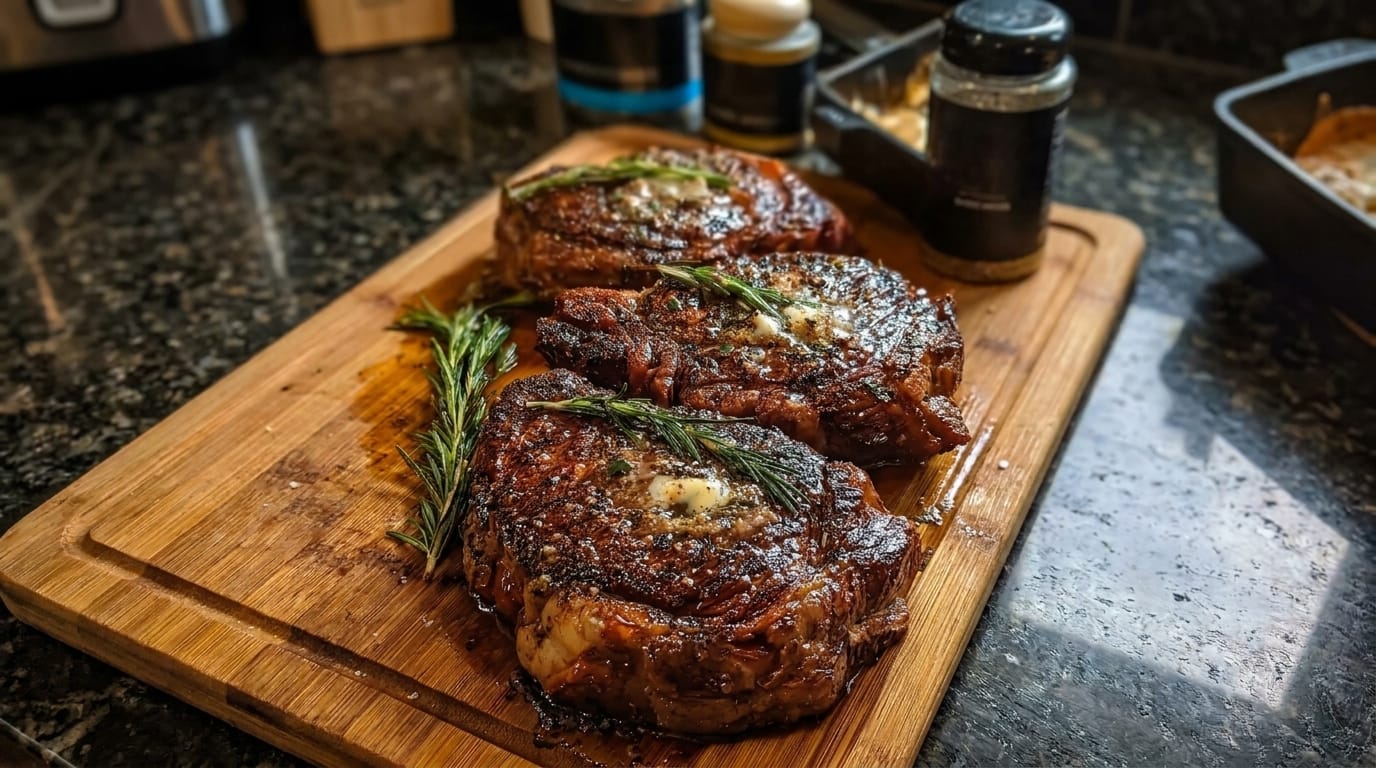
Welcome to your ultimate, deeply comprehensive guide for preparing a restaurant-quality, exceptionally flavorful culinary masterpiece: Herb-Buttered Ribeye Steaks. If you want a masterclass in achieving a deeply caramelized, savory crust on the outside while maintaining a succulent, buttery-soft interior topped with melting herb butter, this extended guide is built for you.
Why Ribeye is the King of Steaks
Among all cuts of beef, the ribeye holds a legendary status among steak enthusiasts. Cut from the rib section of the steer, it boasts unmatched marbling—those intricate veins of intramuscular fat running throughout the meat.
- Incredible Juiciness: As the steak cooks, that rich marbling melts away, naturally basting the muscle fibers from the inside out and ensuring a moist, tender bite every single time.
- The Ultimate Sear: High-heat searing creates a dark, savory crust packed with caramelized goodness that contrasts beautifully with the tender center.
- The Butter Finish: Topping a hot ribeye with a pat of garlic-herb butter melts into the crevices, taking the flavor profile to an entirely new dimension of richness.
Comprehensive Ingredient Selection
To build a magnificent plate of ribeye steaks, quality and freshness matter immensely. Gather these ingredients before you begin:
- The Beef: 3 thick-cut ribeye steaks (at least 1.5 inches thick), well-marbled and preferably prime or high-choice grade.
- The Herb Butter:
- 1/2 cup (1 stick) unsalted butter, softened to room temperature.
- 3 cloves of fresh garlic, finely minced.
- 2 tablespoons fresh rosemary and thyme leaves, finely chopped.
- A pinch of flaky sea salt and cracked black pepper.
- The Seasoning & Searing:
- 1 tablespoon high-smoke-point oil (such as avocado, canola, or grapeseed oil).
- Coarse kosher salt and freshly cracked black pepper.
- Additional fresh sprigs of rosemary for garnish and pan aromatics.
Step-by-Step Culinary Masterclass
Phase 1: Preparation and Temperature
- Bring to Room Temperature: Remove your ribeye steaks from the refrigerator 35 to 45 minutes before cooking. Allowing the meat to lose its chill is essential for even cooking from edge to center.
- Pat Dry: Thoroughly pat every steak dry with paper towels. Surface moisture is the enemy of a great crust, so ensuring a completely dry surface guarantees a golden-brown sear.
- Season Generously: Season all sides of the steaks liberally with coarse kosher salt and freshly cracked black pepper just before cooking, pressing the spices into the meat.
Phase 2: Searing to Perfection
- Heat the Skillet: Place a heavy cast-iron skillet over high heat until it is smoking hot. Add your high-smoke-point oil, swirling to coat the bottom evenly.
- The Sear: Carefully lay the ribeye steaks into the hot skillet away from you to prevent splashing. Sear undisturbed for 2 to 3 minutes to build a deep, caramelized crust, then flip.
- Basting with Butter: Once flipped, reduce the heat to medium. Add your softened herb butter, minced garlic, and fresh rosemary sprigs directly into the pan. As the butter melts and foams up, use a large spoon to continuously scoop the hot, fragrant herb butter over the top of the steaks (a technique known as basting).
Phase 3: Temperature Control and Resting
- Monitor Doneness: Use a digital meat thermometer inserted into the thickest part of the steak to check internal temperature:
- Rare: 120°F to 125°F (49°C to 52°C)
- Medium-Rare: 130°F to 135°F (54°C to 57°C)
- Medium: 140°F to 145°F (60°C to 63°C)
- The Crucial Rest: Transfer the cooked ribeye steaks to a warm wooden cutting board. Top each steak with an extra pat of herb butter and fresh rosemary sprigs. Tent loosely with foil and let rest for 8 to 10 minutes so the juices redistribute evenly throughout the muscle.
Master Chef Pro-Tips for Perfection
- Do Not Skimp on Thickness: Always choose thick-cut steaks (1.5 inches or more). Thin steaks overcook in the center long before you can develop a proper crust on the outside.
- Cast Iron is Best: A heavy cast-iron skillet retains heat better than standard pans, giving you that quintessential steakhouse crust.
- Slice Against the Grain: When serving, slice the steak perpendicular to the direction of the muscle fibers for the most tender bite possible.
What is your favorite side dish to serve alongside a perfectly seared ribeye steak, like garlic mashed potatoes or roasted asparagus?