
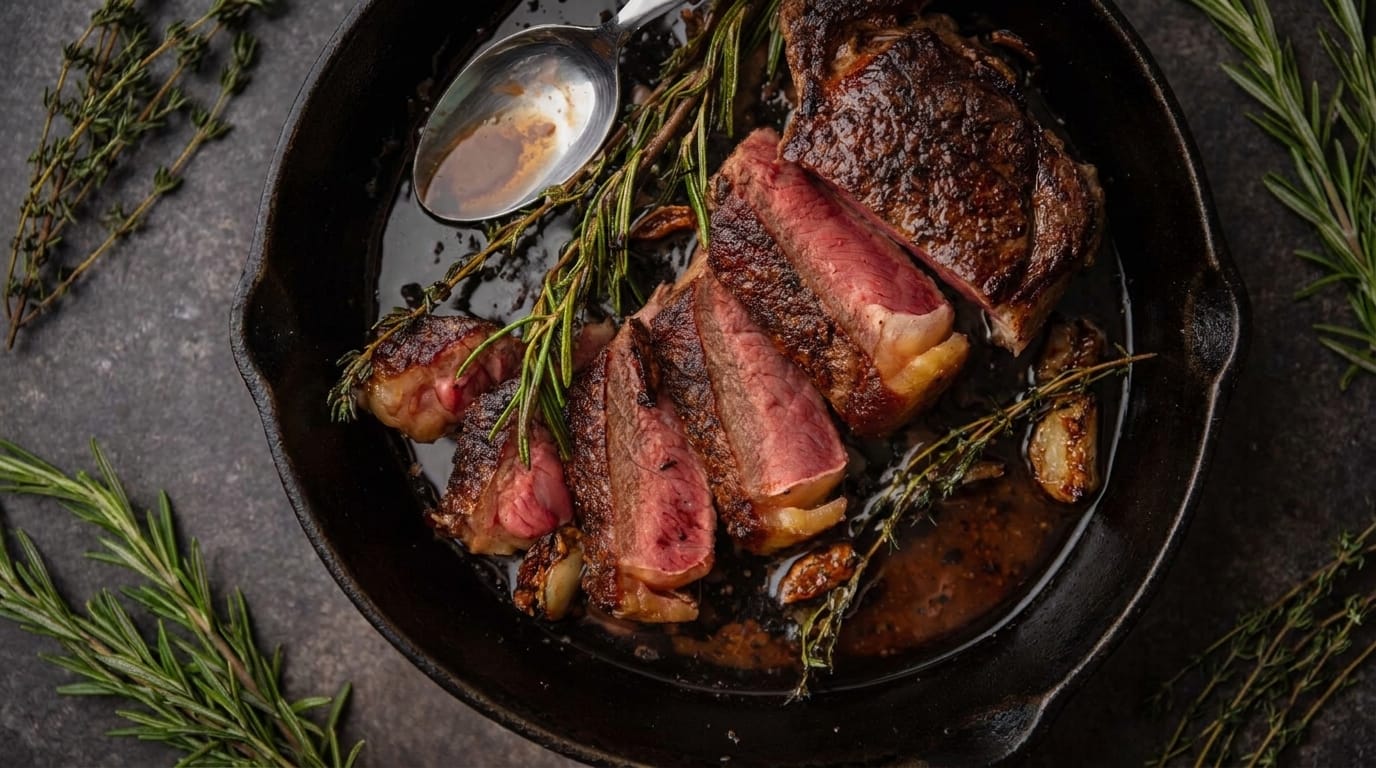
Cast-Iron Herb Butter Seared Steak represents the undisputed pinnacle of culinary indulgence, blending the primal satisfaction of a deep, caramelized crust with the melt-in-your-mouth tenderness of perfectly cooked beef. Whether you are celebrating a momentous occasion or elevating an ordinary weeknight dinner into an unforgettable feast, this culinary masterpiece delivers rich, complex flavors that rival the finest steakhouses in the world. Achieving this level of perfection requires more than simply tossing a cut of meat into a pan; it demands an understanding of heat dynamics, seasoning science, and the art of basting with aromatic fats. By meticulously breaking down every single phase—from choosing the ideal cut and managing skillet temperatures to mastering the continuous cascade of melted herb butter—this comprehensive guide transforms your home kitchen into a professional culinary sanctuary.
Understanding the Anatomy of Steak Searing and Flavor Chemistry
To consistently produce a steak with a magnificent mahogany crust and a juicy, succulent interior, one must master the underlying physics and chemistry of cooking meat.
The Maillard Reaction: The Science Behind the Crust
The incredible, savory crust that forms on a properly seared steak is the direct result of the Maillard reaction—a complex chemical reaction between amino acids and reducing sugars that occurs when proteins are subjected to high heat.
- The role of moisture: Surface moisture is the primary enemy of the Maillard reaction. Water must evaporate before the temperature of the meat surface can rise high enough to trigger browning, which can lead to overcooked gray interiors. Patting the steak completely dry with paper towels is an essential, non-negotiable prerequisite.
- Pan thermodynamics: A heavy cast-iron skillet acts as a thermal reservoir, absorbing and holding immense amounts of heat. When the dry, seasoned steak hits the scorching iron surface, the pan transfers heat rapidly, initiating instant browning without losing its temperature.
The Power of Aromatic Fat Basting (Arrosé)
Basting a steak with foaming butter infused with garlic and fresh herbs—a French technique known as arrosé—revolutionizes its flavor and texture.
- Thermal transfer: Spooning hot, melted butter over the top of the steak cooks the upper layers more evenly while counterbalancing the intense, direct heat coming from the bottom of the skillet.
- Infusion of aromatics: As butter foams and melts, it draws out the fat-soluble flavor compounds from smashed garlic cloves, woody rosemary sprigs, and fragrant thyme, coating every inch of the meat in a rich, aromatic glaze.
Comprehensive Ingredient Blueprint
Creating a transcendent cast-iron steak relies on keeping the ingredient list focused, high-quality, and intentional. Here is the exact blueprint designed to yield a perfectly balanced, deeply savory portion:
- Beef Steak: 1 beef steak (ideally a thick-cut ribeye or strip steak, providing rich marbling and deep flavor)
- Butter: 2 tbsp (adds luxurious richness, promotes browning, and creates the foundational basting medium)
- Garlic: 2 cloves, smashed (delivers pungent, savory aromatic depth as it infuses the hot butter)
- Fresh Rosemary and Thyme: 2 sprigs of each (offers earthy, piney, and floral herbaceous notes that cut through the richness of the beef and butter)
- Salt and Black Pepper: To taste (draws out natural moisture, builds a seasoned crust, and enhances the savory character of the beef)
Step-by-Step Culinary Masterclass
Executing a flawless cast-iron steak requires precise timing, unwavering attention, and absolute control over your heat sources. Follow these detailed steps to achieve professional results every single time.
Step 1: Preparation and Temperature Management
- Remove the 1 beef steak from the refrigerator approximately 30 to 45 minutes before cooking to allow it to lose its chill. Cooking a cold steak directly from the fridge results in uneven cooking, where the exterior overcooks before the center reaches your desired temperature.
- Pat the steak thoroughly dry on all sides using paper towels, ensuring zero surface moisture remains.
- Season the steak generously with salt and black pepper to taste, pressing the seasoning gently into the meat so it adheres securely.
Step 2: Achieving the Initial Sear in Cast Iron
- Place a heavy cast-iron skillet over high heat and let it heat up dry until it is piping hot and beginning to shimmer or lightly smoke.
- Add a tiny amount of high-smoke-point oil if necessary, though a well-seasoned cast-iron skillet combined with the natural fat of the steak is often sufficient.
- Carefully lay the seasoned 1 beef steak into the center of the screaming hot skillet away from you to prevent any oil splatter.
- Sear the steak undisturbed for 2 to 3 minutes to build a deep, rich crust before flipping.
Step 3: Butter Basting and Herb Infusion
- Once the initial crust has formed and you have flipped the steak, reduce the heat to medium-low to prevent the pan from burning.
- Add the 2 tbsp of butter, 2 cloves smashed garlic, and 2 sprigs fresh rosemary and thyme directly into the foaming butter.
- Tilt the skillet slightly toward you and use a large spoon to scoop up the melted, herb-infused butter, continuously spooning (arrosé) it in a steady cascade over the top of the searing steak.
- Continue cooking and basting until the steak reaches your desired internal temperature (such as 130°F to 135°F for medium-rare).
Step 4: Resting the Meat
- Transfer the cooked steak immediately to a warm cutting board or a resting plate.
- Allow the steak to rest undisturbed for 5 to 8 minutes. Resting is vital because it allows the muscle fibers to relax and the savory juices to redistribute evenly throughout the cut rather than spilling out onto the board when sliced.
Plating, Presentation, and Finishing Touches
Elevating a classic steak from a simple meal to a fine-dining experience depends heavily on how it is presented on the plate.
- The Slice: Use a sharp carving knife to slice the steak against the grain into thick, even strips, revealing the vibrant pink interior and glossy marbling.
- The Arrangement: Fan the sliced steak elegantly in the cast-iron skillet or on a warm platter, letting the pieces lean against one another to showcase the magnificent crust.
- The Pan Juices: Spoon the remaining garlic- and herb-infused pan drippings generously over the sliced meat to ensure maximum moisture and flavor.
- The Garnish: Leave the charred garlic cloves and crisp rosemary and thyme sprigs resting naturally alongside the steak for an authentic, rustic, and visually striking presentation.
Frequently Asked Questions
What is the best cut of beef to use for a cast-iron skillet steak?
Thick-cut ribeye, New York strip, and filet mignon are the absolute gold standard for cast-iron searing. Ribeye offers incredible marbling that renders down during cooking for maximum juiciness, while strip steaks provide a fantastic balance of robust beef flavor and firm texture.
How do I know when my steak has reached the correct internal temperature?
Using an instant-read digital meat thermometer inserted into the thickest part of the steak is the only foolproof method. Pull the steak at 120°F to 125°F for rare, 130°F to 135°F for medium-rare, 140°F for medium, and 150°F or above for well-done, keeping in mind that carryover cooking will raise the temperature another 5 degrees while resting.
Why is resting the steak so important?
When a steak cooks, the intense heat drives the natural juices toward the center of the meat. Cutting into a steak immediately upon removing it from the heat forces those juices to escape onto the plate, resulting in dry meat; resting gives the proteins time to reabsorb the moisture.
Conclusion and Call to Action
Mastering the art of the cast-iron herb butter seared steak transforms your approach to home cooking, giving you the confidence to prepare a restaurant-quality meal anytime you desire. The harmonious combination of a deeply caramelized crust, tender interior, and aromatic herb-infused butter creates an extraordinary sensory experience that never fails to satisfy.
Would you prefer this perfectly seared steak served with garlic butter or a rich mushroom sauce?
Save this recipe for your next steak night and drop a comment below!
#CastIronSteak #SteakLover #ComfortFood #EasyDinner #HeartyMeals