
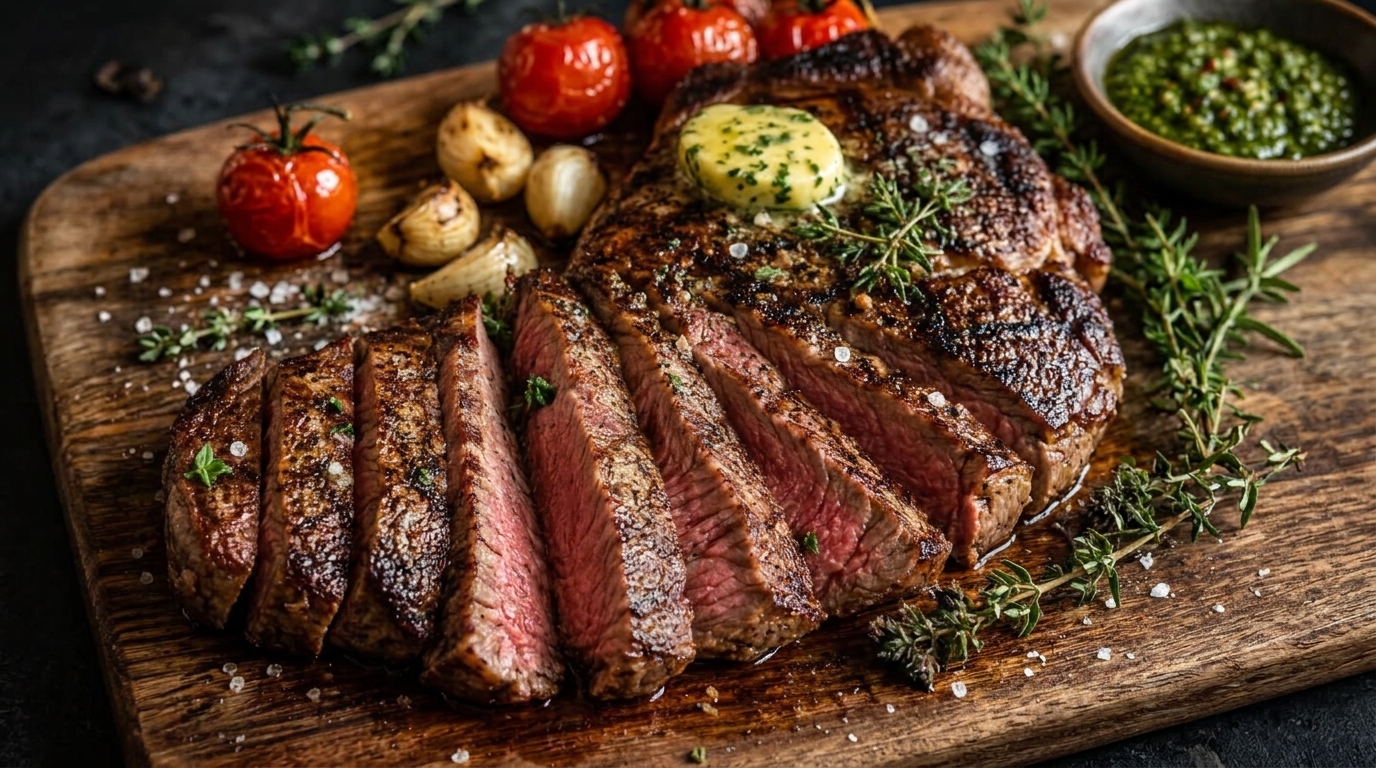
A beautifully seared steak with a deep golden crust and a warm, juicy pink center is one of the most satisfying dinners you can make at home. This Juicy Steak Dinner Recipe shows you how to cook tender, flavorful beef to a classic medium-rare finish using a simple skillet method, butter, garlic, and fresh herbs.
You do not need a restaurant kitchen or complicated equipment to make an impressive steak. The most important steps are choosing a good cut of beef, drying the surface properly, heating the pan thoroughly, and monitoring the internal temperature instead of relying only on cooking time.
This method works beautifully for ribeye, New York strip, sirloin, or filet mignon. Serve your steak with roasted potatoes, mashed potatoes, grilled vegetables, salad, or a simple pan sauce for a complete dinner that feels special enough for date night while still being easy enough for a weekend family meal.
Why You’ll Love This Juicy Steak Dinner
The biggest advantage of this recipe is control. Steak can go from perfectly cooked to overdone very quickly, especially when using high heat. By combining a hot sear with an instant-read thermometer, you can achieve much more consistent results.
The butter-basting step also adds incredible flavor. As butter melts with garlic, rosemary, and thyme, it picks up the savory browned bits in the pan. Spooning that aromatic butter over the beef repeatedly helps coat the steak with rich flavor while the crust continues developing.
This recipe is also flexible. You can use several different steak cuts, change the herbs, add mushrooms or onions, or finish the steak with a simple garlic butter.
Ingredients
For the Steak
- 2 steaks, about 8 to 12 ounces each
- 1 to 1½ inches thick
- 1 tablespoon high-heat cooking oil
- 1 teaspoon kosher salt, or to taste
- ½ teaspoon freshly ground black pepper
- ½ teaspoon garlic powder, optional
For the Garlic Herb Butter
- 3 tablespoons unsalted butter
- 3 garlic cloves, lightly crushed
- 2 sprigs fresh rosemary
- 3 to 4 sprigs fresh thyme
Optional for Serving
- Flaky sea salt
- Freshly cracked black pepper
- Garlic butter
- Roasted potatoes
- Mashed potatoes
- Grilled asparagus
- Green beans
- Roasted mushrooms
- Fresh salad
Best Steak Cuts for This Recipe
Several cuts work well for pan-seared steak.
Ribeye is one of the richest options because it contains generous marbling. As the fat cooks, it adds both flavor and tenderness.
New York strip has a slightly firmer texture but still contains enough fat to remain juicy.
Filet mignon is exceptionally tender and leaner than ribeye, although it usually has a milder beef flavor.
Sirloin is a more affordable option and works very well when cooked carefully without overcooking.
For the most consistent results, choose steaks approximately 1 to 1½ inches thick. Very thin steaks cook so quickly that developing a strong crust without overcooking the center can be difficult.
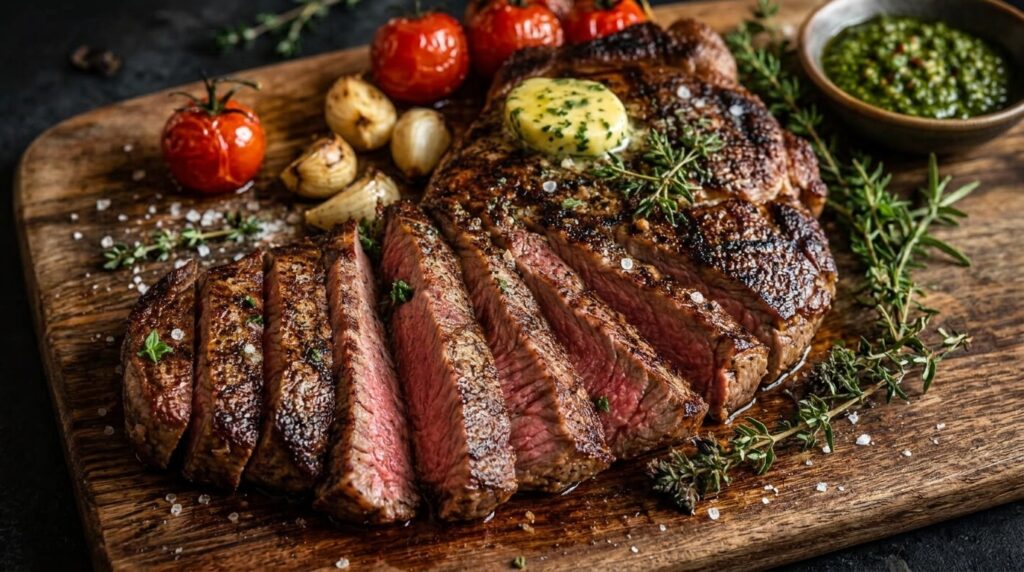
How to Make Perfect Medium-Rare Steak
1. Remove the Steak From the Refrigerator
Take the steaks out of the refrigerator about 20 to 30 minutes before cooking.
This gives you time to prepare the remaining ingredients and allows the exterior of the beef to lose some of its chill.
You do not need to leave steak out for hours. A short preparation period is enough.
Place the steaks on a clean plate and pat both sides thoroughly dry with paper towels.
This drying step is extremely important because surface moisture turns into steam when it hits the skillet. A dry steak develops a much better brown crust.
2. Season Generously
Season both sides of the steak with kosher salt and freshly ground black pepper.
Add garlic powder if desired.
Do not forget to season the edges of thicker steaks.
Press the seasoning gently into the surface rather than rubbing aggressively.
For even deeper seasoning, you can salt the steaks several hours ahead and refrigerate them uncovered. This dry-brining method also helps dry the exterior.
3. Heat the Skillet
Place a heavy cast-iron or stainless-steel skillet over medium-high to high heat.
Allow it to heat for approximately 3 to 5 minutes.
The pan should be very hot before the steak goes in.
Add the cooking oil and swirl it around the skillet.
Choose an oil suitable for high-temperature cooking rather than starting with butter. Butter contains milk solids that can burn quickly during the initial sear.
4. Sear the First Side
Carefully lay the steak in the hot skillet.
You should immediately hear a strong sizzling sound.
Once the steak is in the pan, avoid moving it unnecessarily.
Let it sear for approximately 2½ to 4 minutes, depending on thickness.
The goal is to develop a dark golden-brown crust before flipping.
If you try to lift the steak too soon and it sticks firmly, give it a little more time. Once a crust forms, the meat will often release more easily from the pan.
5. Flip the Steak
Turn the steak using sturdy kitchen tongs.
Sear the second side for approximately 2 to 3 minutes.
If your steak has a thick strip of fat around one edge, hold it upright with the tongs for 30 to 60 seconds so that the fat can render and brown.
This extra step adds flavor and improves the texture of the fatty edge.
6. Add Butter, Garlic, and Herbs
Reduce the heat slightly to medium.
Add the butter, crushed garlic cloves, rosemary, and thyme to the skillet.
The butter will quickly melt and foam.
Tilt the pan slightly so the melted butter pools along one side.
Using a large spoon, scoop up the foaming garlic-herb butter and continuously pour it over the steak.
Continue basting for approximately 1 to 2 minutes.
This step adds tremendous flavor and helps cook the upper surface gently while the bottom continues browning.
7. Check the Internal Temperature
The most reliable way to cook steak accurately is with an instant-read meat thermometer.
Insert it sideways into the thickest part of the steak, avoiding large pockets of fat.
For a culinary medium-rare result, cooks generally aim for a final internal temperature around 130–135°F (54–57°C).
Because steak continues cooking after it leaves the skillet, you can usually remove it a few degrees before your desired final temperature.
For food-safety guidance, USDA recommendations for whole cuts of beef call for 145°F with at least a 3-minute rest. If you are serving anyone at higher risk from foodborne illness, use the higher safe endpoint rather than a lower medium-rare temperature.
8. Rest the Steak
Transfer the cooked steak to a warm plate or cutting board.
Let it rest for approximately 5 to 10 minutes before slicing.
Do not skip this step.
Resting gives the juices inside the meat time to settle. Cutting immediately can cause more juices to flow onto the cutting board instead of staying inside the steak.
Loosely tent the steak with foil if desired, but do not wrap it tightly because trapped steam can soften the crust.
9. Slice Against the Grain
Look closely at the direction of the muscle fibers running through the steak.
Slice across those fibers rather than parallel to them.
Cutting against the grain shortens the muscle fibers and makes each bite feel more tender.
For ribeye or filet mignon, you can also serve the steak whole and allow each person to cut their own portion.
10. Finish and Serve
Spoon any remaining garlic herb butter from the skillet over the steak.
Finish with a pinch of flaky sea salt and freshly cracked black pepper.
Serve immediately with your favorite sides.
What to Serve With Medium-Rare Steak
A juicy steak works especially well with classic potato dishes.
Serve it with garlic mashed potatoes, crispy roasted potatoes, baked potatoes, French fries, or creamy potato gratin.
For vegetables, try roasted asparagus, sautéed green beans, Brussels sprouts, mushrooms, carrots, or broccoli.
A simple green salad dressed with vinaigrette provides a refreshing contrast to the rich beef.
You can also serve steak with creamy peppercorn sauce, mushroom sauce, chimichurri, garlic herb butter, or a red wine-style pan sauce.
Tips for the Juiciest Steak
Start with thick steaks. Steaks around 1 to 1½ inches thick give you enough time to form a crust without immediately overcooking the center.
Dry the beef thoroughly. This is one of the easiest ways to improve browning.
Heat the pan before adding the steak. A lukewarm skillet will cook the meat but will not produce the same restaurant-style crust.
Do not overcrowd the skillet. Cook two steaks only if your pan is large enough to leave space around them.
Use tongs instead of a fork. Piercing the steak repeatedly is unnecessary.
Use a thermometer. Cooking times can vary dramatically depending on thickness, pan temperature, and steak cut.
Add butter after searing. Starting with butter can cause it to burn before the steak develops enough color.
Rest before slicing. Five to ten minutes makes a noticeable difference.
Easy Steak Dinner Variations
Garlic Parmesan Steak
Finish the sliced steak with garlic butter and a small amount of freshly grated Parmesan.
Peppercorn Steak
Add 1 teaspoon roughly crushed black peppercorns while making a simple cream-based pan sauce.
Mushroom Butter Steak
After removing the steak, sauté sliced mushrooms in the same pan with butter and garlic.
Spicy Cajun Steak
Replace the simple seasoning with Cajun seasoning and finish with garlic butter.
Steak With Chimichurri
Serve the sliced beef with a fresh sauce made from parsley, garlic, olive oil, vinegar, and herbs.
Rosemary Garlic Steak
Increase the rosemary and garlic during the butter-basting step for a stronger aromatic flavor.
Common Steak Mistakes to Avoid
One of the most common mistakes is placing wet steak into the skillet. Excess moisture prevents proper browning.
Another mistake is constantly flipping and moving the beef before a crust develops. Let the skillet do its job.
Overcooking is also easy when you rely entirely on timing. Two steaks of the same weight can cook differently depending on thickness and shape, which is why internal temperature is so valuable.
Finally, avoid slicing the steak immediately after cooking. A short rest helps keep the meat much juicier.
Storage and Reheating
Store leftover cooked steak in an airtight container in the refrigerator for up to 3 to 4 days.
For best results, keep the steak whole rather than slicing it before storage. Larger pieces usually retain moisture better.
To reheat, warm the steak gently in a skillet over low heat with a little butter.
You can also place it in a low oven until just heated through.
Avoid prolonged high-temperature reheating, which can turn a previously tender steak well-done and dry.
Cold leftover steak is also excellent sliced thinly and added to salads, sandwiches, wraps, or steak-and-egg breakfasts.
Final Thoughts
Making a Juicy Medium-Rare Steak Dinner at home is less complicated than it may seem. The key is focusing on a few important techniques: start with a good-quality steak, dry the surface thoroughly, season it well, use a properly heated skillet, finish with garlic herb butter, and monitor the internal temperature carefully.
With those simple techniques, you can create beef with a deeply browned crust, tender interior, and rich steakhouse-style flavor without leaving your own kitchen.
Pair your steak with creamy mashed potatoes and vegetables for a classic dinner, add roasted potatoes for something rustic, or serve sliced steak with a fresh salad and herb sauce for a lighter meal.
Once you become comfortable controlling the heat and checking the internal temperature, this skillet method becomes an easy foundation for countless steak dinners.