
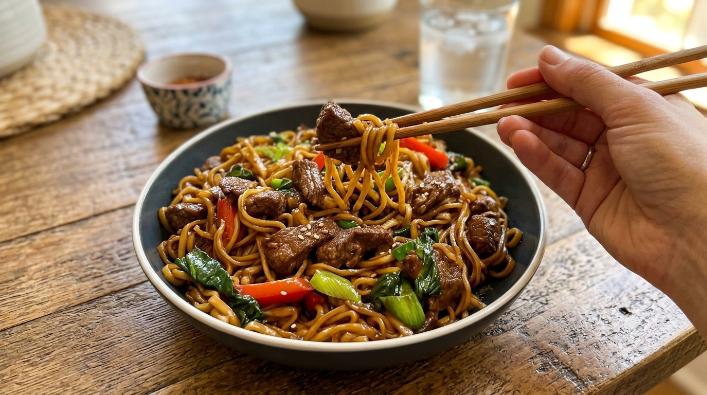
Easy Beef Lo Mein with Bell Peppers & Onions is a quick, satisfying noodle dinner loaded with tender slices of beef, colorful vegetables, and chewy noodles tossed in a rich homemade lo mein sauce. The combination of soy sauce, garlic, sesame oil, and a touch of sweetness gives every bite that irresistible takeout-style flavor while keeping the recipe simple enough for a busy weeknight.
This homemade beef lo mein comes together quickly once the ingredients are prepared. The beef is seared over high heat until browned and juicy, the vegetables are stir-fried until crisp-tender, and everything is combined with noodles and a glossy savory sauce.
It is also incredibly flexible. You can use whatever vegetables you have available, adjust the sweetness or spice level, and even substitute chicken, shrimp, or tofu for the beef. Serve it straight from the skillet for an easy complete dinner.
Why You’ll Love This Beef Lo Mein
One of the biggest advantages of homemade lo mein is that you can control the ingredients while still getting the rich, savory flavor associated with restaurant-style noodles.
Thinly sliced beef cooks in just a few minutes, making this a great recipe when you want a hearty dinner without spending a long time in the kitchen.
Bell peppers and onions bring color, sweetness, and texture to the dish. Adding broccoli, bok choy, carrots, or mushrooms can make it even more substantial.
The sauce is another highlight. It coats the noodles instead of leaving them dry, creating a glossy finish with layers of salty, slightly sweet, garlicky flavor.
Ingredients
For the Beef
- 1 pound flank steak, sirloin steak, or ribeye
- 1 tablespoon soy sauce
- 1 teaspoon cornstarch
- ½ teaspoon sesame oil
- ¼ teaspoon black pepper
- 1 tablespoon vegetable or avocado oil
For the Noodles
- 12 ounces lo mein noodles
- 1 teaspoon sesame oil, for tossing cooked noodles
For the Vegetables
- 1 red bell pepper, thinly sliced
- 1 yellow or orange bell pepper, thinly sliced
- 1 small green bell pepper, sliced
- 1 medium yellow onion, thinly sliced
- 2 cups chopped bok choy or baby spinach
- 2 green onions, sliced
- 3 cloves garlic, minced
- 1 teaspoon freshly grated ginger
For the Lo Mein Sauce
- ¼ cup low-sodium soy sauce
- 2 tablespoons oyster sauce
- 1 tablespoon dark soy sauce
- 1 tablespoon brown sugar
- 1 tablespoon sesame oil
- 1 tablespoon rice vinegar
- ½ cup beef broth
- 1 teaspoon cornstarch
- ¼ teaspoon crushed red pepper flakes, optional
How to Make Beef Lo Mein
1. Prepare the Beef
Place the beef in the freezer for approximately 15–20 minutes before slicing. Slightly chilled beef is easier to cut into thin, uniform strips.
Using a sharp knife, slice the beef thinly against the grain.
Cutting against the grain is important because it shortens the muscle fibers, creating a more tender texture after cooking.
Place the sliced beef in a bowl and add the soy sauce, cornstarch, sesame oil, and black pepper.
Toss thoroughly and allow the beef to marinate for approximately 10–15 minutes.
The cornstarch creates a thin coating that helps protect the beef from drying out while also giving it a lightly caramelized surface.
2. Make the Lo Mein Sauce
In a medium bowl, whisk together:
- Soy sauce
- Oyster sauce
- Dark soy sauce
- Brown sugar
- Sesame oil
- Rice vinegar
- Beef broth
- Cornstarch
- Optional red pepper flakes
Whisk until the cornstarch has completely dissolved.
Set the sauce aside while preparing the noodles and vegetables.
3. Cook the Lo Mein Noodles
Bring a large pot of water to a boil.
Cook the lo mein noodles according to the package instructions until just tender.
Avoid overcooking them because they will continue cooking briefly when tossed with the hot vegetables and sauce.
Drain thoroughly.
Toss the noodles with approximately 1 teaspoon sesame oil to keep them from sticking together.
Set aside.
4. Sear the Beef
Heat a large wok or heavy skillet over high heat.
Add 1 tablespoon vegetable or avocado oil.
Once the oil is hot, arrange the beef in a single layer.
Let it cook undisturbed for approximately 1 minute so the surface can develop some browning.
Stir-fry for another 1–2 minutes until most of the beef is browned.
The beef does not need to be completely cooked through yet because it will return to the skillet later.
Transfer the beef to a clean plate.
Avoid overcrowding the skillet. If necessary, cook the beef in two batches so it sears rather than steams.
5. Stir-Fry the Vegetables
Add another small splash of oil if the skillet looks dry.
Add the onion and bell peppers.
Cook over medium-high to high heat for approximately 3–4 minutes, tossing frequently.
The vegetables should become slightly tender while retaining a little crunch.
Add the garlic and ginger and cook for approximately 30 seconds.
Next, add the bok choy or spinach.
Cook for another 1–2 minutes, just until the greens begin to wilt.
6. Add the Beef Back to the Pan
Return the browned beef and any juices collected on the plate to the skillet.
Toss everything together for approximately 1 minute.
The beef should finish cooking while absorbing the flavors from the vegetables, garlic, and ginger.
7. Add the Noodles and Sauce
Add the cooked lo mein noodles to the skillet.
Whisk the prepared sauce once more because the cornstarch may settle at the bottom.
Pour the sauce evenly over the noodles.
Using tongs or two large spoons, toss everything together gently.
Cook over medium-high heat for approximately 2–3 minutes.
As the sauce heats, it will thicken slightly and coat the beef, vegetables, and noodles.
The finished noodles should be glossy and saucy rather than swimming in liquid.
Remove from heat and sprinkle with sliced green onions.
What to Serve With Beef Lo Mein
Beef lo mein already contains protein, carbohydrates, and vegetables, so it can easily be served as a complete meal.
For a larger Asian-inspired dinner, consider serving it with:
- Vegetable spring rolls
- Chicken dumplings
- Steamed edamame
- Cucumber salad
- Garlic green beans
- Steamed broccoli
- Egg drop soup
- Hot and sour soup
A light cucumber or cabbage salad is especially good because its crisp texture contrasts nicely with the rich noodles.
Tips for the Best Beef Lo Mein
Slice the beef very thinly. Thin pieces cook rapidly and remain more tender.
Cut against the grain. This makes a significant difference in the final texture.
Use high heat. Stir-frying works best when the pan is properly heated.
Prepare everything before cooking. Once stir-frying starts, the recipe moves quickly.
Don’t overcook the noodles. Slightly firm noodles hold up much better when tossed with the sauce.
Use dark soy sauce for color. Dark soy sauce gives lo mein its signature deep brown appearance without requiring too much regular soy sauce.
Toss rather than aggressively stir. Gentle tossing helps prevent the noodles from breaking.
Easy Recipe Variations
Spicy Beef Lo Mein
Add 1–2 teaspoons chili garlic sauce, sriracha, or additional crushed red pepper flakes to the sauce.
Beef and Broccoli Lo Mein
Replace some of the bell peppers with 2 cups of small broccoli florets.
Blanch the broccoli for 1–2 minutes before stir-frying if you prefer a softer texture.
Mushroom Beef Lo Mein
Add 8 ounces of sliced mushrooms along with the onions. Shiitake, cremini, or white mushrooms all work well.
Chicken Lo Mein
Replace the beef with thinly sliced chicken breast or boneless chicken thighs.
Shrimp Lo Mein
Substitute peeled and deveined shrimp for the beef. Shrimp cook quickly, usually requiring only 1–2 minutes per side.
Storage and Reheating
Allow leftover beef lo mein to cool before transferring it to an airtight container.
Refrigerate for up to 3–4 days.
For the best texture, reheat the noodles in a skillet over medium heat. Add a tablespoon or two of water or beef broth to loosen the sauce.
Toss gently until warmed through.
Individual portions can also be reheated in the microwave in short intervals.
Avoid overheating because the noodles may become overly soft and the beef may turn tough.
Frequently Asked Questions
What type of beef is best for lo mein?
Flank steak and sirloin are excellent because they can be sliced thinly and cook quickly. Ribeye also works well if you prefer richer, more tender beef.
Can I use spaghetti instead of lo mein noodles?
Yes. Spaghetti, linguine, or other long noodles can work when traditional lo mein noodles are unavailable.
What is the difference between lo mein and chow mein?
Lo mein typically features soft boiled noodles tossed with sauce, meat, and vegetables. Chow mein is often stir-fried longer, resulting in noodles with a firmer or crispier texture.
Can I make the sauce ahead of time?
Yes. Mix the sauce and refrigerate it in a covered container for up to 3 days. Whisk thoroughly before using.
How can I make my lo mein more saucy?
Increase the beef broth by approximately ¼ cup and add an additional teaspoon of oyster sauce. Add the extra liquid gradually so the noodles do not become watery.
Final Thoughts
Easy Beef Lo Mein with Bell Peppers & Onions is a flavorful homemade alternative to ordering takeout. Tender beef, colorful peppers, onions, greens, and chewy noodles are tossed together in a glossy garlic-soy sauce for a dinner that delivers plenty of savory flavor in every bite.
With a little ingredient preparation, the actual cooking takes only minutes. It is an excellent recipe for busy weeknights, family dinners, or anytime you’re craving comforting Asian-inspired noodles.
Serve your beef lo mein immediately while the noodles are hot and glossy, finished with sliced green onions and, if desired, a sprinkle of sesame seeds or red pepper flakes.