

Understanding Feline Behavior, Emotional Triggers, and Practical Solutions to Strengthen Your Bond
Introduction: Is Your Cat Really Ignoring You?
You call your cat’s name.
No response.
You walk into the room.
They barely look at you.
You try to pet them.
They walk away.
If you’ve ever thought, “Why does my cat ignore me?” — you’re not alone.
Many cat owners misinterpret feline behavior as indifference or lack of affection. But the truth is much more complex. Cats do not ignore humans in the same way humans ignore each other. What looks like avoidance is often communication.
In this complete guide, you’ll learn:
- Why cats seem to ignore their owners
- The psychology behind feline independence
- Common behavioral mistakes owners make
- Signs your cat actually cares
- How to fix distant behavior
- How to build a deeper emotional bond
Let’s break down the truth about cat behavior.

Part 1: Do Cats Really Ignore Their Owners?
Understanding Feline Independence
Cats are naturally independent animals. Unlike dogs, they are not pack-driven. In the wild, cats hunt alone and survive independently. This evolutionary background shapes how they interact with humans.
When a cat doesn’t respond immediately, it does not mean:
- They don’t love you
- They don’t recognize you
- They don’t care
It often means:
- They feel safe enough not to react
- They are focused on something else
- They communicate differently
Cats are selective with their energy. Silence is not rejection — it is often comfort.
How Cats View Humans
Research suggests that domestic cats often see their humans as a secure base. Studies on attachment show that cats display bonding patterns similar to human infants when separated and reunited with owners.
Even if your cat appears indifferent, they likely:
- Recognize your voice
- Associate you with safety
- Track your movements
- Adjust their behavior around you
The bond is real — even if subtle.
Part 2: Common Reasons Your Cat Seems to Ignore You
Let’s explore the most common reasons behind distant behavior.
1. Your Cat Is Overstimulated
Cats can become overstimulated easily. Petting for too long or touching sensitive areas can cause withdrawal.
Signs of overstimulation:
- Tail flicking
- Ears turning sideways
- Sudden swatting
- Walking away
Solution: Learn your cat’s tolerance limit. Stop interaction before irritation begins.
2. They Feel Stressed or Anxious
Stress can make cats withdraw.
Common stress triggers:
- Loud noises
- Changes in environment
- New pets
- New people
- Rearranged furniture
Cats thrive on routine. Sudden changes may cause temporary distance.
3. You Approach Them Incorrectly
Direct staring, loud calling, or sudden grabbing can feel threatening to a cat.
Instead of approaching directly:
- Sit quietly nearby
- Avoid prolonged eye contact
- Let them initiate contact
Respect builds trust.

4. Your Cat Is Bored
Mental stimulation is critical.
A bored cat may:
- Ignore interaction
- Sleep excessively
- Avoid engagement
Provide:
- Puzzle feeders
- Climbing spaces
- Daily interactive play
Engagement increases responsiveness.
5. They Are Not Feeling Well
If your cat suddenly becomes distant, it may signal illness.
Watch for:
- Appetite changes
- Hiding
- Litter box issues
- Lethargy
Cats hide pain extremely well. Behavioral changes often appear before physical symptoms.
Consult a veterinarian if distance is sudden and unusual.
Part 3: Signs Your Cat Actually Loves You (Even If They Ignore You)
Sometimes what looks like indifference is actually quiet affection.
Here are subtle love signals:
Slow Blinking
If your cat slowly blinks at you, it’s a sign of trust and relaxation.
Blink back gently.
Sleeping Near You
Cats only sleep near those they trust.
Following You Room to Room
Even if they don’t seek touch, proximity equals attachment.
Grooming Themselves Near You
This means they feel safe in your presence.
Head Bunting
When your cat rubs their head on you, they are marking you as safe.
Part 4: How to Fix Distant Cat Behavior
Now let’s focus on solutions.
Step 1: Respect Boundaries
Stop forcing affection.
Let your cat come to you.
This single shift changes everything.
Step 2: Create Positive Associations
Use:
- Gentle praise
- Soft voice tone
- Occasional treats
- Calm movements
Your presence should predict comfort.
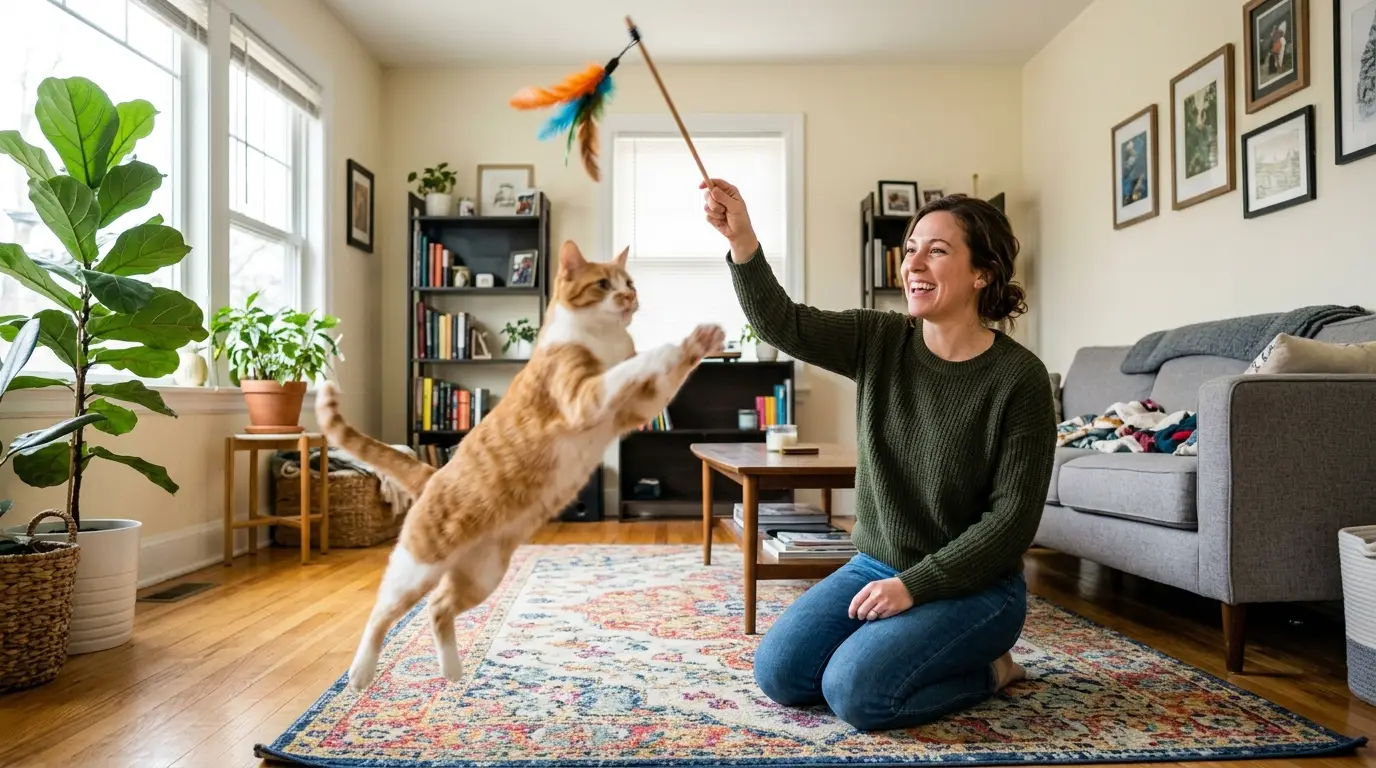
Step 3: Improve Daily Play Routine
Play mimics hunting.
Use wand toys and simulate:
- Stalking
- Chasing
- Catching
10–15 minutes twice daily increases bonding significantly.
Step 4: Build a Predictable Routine
Feed at consistent times.
Maintain consistent sleep patterns.
Cats relax when life feels predictable.
Step 5: Provide Vertical Space
Climbing increases confidence.
Add:
- Cat trees
- Shelves
- Window perches
A confident cat is a social cat.
Step 6: Use Slow Blink Communication
Look softly.
Blink slowly.
Look away.
This is feline language.
Step 7: Avoid Punishment
Yelling damages trust.
Cats do not associate punishment with behavior correction the way humans expect.
Instead, redirect unwanted behavior.
Part 5: When Ignoring Becomes a Real Problem
Some situations require attention.
Sudden Withdrawal
If your cat was affectionate and suddenly becomes distant, investigate:
- Pain
- Illness
- Environmental changes
Aggression Alongside Ignoring
This may indicate fear or stress.
Consult a veterinarian or feline behavior specialist if needed.
Part 6: How Long Does It Take to Fix Distant Behavior?
It depends on:
- Your cat’s personality
- Their history
- Consistency in your actions
Some cats improve within weeks.
Others may take months.
Patience is essential.
Trust grows slowly — but deeply.
Part 7: Personality Differences Matter
Some cats are naturally:
- Highly social
- Moderately affectionate
- Independent observers
Accepting your cat’s personality reduces frustration.
Not every cat will be a lap cat.
And that’s okay.
Part 8: Building a Stronger Emotional Bond
Here’s what truly strengthens attachment:
Quality Time Without Pressure
Sit in the same room quietly.
Read.
Work.
Let your cat approach naturally.
Gentle Grooming
Brushing mimics social grooming between cats.
Speak Softly
Cats respond to tone more than words.
Learn Their Unique Signals
Every cat communicates differently.
Observe patterns.
Adapt accordingly.
Part 9: The Emotional Truth
Your cat is not ignoring you.
They are communicating on their terms.
When you understand feline psychology, everything changes.
Instead of chasing affection, you earn it.
Instead of forcing attention, you build trust.
Instead of frustration, you experience connection.
Final Thoughts: From Distance to Deep Bond
If your cat seems distant, don’t take it personally.
Adjust your approach.
Respect their nature.
Provide stimulation.
Maintain routine.
Observe quietly.
Over time, something shifts.
The slow blink lasts longer.
They sit closer.
They follow you.
They rest near you.
And one day, you realize:
They were never ignoring you.
They were just waiting for you to understand.
