

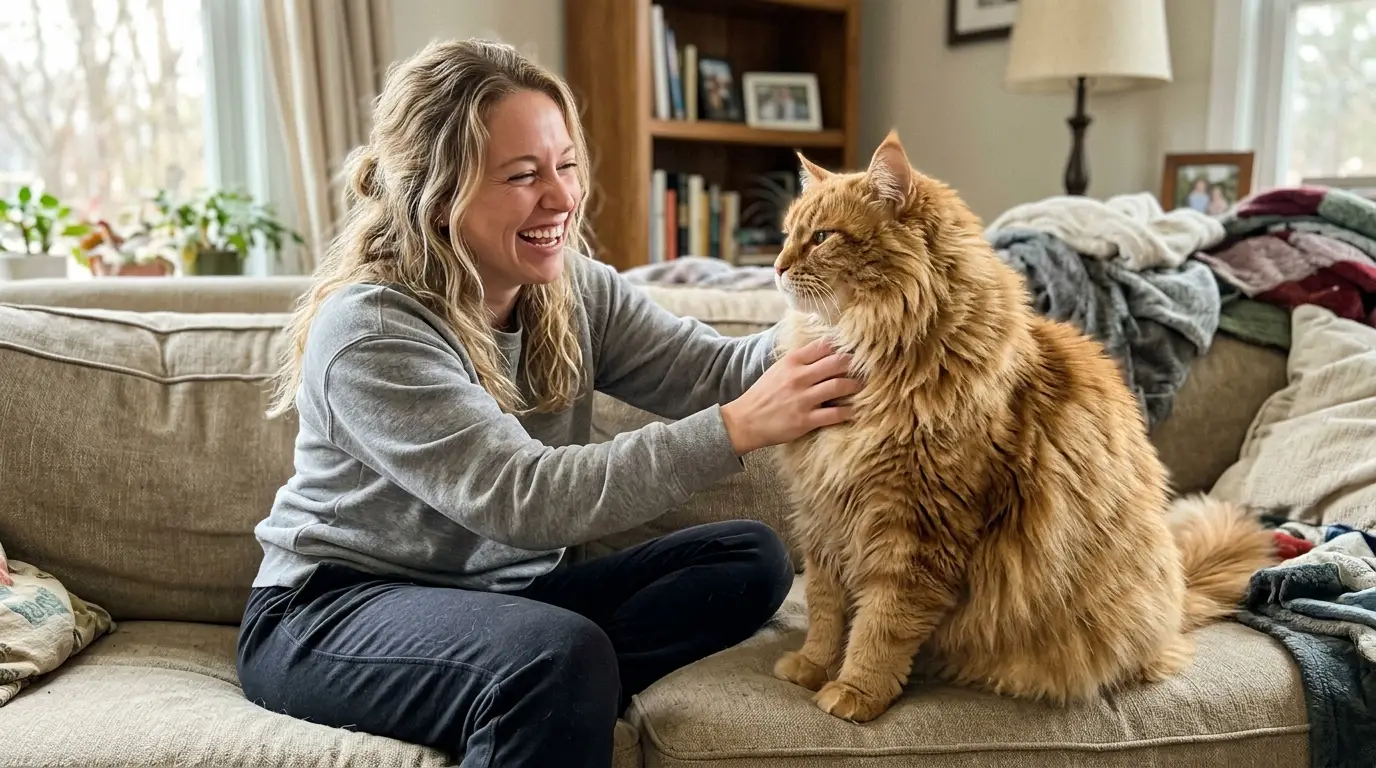
The Emotional and Behavioral Truth Behind One of the Deepest Signs of Feline Love
Introduction: It’s Never “Just Sleeping”
You wake up and notice your cat curled beside your legs.
Or maybe they rest near your pillow.
Sometimes they press their back against you.
Sometimes their paw gently touches your arm.
And in that quiet moment, it feels peaceful.
But here’s what many cat owners don’t realize:
When your cat chooses to sleep next to you, it is one of the strongest trust signals they can give.
Cats are most vulnerable when they sleep. In the wild, sleeping in the wrong place can mean danger. So when your cat chooses to sleep near you, they are making a powerful emotional statement.
In this guide, you’ll learn:
- Why cats sleep next to their owners
- What it means emotionally
- The psychology behind feline sleeping behavior
- How sleeping position reveals trust levels
- When sleeping changes may signal stress
- How to strengthen your bond even more
Let’s explore what that quiet moment truly means.
Part 1: Why Sleep Equals Vulnerability for Cats
The Instinctive Need for Safety
Cats are both predators and prey in the wild. Even though domestic cats live safely indoors, their instincts remain strong.
When a cat sleeps, they:
- Lower their guard
- Reduce awareness
- Slow their reflexes
This is why cats carefully choose where to rest.
If your cat sleeps near you, they believe:
- You are not a threat
- You are part of their safe territory
- You provide security
This is not random behavior. It is instinct-driven trust.
Part 2: The Emotional Meaning Behind Sleeping Near You
1. You Are Their Safe Space
Cats choose warm, quiet, protected places to sleep.
If they choose you, it means:
You are their warmth.
You are their comfort.
You are their safe zone.
They feel emotionally regulated around you.
2. They Associate You With Stability
Cats thrive on routine.
Your scent, voice, and movement patterns represent predictability.
Sleeping next to you reinforces that sense of security.
3. They Feel Deep Attachment
Studies show cats form secure attachments similar to children bonding with caregivers.
When separated from their owners, many cats show:
- Increased stress
- Searching behavior
- Vocalization
Sleeping beside you reduces anxiety.
Part 3: What Sleeping Positions Reveal
Not all sleeping positions mean the same thing.
Curled Up Near Your Feet
This shows comfort but moderate alertness.
They trust you but still prefer slight distance.
Pressed Against Your Body
Full trust.
This position indicates they feel protected and bonded.
Sleeping on Your Chest
Strong emotional attachment.
Your heartbeat and breathing regulate their nervous system.
Exposing Their Belly While Sleeping
Maximum vulnerability.
This is a powerful trust signal.
Facing Away From You
Interestingly, this often means trust too.
It suggests they believe you are watching their back.
Part 4: Why Some Cats Suddenly Stop Sleeping Near You
If your cat used to sleep beside you and stops, don’t panic — but observe carefully.
Possible reasons include:
Environmental Changes
- New furniture
- New pets
- Temperature changes
- New scents
Stress or Anxiety
- Loud noises
- Visitors
- Schedule changes
Health Concerns
Cats in pain may isolate themselves.
Watch for:
- Appetite changes
- Reduced grooming
- Litter box changes
If sleeping behavior shifts dramatically, consult a veterinarian.
Part 5: Temperature and Comfort Factors
Cats are heat seekers.
Your body temperature is warmer than most surfaces in your home.
Sleeping next to you may simply be practical — but practicality does not cancel emotional trust.
Comfort and attachment often work together.
Part 6: Do Cats Sleep With Their Favorite Person?
In multi-person households, cats often choose one individual to sleep beside more frequently.
Reasons include:
- Who feeds them
- Who plays with them
- Who respects boundaries
- Who has a calmer energy
Cats gravitate toward emotional stability.
Part 7: How to Strengthen the Bond Further
If your cat already sleeps near you, you can deepen that connection.
1. Create a Calm Bedtime Routine
Cats feel secure with patterns.
Soft voice tones and gentle movements at night reinforce safety.
2. Avoid Sudden Movements While They Sleep
Startling a sleeping cat can increase alertness long-term.
Move gently.
3. Maintain Clean, Comfortable Bedding
Cats are clean animals.
Fresh sheets encourage closeness.
4. Respond Gently if They Wake You
Soft reassurance strengthens trust.
Part 8: What If Your Cat Never Sleeps Near You?
Not all cats are the same.
Some prefer:
- Sleeping alone
- Elevated surfaces
- Hidden spots
This does not automatically mean lack of trust.
Observe other trust signs like:
- Slow blinking
- Following behavior
- Sitting nearby
- Grooming in your presence
Trust appears differently in different personalities.
Part 9: The Psychological Comfort Cats Gain From Sleeping Near You
Sleeping near their human:
- Lowers stress hormones
- Increases feelings of security
- Reinforces social bonding
- Builds routine familiarity
This behavior strengthens long-term attachment.
Part 10: The Emotional Truth
When your cat chooses to sleep beside you, it’s not random.
It’s not accidental.
It’s not meaningless.
It is a quiet decision.
A decision based on instinct, safety, and emotional connection.
They trust you enough to let their guard down.
And in the world of cats, that is everything.
Final Thoughts: It’s More Than Just Sleep
Cats do not express love loudly.
They express it quietly.
Through proximity.
Through stillness.
Through presence.
The next time your cat curls beside you at night, understand what it truly means.
They are not just resting.
They are trusting.
And that is one of the deepest bonds you can share.
