

Introduction
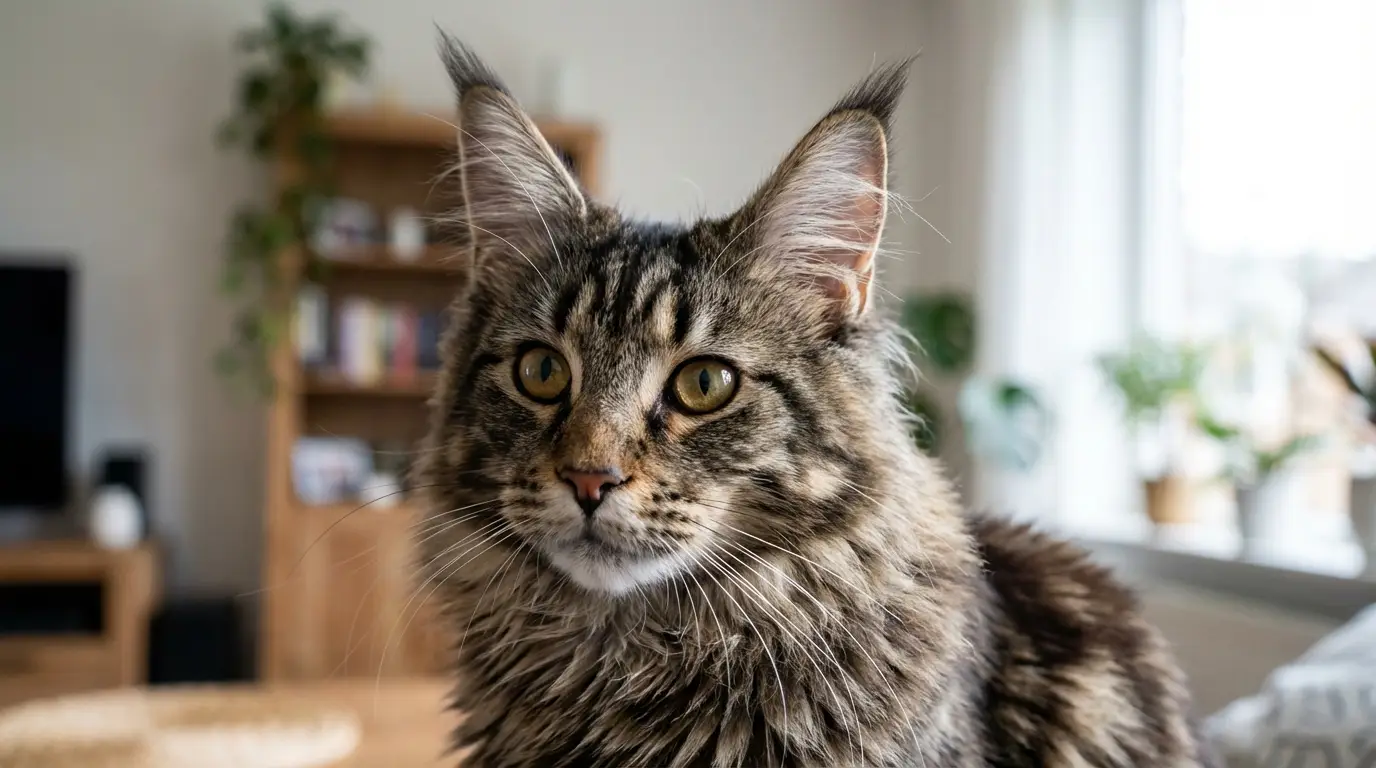
The Maine Coon is one of the most beloved and recognizable cat breeds in the world. Known as the “gentle giant” of the feline world, this breed combines impressive size with a friendly, affectionate personality.
With their luxurious coats, tufted ears, bushy tails, and dog-like behavior, Maine Coons are often described as the perfect family cat.
If you’re considering bringing one home — or simply want to understand this magnificent breed better — this complete guide covers everything you need to know.
Breed Overview
- Origin: United States (Maine)
- Size: Large to Extra Large
- Weight: 10–25 pounds (males larger than females)
- Lifespan: 12–15 years
- Temperament: Gentle, intelligent, social
- Coat Type: Long, thick, water-resistant
History and Origins of the Maine Coon
The Maine Coon is one of the oldest natural cat breeds in North America.
While many legends surround its origin — including myths about raccoon ancestry (biologically impossible) — most experts believe the breed developed naturally in the harsh climate of Maine.
Their thick, water-resistant coat and bushy tail evolved to survive cold winters. Over time, their friendly temperament made them popular farm cats, valued for their hunting skills and adaptability.
Today, they are among the most popular pedigree cats worldwide.
Physical Characteristics
1. Size and Build
Maine Coons are famous for their size. Males can weigh up to 25 pounds and are muscular with a broad chest and sturdy bone structure.
Despite their size, they move gracefully and are surprisingly agile.
2. Coat and Fur Texture
Their coat is long but not overly silky. It has a slightly shaggy appearance with:
- Longer fur around the neck (mane)
- Feathered tail
- Thick undercoat
- Water-resistant top layer
The coat is designed to protect them from cold and snow.
3. Ears and Facial Features
One of their most striking features is their:
- Large ears
- Lynx-like ear tufts
- Expressive oval-shaped eyes
Their facial structure gives them an intelligent and alert appearance.
4. Tail
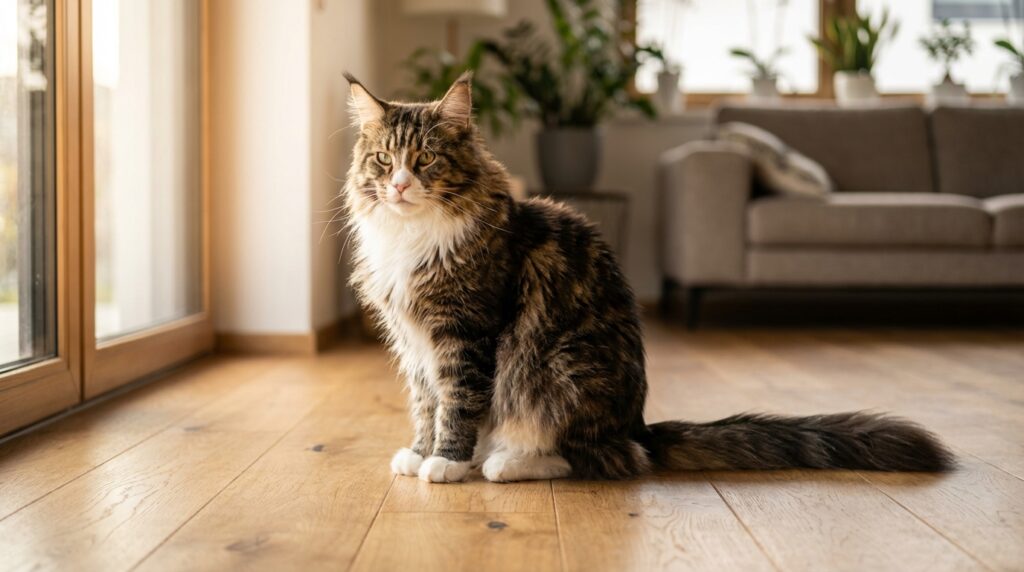
The Maine Coon’s tail is long, thick, and bushy. In winter climates, they often wrap it around their body for warmth.
Personality and Temperament
Gentle and Affectionate
Despite their large size, Maine Coons are known for their gentle nature. They are affectionate but not overly demanding.
They enjoy being near their owners but typically do not cling constantly.
Dog-Like Behavior
Many owners describe Maine Coons as “dog-like.”
They often:
- Follow their owners around
- Learn tricks
- Play fetch
- Greet guests at the door
Their intelligence makes them highly interactive pets.
Great with Families and Children
Maine Coons are patient and tolerant, making them ideal for families with children.
They usually get along well with other cats and even dogs when properly introduced.
Vocal but Not Loud
Unlike some vocal breeds, Maine Coons communicate with soft chirps and trills instead of loud meows.
This unique sound adds to their charm.
Grooming and Maintenance
Brushing Needs
Although they have long fur, Maine Coons do not mat as easily as some other long-haired breeds.
Brushing 2–3 times per week is typically sufficient.
Focus on:
- Behind the ears
- Under the legs
- Around the tail
Shedding
They shed moderately, with heavier shedding during seasonal changes.
Regular grooming reduces loose hair and hairballs.
Bathing
Occasional baths may be needed, especially if they get dirty. Many Maine Coons surprisingly tolerate water well.
Exercise and Activity Needs
Maine Coons are playful and active, even into adulthood.
They enjoy:
- Climbing cat trees
- Interactive toys
- Puzzle feeders
- Playing fetch
Because of their size, sturdy cat furniture is recommended.
Health Considerations
Like all breeds, Maine Coons are prone to certain genetic conditions.
1. Hypertrophic Cardiomyopathy (HCM)
A common heart condition in cats. Responsible breeders screen for this.
2. Hip Dysplasia
Due to their size, some Maine Coons may develop joint issues.
3. Spinal Muscular Atrophy (SMA)
A genetic condition affecting muscle development.
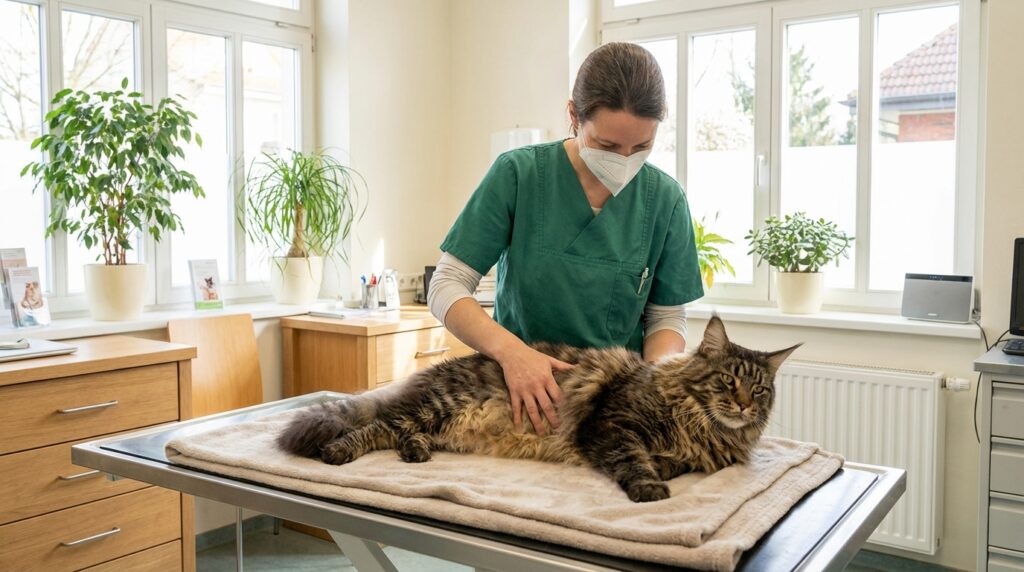
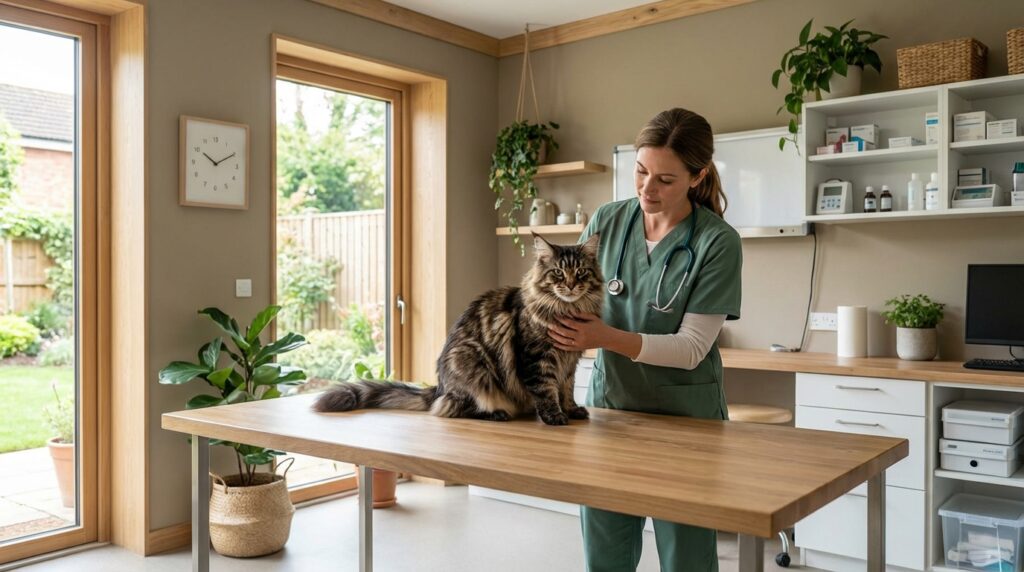
Regular veterinary checkups and choosing a responsible breeder significantly reduce risks.
Diet and Nutrition
Because of their size, Maine Coons require:
- High-quality protein
- Controlled portions
- Balanced nutrients
- Joint-support supplements (if recommended)
Avoid overfeeding, as obesity increases joint stress.
Fresh water should always be available.
Living Environment
Maine Coons adapt well to:
- Apartments (with enough stimulation)
- Large homes
- Multi-pet households
They thrive in environments where they can interact with humans daily.
Is a Maine Coon Right for You?
A Maine Coon may be ideal if you:
✔ Want a friendly, affectionate companion
✔ Have time for interaction
✔ Can provide grooming
✔ Appreciate a larger cat
They may not be ideal if you:
✘ Prefer a low-maintenance pet
✘ Dislike shedding
✘ Have very limited space without vertical enrichment
Final Thoughts
The Maine Coon is a majestic, intelligent, and loving breed that fits well into many households. Their combination of beauty, personality, and adaptability makes them one of the most admired cat breeds in the world.
With proper care, attention, and love, a Maine Coon becomes not just a pet — but a true family member.
