

Introduction
Indoor cats live longer, safer lives compared to outdoor cats. However, staying indoors means they rely entirely on you for stimulation, exercise, and mental enrichment.
Without proper engagement, indoor cats can develop boredom, obesity, anxiety, or destructive behaviors.
This guide will show you exactly how to create a healthy, stimulating indoor environment that keeps your cat happy and balanced.
Why Indoor Enrichment Is So Important
In the wild, cats spend their time:
- Hunting
- Climbing
- Exploring
- Marking territory
- Observing their surroundings
When confined indoors without stimulation, they lose access to these natural behaviors.
A well-designed indoor setup should mimic these instincts.
1. Provide Vertical Space
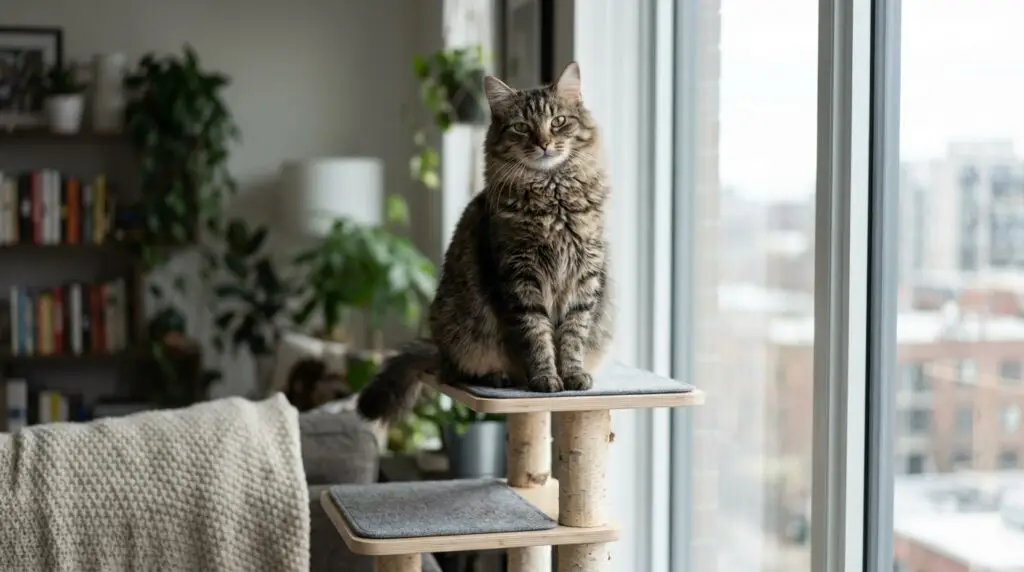
Cats feel safer when they can observe their environment from above.
Add:
- Cat trees
- Wall-mounted shelves
- Window perches
- Tall furniture access
Vertical space reduces stress in multi-cat households and increases confidence.
2. Encourage Natural Hunting Behavior
Even well-fed cats have strong hunting instincts.
Try:
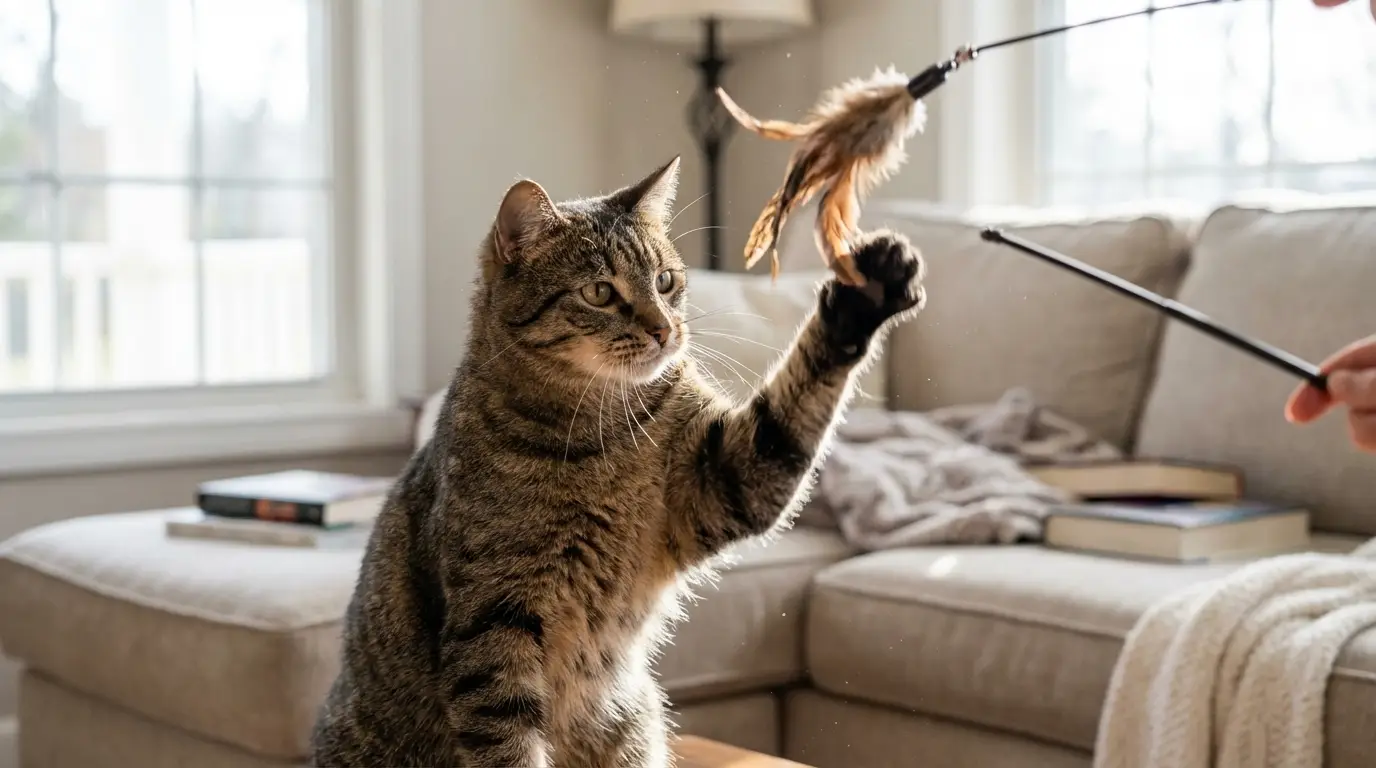
- Interactive wand toys
- Puzzle feeders
- Treat-dispensing toys
- Short daily play sessions (10–15 minutes)
Structured play reduces zoomies and nighttime hyperactivity.
3. Create Safe Hiding Spots
Cats need private areas where they feel secure.
Safe spaces can include:
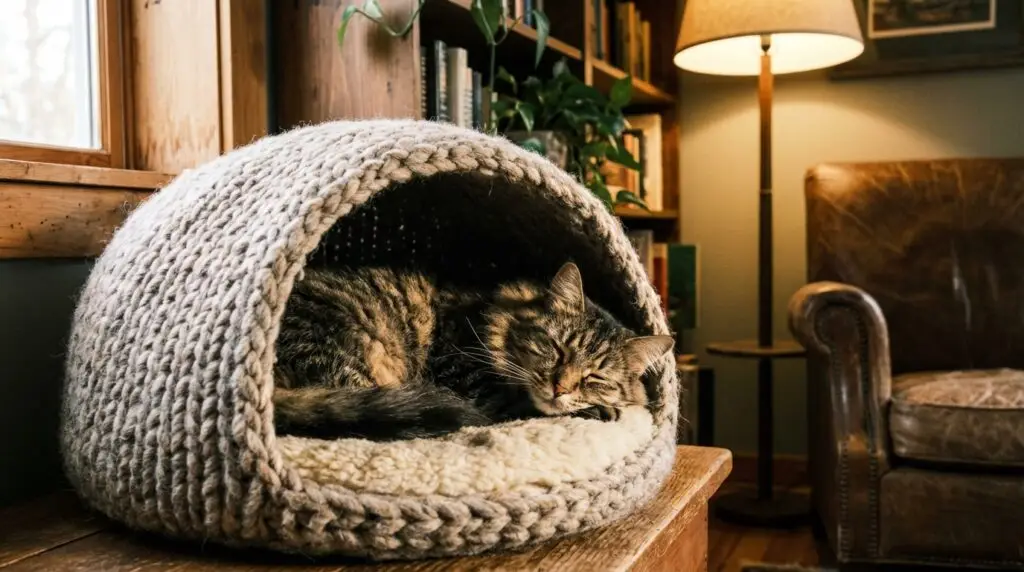
- Covered cat beds
- Boxes
- Quiet corners
- Soft blankets inside closets
Never force your cat out of their safe zone.
4. Provide Scratching Options
Scratching is not misbehavior — it’s essential.
Offer:
- Vertical scratching posts
- Horizontal scratch pads
- Different textures (sisal, cardboard, carpet)
Place them near areas your cat already scratches.
5. Window Entertainment
A simple window can be your cat’s favorite “TV.”
Set up:
- A perch by a window
- Bird feeders outside (if possible)
- Safe screened windows for fresh air
Watching birds and outdoor movement stimulates their mind.
6. Maintain a Consistent Routine
Cats thrive on predictability.
Try to:
- Feed at the same times daily
- Play at consistent hours
- Keep litter boxes clean
Routine reduces anxiety and behavioral issues.
Signs Your Indoor Cat Is Happy
- Normal appetite
- Regular grooming
- Relaxed body posture
- Playful energy
- Healthy sleep patterns
If your cat becomes withdrawn or destructive, review their environment.
Final Thoughts
An enriched indoor life isn’t about expensive equipment. It’s about understanding your cat’s instincts and creating opportunities for them to express natural behaviors safely.
A stimulated cat is a happy cat.
